








Sort by:
746 products
746 products

Tall gold pot to spice up any space
Diameter - 5”
Height - 6”


$4 each or 3 for $10 (save $2!)
A cheery hit of yellow early in the summer.
Type: Perennial, near native to Ontario
Height: 2 - 4 feet
Light: Full sun to part shade
Soil: Tolerant of many types of soil from clay to sand.
Water: water well until established, then quite drought tolerant.
Bloom time: Blooms in mid June.
Planting: Cold, moist stratification required - see options in photos, courtesy of Northern Wildflowers.
Wild life support: visited by small bees and host plant for the Black swallowtail butterfly


The Goldfish plant is a quirky, fun and interesting little plant. Yes, it looks like goldfish with its orange flowers in the shape of a fish! It originates from the tropical forests of Brazil. Under the right conditions and lots of bright light, this plant will flower on and off throughout the year. The vines are great for hanging baskets. In the language of flowers, this one symbolizes prosperity and abundance. Pruning after flowering and the occasional cleaning of the leaves will help this plant flourish!
Scientific Name: Nematanthus Gregarius It is also sometimes referred to as Nematanthus Nervosus.
Common Name: Goldfish Plant
Light: Bright Indirect light
Growth: Potentially 3 feet long
Watering: Consistent Moisture but not soggy
Pet Safe: Yes
Care: Intermediate


The Goldfish plant is a quirky, fun and interesting little plant. Yes, it looks like goldfish with its orange flowers in the shape of a fish! This variety offers even more excitement with it's bright gold coloured leaves that have a splash of green in the centre! The vines are great for hanging baskets. Pruning after flowering and the occasional cleaning of the leaves will help this plant flourish!
Scientific Name: Nematanthus "Aurora gold"
Common Name: Goldfish Plant
Light: Bright Indirect light
Growth: Potentially 3 feet long
Watering: Consistent Moisture but not soggy
Pet Safe: Yes
Care: Intermediate

We have never seen a variegated variety before - we had to bring it in for you!
The Goldfish plant is a quirky, fun and interesting little plant. Yes, it looks like goldfish with its orange flowers in the shape of a fish! It originates from the tropical forests of Brazil. Under the right conditions and lots of bright light, this plant will flower on and off throughout the year. The vines are great for hanging baskets. In the language of flowers, this one symbolizes prosperity and abundance. Pruning after flowering and the occasional cleaning of the leaves will help this plant flourish!
Scientific Name: Nematanthus Gregarius It is also sometimes referred to as Nematanthus Nervosus.
Common Name: Goldfish Plant
Light: Bright Indirect light
Growth: Potentially 3 feet long
Watering: Consistent Moisture but not soggy
Pet Safe: Considered non toxic
Care: Intermediate

Oregano has a strong antioxidant called rosmarinic acid, packing 42 times the antioxidant punch of an apple and making it great for your immune system. It’s also the secret ingredient for taking your veggie dishes to the next level!
A classic must have plant in the dry or scented garden!
Scientific Name: origanum vulgate subsp. hirtum
Growth: This is a perennial herb in the mint family, so it can be planted outdoors but as it likes to spread, it is best planted in a pot.
Light: Full sun
Watering: This is a Mediterranean herb and so it is happily drought tolerant.
Pet Safe: No
Care: Easy
Harvest:. pick several branches, lay flat on a cookie tray or tie together and hang in a bunch. Once the leaves have dried, crumble them into a container.

$4 each or 3 for $10 (save $2!)
Green onions are a great start to the vegetable garden as they can be harvested early. Wonderful in garden salads or in egg salad!
Type: perennial bulb
Light: Full sun to light shade
Soil: Loose, sandy, well drained with added organic matter
Water: Regular watering while establishing
Harvest: Spring
Planting: Seeds can be sown indoors in a tray 3-4 weeks before the last frost. Harden off* before placing in the ground.
* Hardening off refers to the process of gently and gradually acclimatizing indoor grown seedlings to the great outdoors! Don't throw your new babies straight into the elements! Over the course of a week, take them outside for a few hours at a time, bringing them back indoors afterwards. First sit them in the shade and then slowly introduce them to the sun. Increase the length of time they are outside and are exposed to the sun, until you feel they are ready to face the big outside world!
$4 each or 3 for $10 (save $2!)
Green onions are a great start to the vegetable garden as they can be harvested early. Wonderful in garden salads or in egg salad!
Type: perennial bulb
Light: Full sun
Soil: Loose, well drained with added organic matter
Water: Regular watering while establishing
Harvest: 60 days after planting.
Planting: Space 3" - 4" apart and bury the bulb deeply enough to keep the plant upright.


Calling all tea lovers! Ready to brew up something magical? This hands-on workshop is your ticket to becoming a home tea gardener. You'll discover the secrets to growing gorgeous herbs, blending flavours like a pro, and creating your own signature tea blends right from your kitchen. Best part? You'll walk away with 3 thriving seedlings and a treasure trove of recipes and care tips to keep the tea magic flowing at home. Perfect for curious minds aged 8 and up!


This Lemon Lime Philodendron is one of the most vinstant varieties of the family. These heart shaped leaves are golden yellow or bright green. When new growth appears, the colour is more vibrant and brighter than the older leaves. Lemon Lime philodendron are great for hanging baskets and it is a remarkable trailing plant.
Scientific Name: Philodendron hederaceum 'Lemon Lime'
Common Name: Lemon Lime Philodendron
Light: Bright indirect light to low light
Watering: Keep evenly hydrated, ensure good drainage
Growth: The vine itself can grow very long if in the right conditions. If it starts to look "leggy", make sure it's in a bright spot and trim the vine to encourage more growth.
Pet Safe: No
Care: Easy
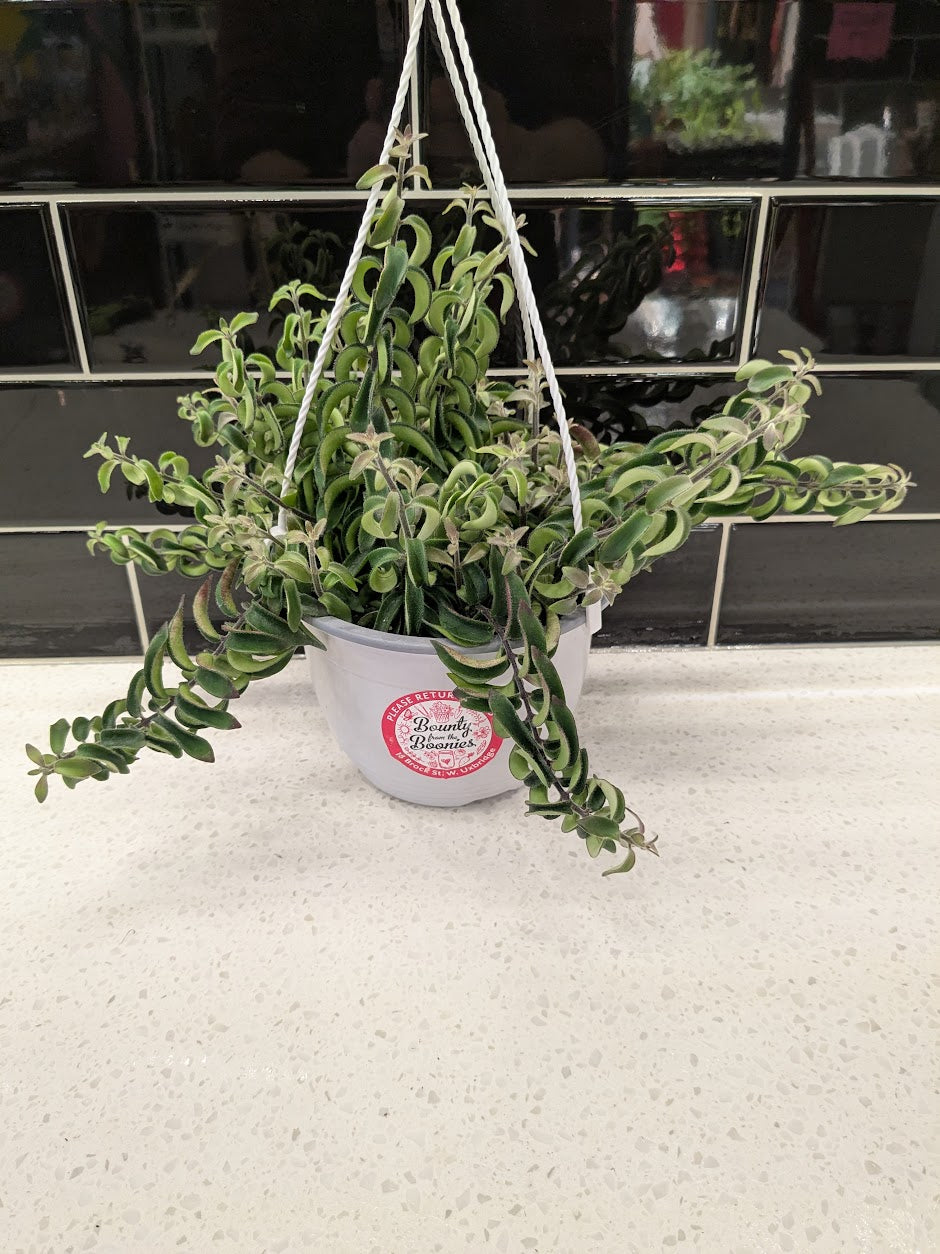
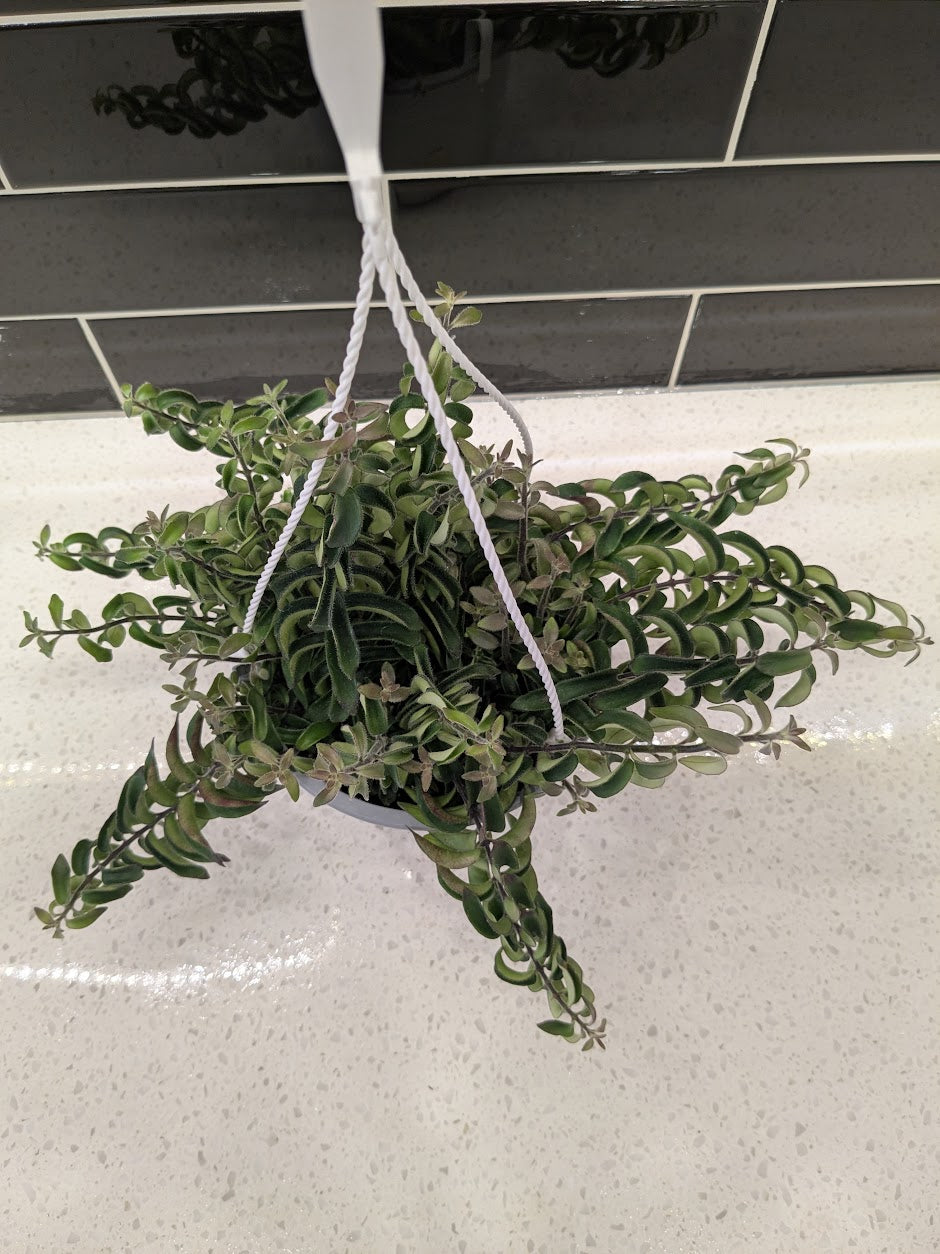
This is a dangling plant that has beautiful bright purple flowers that look like tubes of lipstick! The Curly Q is a variety of the Lipstick Plant. Known for its trailing stems, waxy leaves, and striking red, tubular flowers that resemble lipstick emerging from a tube. This plant is native to Southwest Asia, specifically Indonesia and Malaysia.
Scientific Name: Aeschynanthus Radicans
Common Name: Lipstick Plant/Curly Q
Light: Bright indirect light
Watering: Keep evenly hydrated, likes to be misted
Growth: 2-3 feet long indoors
Pet Safe: Yes
Care: Intermediate

Lipstick Plant
This is a dangling plant that has beautiful bright purple flowers that look like tubes of lipstick! The Krakau is a variety of the Lipstick Plant. Known for its
trailing stems, dark green and purple leaves, and striking red, tubular flowers that resemble lipstick emerging from a tube. This plant is native to Southwest Asia, specifically Indonesia and Malaysia.
Scientific Name: Aeschynanthus Radicans
Common Name: Lipstick Plant
Light: Bright indirect light
Watering: Keep evenly hydrated, likes to be misted
Growth: 2-3 feet long indoors
Pet Safe: Yes
Care: Intermediate


Lipstick Plant "Mona Lisa"
This is a dangling plant that has beautiful bright purple flowers that look like tubes of lipstick! The Mona Lisa is a variety of the Lipstick Plant. Known for its trailing stems, waxy leaves, and striking red, tubular flowers that resemble lipstick emerging from a tube. This plant is native to Southwest Asia, specifically Indonesia and Malaysia.
Scientific Name: Aeschynanthus Radicans
Common Name: Lipstick Plant/Mona Lisa
Light: Bright indirect light
Watering: Keep evenly hydrated, likes to be misted
Growth: 2-3 feet long indoors
Pet Safe: Yes
Care: Intermediate

A bushy vine with pink stems and variegated leaves.
Light: Bright indirect light
Watering: Keep evenly hydrated, likes to be misted
Pet Safe: Yes
Care: Intermediate


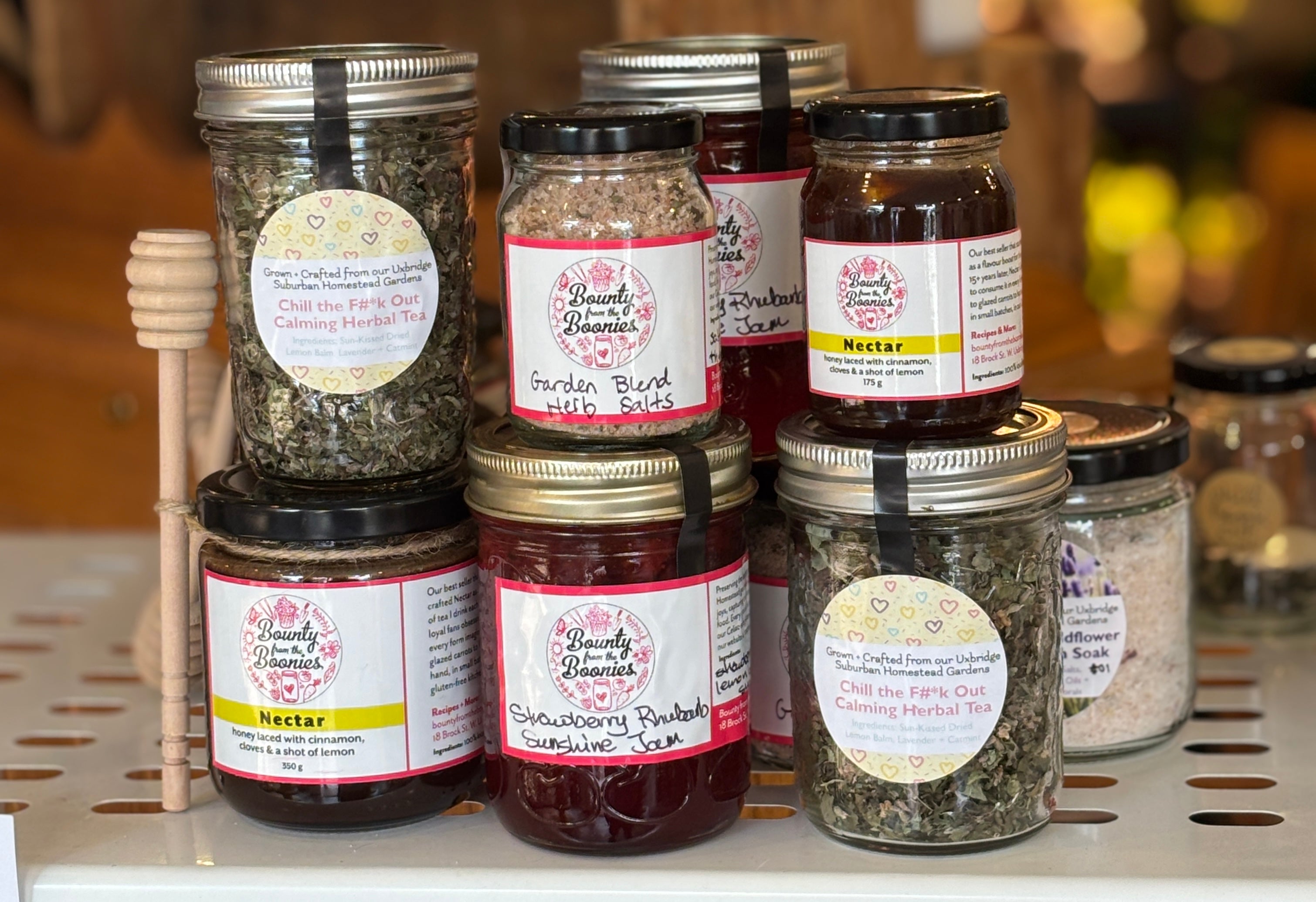
Barfy? Gassy? Farty? Crampy? Soothe grumpy digestive systems and ovaries with our special blend of herbs and flowers that feel good inside while smelling like peace outside.
Preserving the bounty from my Uxbridge suburban Homestead gardens + Ontario growers is among my greatest joys, capturing the incomparable taste of sun-kissed local food. Every product is made by hand, in small batches, in our Celiac-safe gluten-free kitchen.
Ingredients: catmint, lemon balm, white lavender, purple lavender
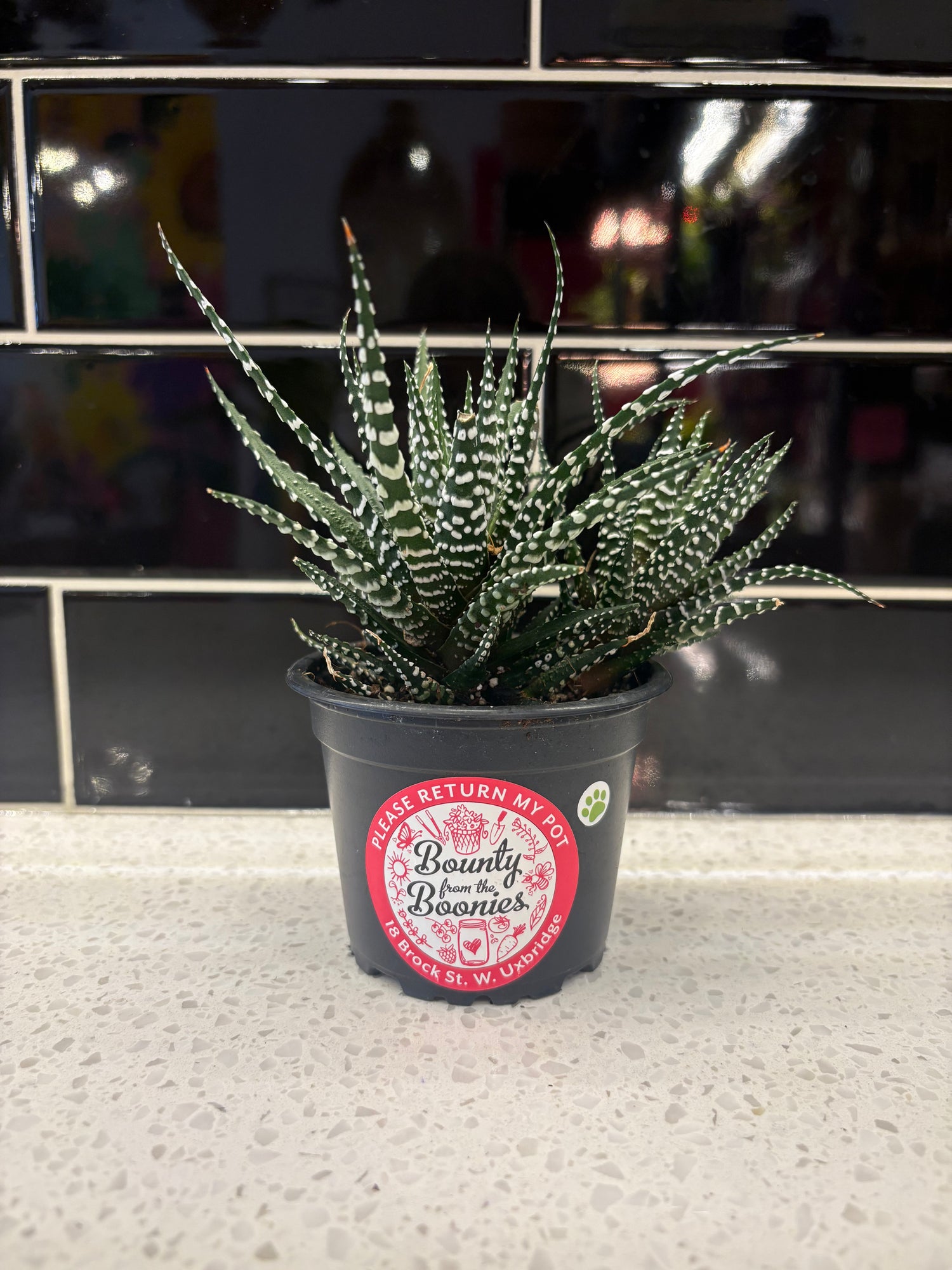
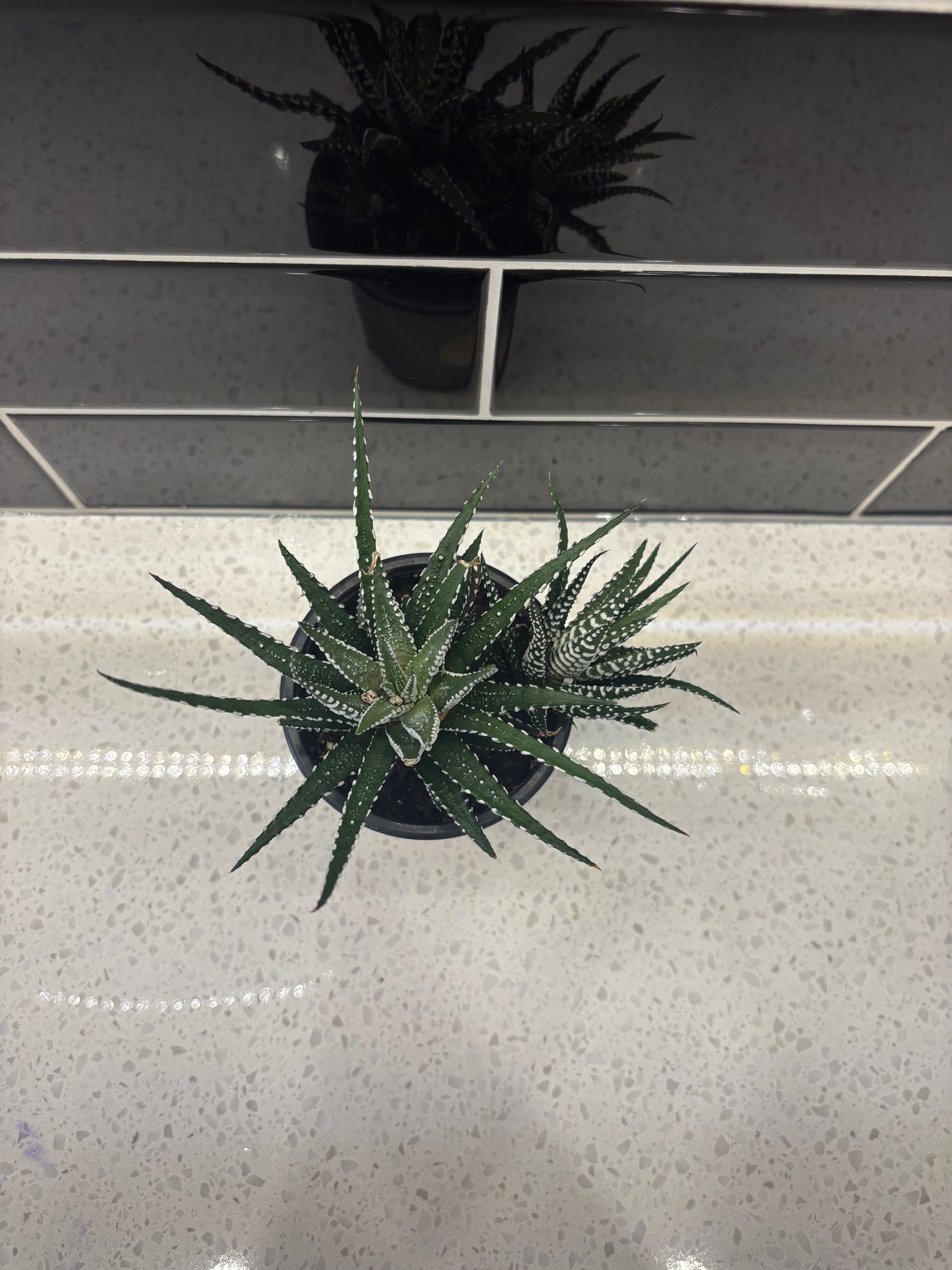
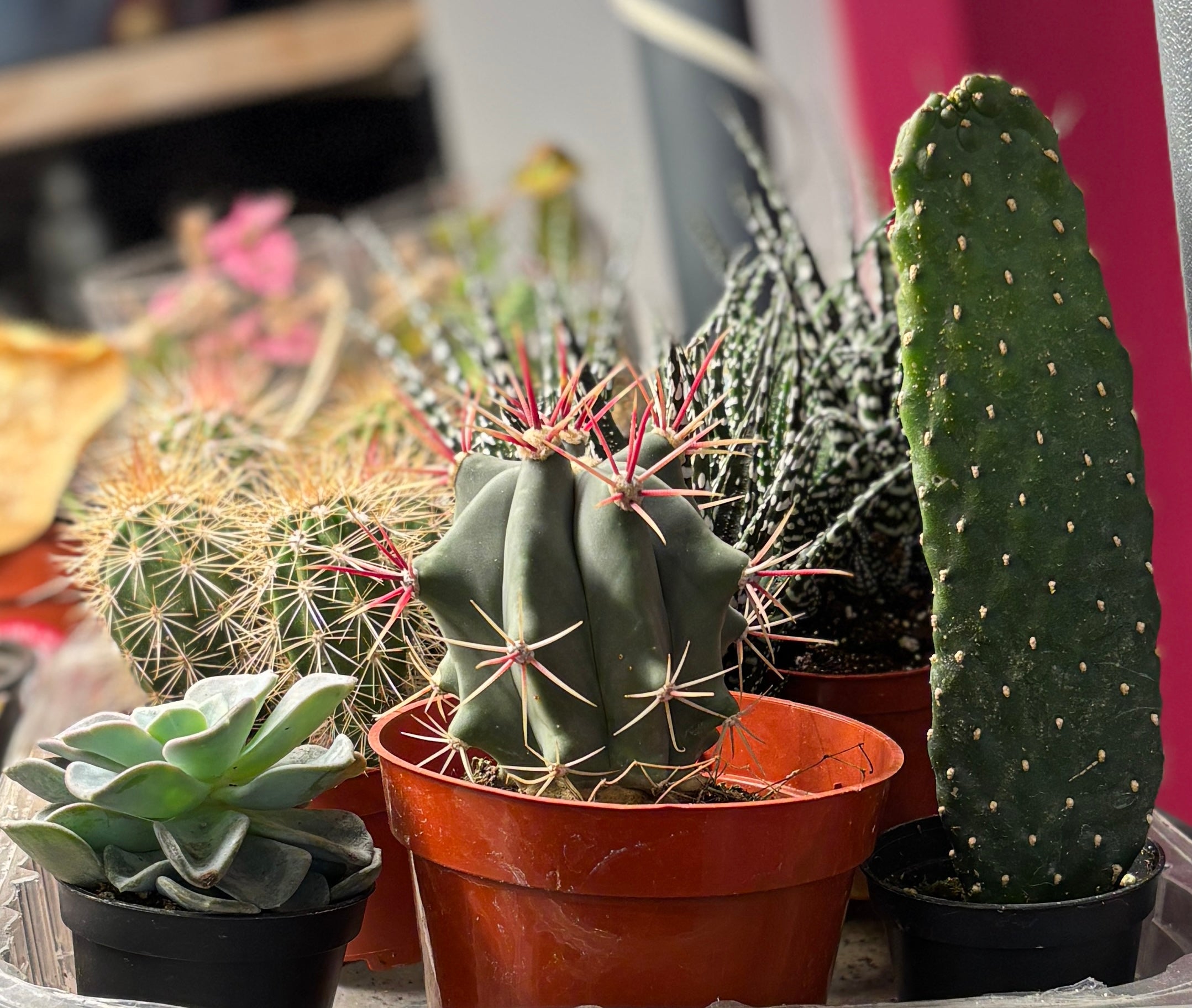
A funky succulent with a spiky look!
Haworthia attenuata, also known as zebra haworthia, is native to Southern Africa. This plant is very slow growing and has a life span of up to 50 years! In the wild, these plants grow in very harsh conditions and can be found buried in sand.
Scientific Name: Haworthia attenuata
Common Name: Zebra Haworthia
Growth: 1-6 inches in height
Light: Bright indirect light
Watering: Let dry out between watering
Pet Safe: Yes
Care: Easy
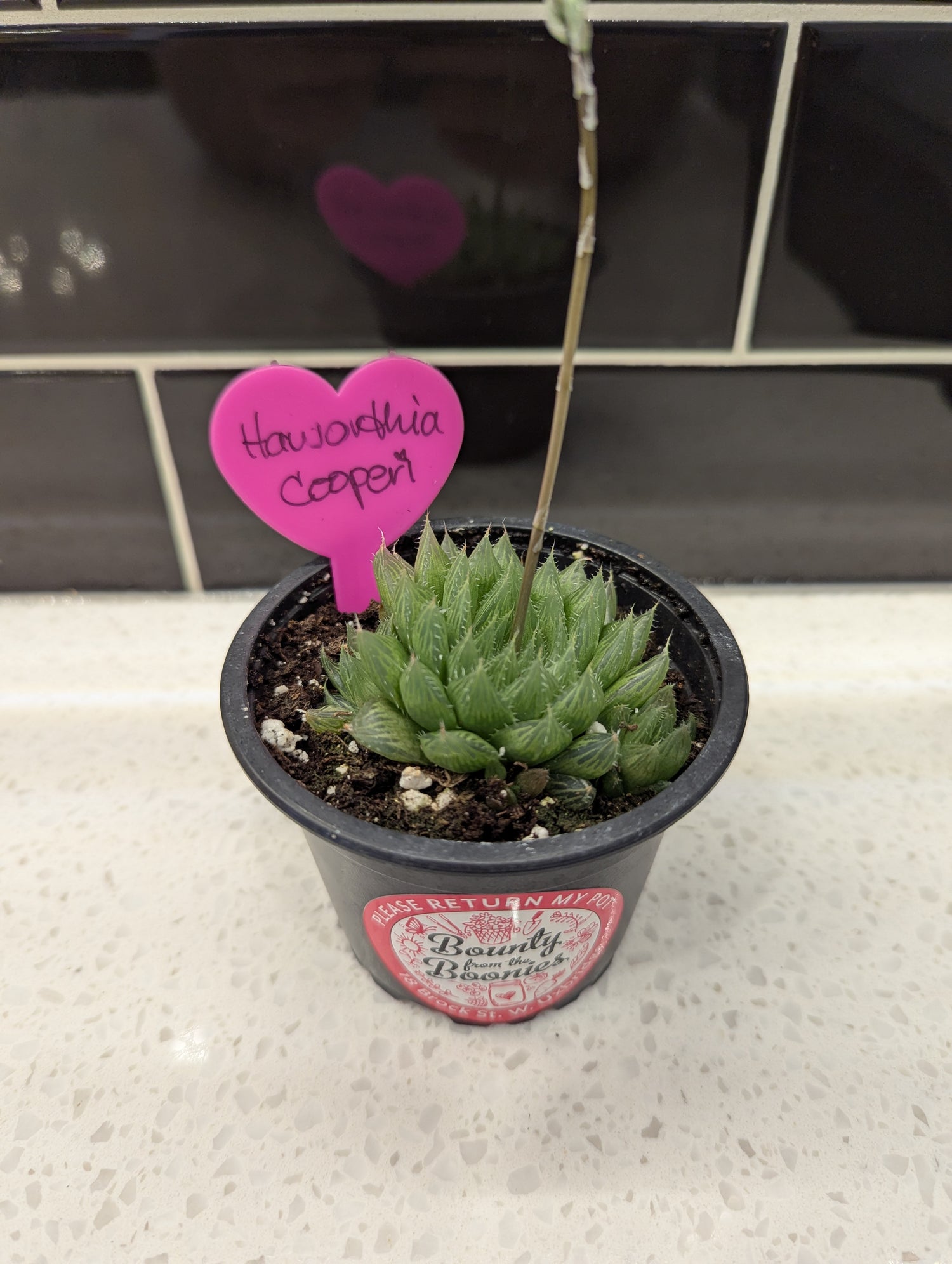
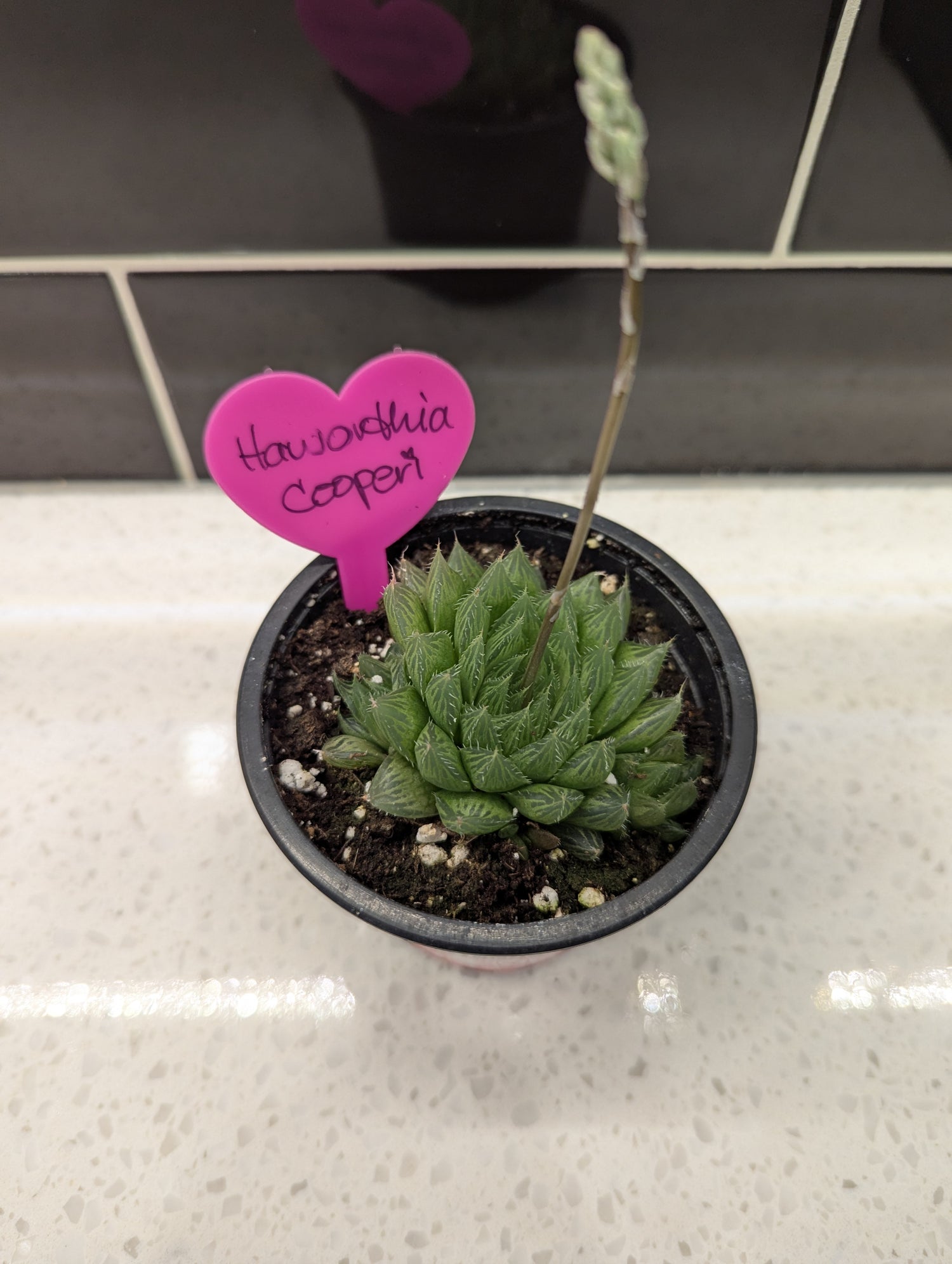
The Haworthia Cooperi grows in clumps of small rosettes of tiny, fleshy, light green leaves. One of the interesting features about this plant is that the leaves have transparent streaks around their tips. Originating from the arid regions of South Africa.
It grows in the wild, often in the shade of rocks and other vegetation to protect its delicate, translucent leaves from the intense sun.
Scientific Name: Haworthia Cooperi
Common Name: Haworthia Cooperi
Lighting: 4-5 hours of bright indirect light in the morning sunlight per day
Watering: When the soil is completely dry, give it a good soak
Growth: 2-4 inches
Pet Safe: Yes
Care: Easy

Haworthia Cooperi grows in clumps of small rosettes of tiny, fleshy, light green leaves. One of the interesting features about this plant is that the leaves have transparent streaks around their tips. Originating from the arid regions of South Africa.
It grows in the wild, often in the shade of rocks and other vegetation to protect its delicate, translucent leaves from the intense sun.
Scientific Name: Haworthia Cooperi
Common Name: Haworthia Cooperi
Lighting: 4-5 hours of bright indirect light in the morning sunlight per day
Watering: When the soil is completely dry, give it a good soak
Growth: 2-4 inches
Pet Safe: Yes
Care: Easy