








All Indoor Plants

Sort by:
268 products
268 products


Pilea Involucrata " Norfolk" is a tropical plant with dark green/brown-purple leaves with silvery-white steaks. It is a relatively low-maintenance plant but does prefer high humidity. This plant is ideal for terrariums and bottle gardens. The Norfolk Pilea is native to Central and South America.
Scientific Name: Pilea Involucrata
Common Name: Friendship plant, Norfolk Pilea
Growth: 6-12 inches
Light: Bright indirect light
Watering: When top soil is dry, ensure good drainage
Pet Safe: Yes
Care: Intermediate


What are Clippings?
Clippings are pieces cut from existing mature plants. They are then placed in water and allowed to build roots. Some grow quickly while others take longer to propagate (grow roots). Once there are several new roots growing and they are at least 1" long it's time to plant. They are great for experimenting, trying new varieties or even adding to aquariums and water features.
Planting
When ready to plant you'll place your clipping in a pot with dirt. You'll want to make sure that the soil stays extra moist for several days to help it acclimatize to its new environment. Congratulations! You have a new plant baby.
Shrimp Plant
It's the Shrimp Plant! This quirky plant has beautifully interesting flowers that resemble shrimps! Native to Mexico, it is a tropical evergreen shrub that has made an interesting house plant. With its constant flowering, you can enjoy the flowers all year round.
Scientific Name: Justicia Brandegeeana
Common Name: Shrimp Plant or False Hop
Light: Part shade or indirect light
Watering: Keep soil consistently wet but not soggy.
Growth: Can grow to 4 feet tall
Pet Safe: Yes, but consuming large amounts can cause your pet to get sick.
Care: Easy


What are Clippings?
Clippings are pieces cut from existing mature plants. They are then placed in water and allowed to build roots. Some grow quickly while others take longer to propagate (grow roots). Once there are several new roots growing and they are at least 1" long it's time to plant. They are great for experimenting, trying new varieties or even adding to aquariums and water features.
Planting
When ready to plant you'll place your clipping in a pot with dirt. You'll want to make sure that the soil stays extra moist for several days to help it acclimatize to its new environment. Congratulations! You have a new plant baby.
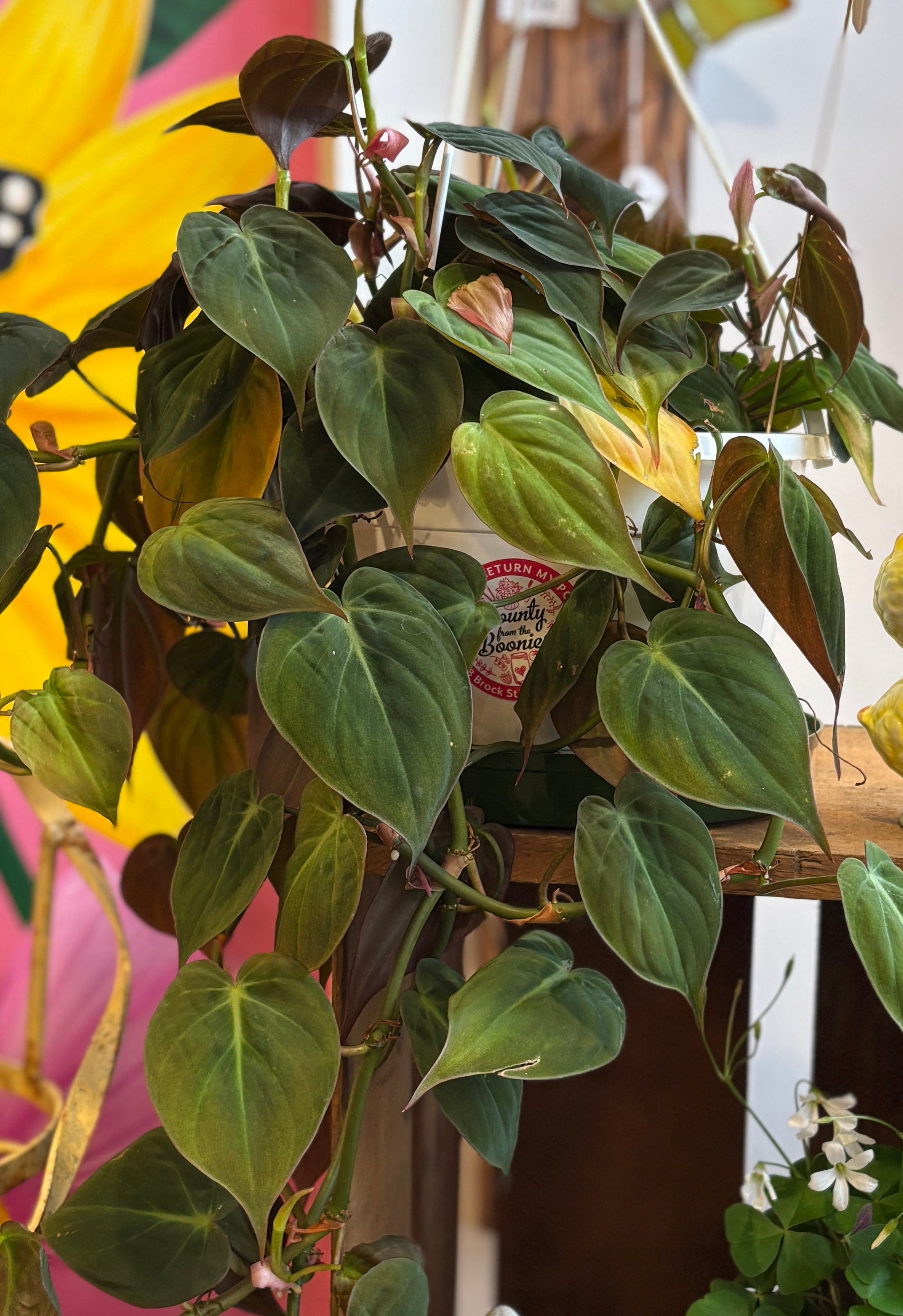
Brazil Philodrendron
Philodendron Brazil originates from the tropical rainforests of Central and South America... specifically Brazil. This houseplant is known for its heart-shaped leaves with vibrant green and yellow variegation. It's wonderful for hanging baskets and it does well climbing a moss poll.
Scientific Name: Philodendron Hederaceum
Common Name: Philodendron Brazil/Heartleaf Philodendron/Sweetheart Plant
Light: Bright indirect light to medium light
Growth: Can grow several feet in a year
Watering: Keep evenly hydrated, ensure good drainage
Pet Safe: No
Care: Intermediate


What are Clippings?
Clippings are pieces cut from existing mature plants. They are then placed in water and allowed to build roots. Some grow quickly while others take longer to propagate (grow roots). Once there are several new roots growing and they are at least 1" long it's time to plant. They are great for experimenting, trying new varieties or even adding to aquariums and water features.
Planting
When ready to plant you'll place your clipping in a pot with dirt. You'll want to make sure that the soil stays extra moist for several days to help it acclimatize to its new environment. Congratulations! You have a new plant baby.
Golden Pothos
An easy indoor plant that is perfect for a hanging pot.
Light: Bright indirect light to medium light
Watering: Keep evenly hydrated, ensure good drainage
Pet Safe: No
Care: Easy


The Philodendron 'White Knight' is a rare climbing houseplant. It has unique green leaves with a white variegation and striking burgundy stems, this plant is stunning. If using a moss pole, this plant can climb and trail beautifully in a well lit space. The White Knight origins are from the Tropical rainforests of South America.
Scientific Name: Philodendron erubescen
Common Name: Philodendron White Knight
Light: Bright, indirect light
Growth: 12-24 inches yearly
Watering: Let soil dry slightly between waterings
Pet Safe: No
Care: Intermediate


The Rabbit's Foot Fern originates from the tropical and subtropical regions of the Fiji Islands. There it grows as an epiphyte (on trees) or lithophyte (on rocks). The way it creeps over surfaces with its furry looking rhizomes, it resembles a rabbit's foot!
Scientific Name: Davallia fejeensis
Common Name: Rabbit's Foot Fern
Light: Bright, indirect light
Watering: Keep consistently hydrated but not soggy. Let the top two inches dry out before watering again.
Growth: Slow growing
Pet Safe: Yes
Care: Intermediate


The Peace Lily 'sensation variegated' is a large-leafed variety of peace lily. It features deep green foliage with creamy white streaks. It offers air-purifying benefits and if you'd like to keep that beautiful variegation, it's important to make sure they get lots of light. It originates from the Southeast Asian rainforests which is why this plant prefers humidity and kept in consistently hydrated but well draining soil.
Scientific Name: Spathiphyllum 'Sensation Variegata'
Common Name: Peace Lily 'Sensation Variegated'
Light: Bright, indirect light - more light, more variegation
Growth: 3-4 feet tall
Watering: Keep consistently hydrated
Pet Safe: No
Care: Intermediate to difficult


The Pothos Glacier is a more rare type of Pothos. It is excellent for beginners! It's an easy to care for houseplant that is known for its heart-shaped leaves with green, white and silvery streaks which makes it distinct from its similar types such as N Joy.
Scientific Name: Epipremnum Aureum
Common Name: Pothos Glacier
Light: Bright, indirect light
Watering: Allow soil to dry between waterings. Ensure good drainage
Growth: Can grow 3-6 feet long. If it gets leggy, cut the vine to push more leaf growth. If leggy, this means it needs more light.
Pet Safe: No
Care: Easy


This cactus is a beautifully small cactus that grows with clustered cylindrical stems. They are covered in dense white hairs and can grow deep rose-pink funnel shaped flowers. This cactus originates from the dry shrub land of regions of Wester Central Mexico.
Scientific Name: Mammillaria Bombycina
Common Name: Silken Pincushion
Growth: Can grow up to 12 inches tall indoors
Light: Full sun
Watering: Let fully dry out between waterings. make sure soil drains well.
Pet Safe: Not toxic but watch out for spikes
Care: Easy


This is a popular, low maintenance houseplant that has funnel shaped leaves. The plant is an air purifying plant which makes it an excellent choice for small spaces, including your bedroom. It originates from tropical West Africa.
Scientific Name: Sansevieria Hahnii
Common Name: Birds Nest Snake Plant
Growth: Slow growing - only 6-12 inches tall
Light: Low-bright indirect light
Watering: Once soil is completely dry. Typically every 2-6 weeks
Pet Safe: No
Care: Easy


This cactus would be described as short, columnar stems (up to 2 ft) covered in long, white, hairy spines with reddish, yellow or brown central spines. Resembling an old man’s beard. This is a slow growing plant originating from Argentina and Bolivia. If you’re lucky, sometimes this plant can produce vibrant pink to crimson flowers if in ideal conditions!
Scientific Name: Oreocereus Trollii
Common Name: Old Man of The Andes Cactus
Growth: 10+ feet tall in ideal conditions
Light: Direct sun
Watering: Soak and then let fully dry out before watering again
Pet Safe: Non-toxic, but spikes can hurt
Care: Easy


The White Striped Dracaena is a popular easy-care houseplant. It has beautiful deep green leaves with contrasting white stripes. If you prune this plant it helps to create a bushier growth. The White Jewel originates from the tropical regions of Africa.
Scientific Name: Dracaena fragrans
Common Name: White Striped
Growth: 3-6 feet over several years
Light: Bright, indirect light, but can tolerate low light
Watering: Water when top two inches are dry. Make sure soil drains well.
Pet Safe: No
Care: Easy


This show-stopping plant has giant, velvet leaves reminiscent of sea turtle shells - the silver veining streaks across the top + sparkles in the sunlight. The heart-shaped foliage is lush + eye-catching, making it a sought-after collector's plant. Would thrive in a bright bathroom!
Scientific Name: Anthurium crystallinum 'Turtle'
Common Name: Turtle Leaf Anthurium
Light: Medium-bright indirect
Growth: 1-1.5 ft tall - the leaves can grow 6-10" long
Watering: Likes a humid environment - keep evenly hydrated + mist regularly
Pet Safe: No
Care: Intermediate


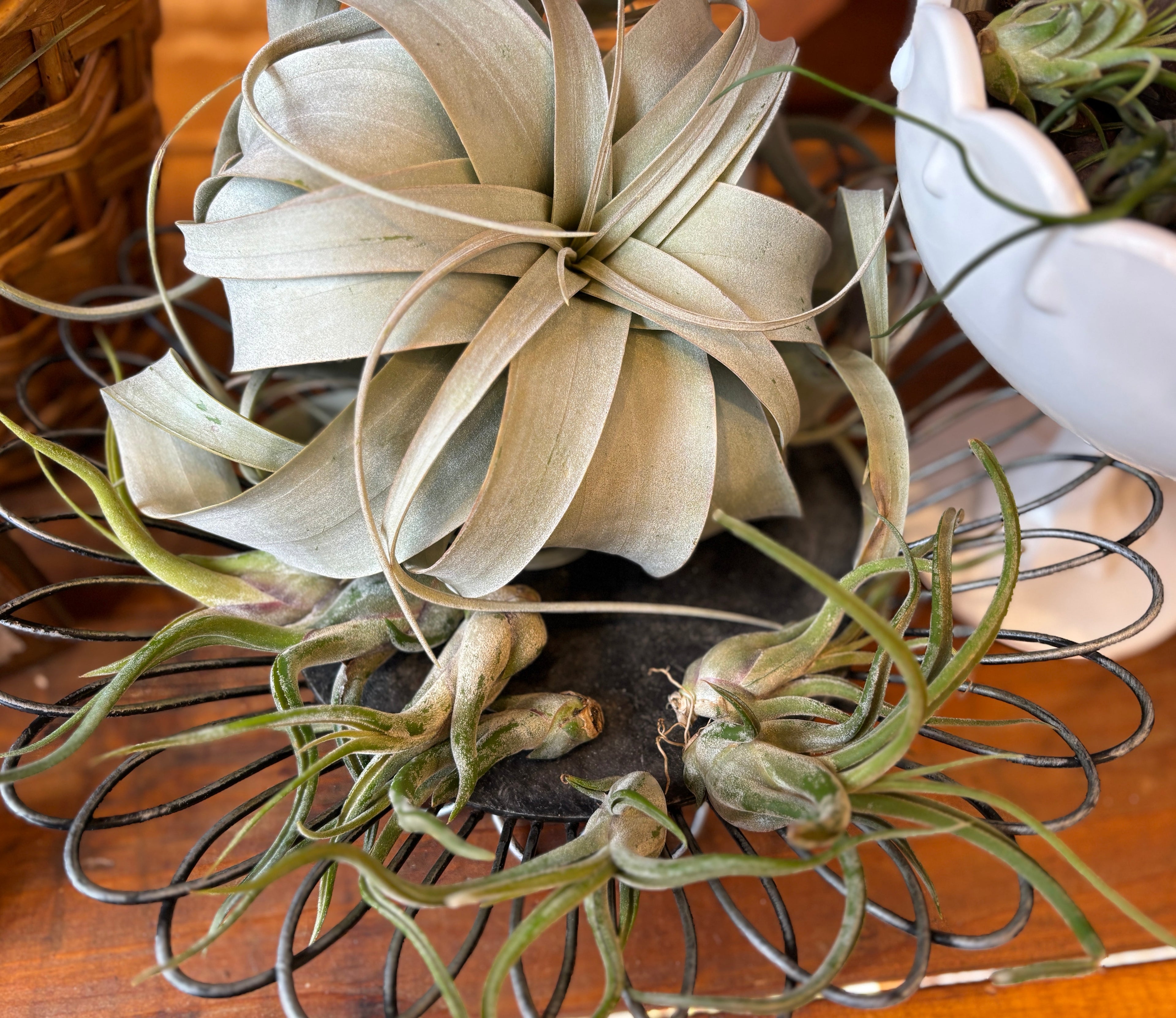
The lowest of care plants!
A variety of shapes and sizes add dramatic flair to any living space.
Light: Bright, indirect light.
Watering: Soak in water once a week and let completely dry.
Care: Easy
Pet Safe: Yes
If purchasing online, the air plant may vary. You will receive the size purchased but exact look can vary.


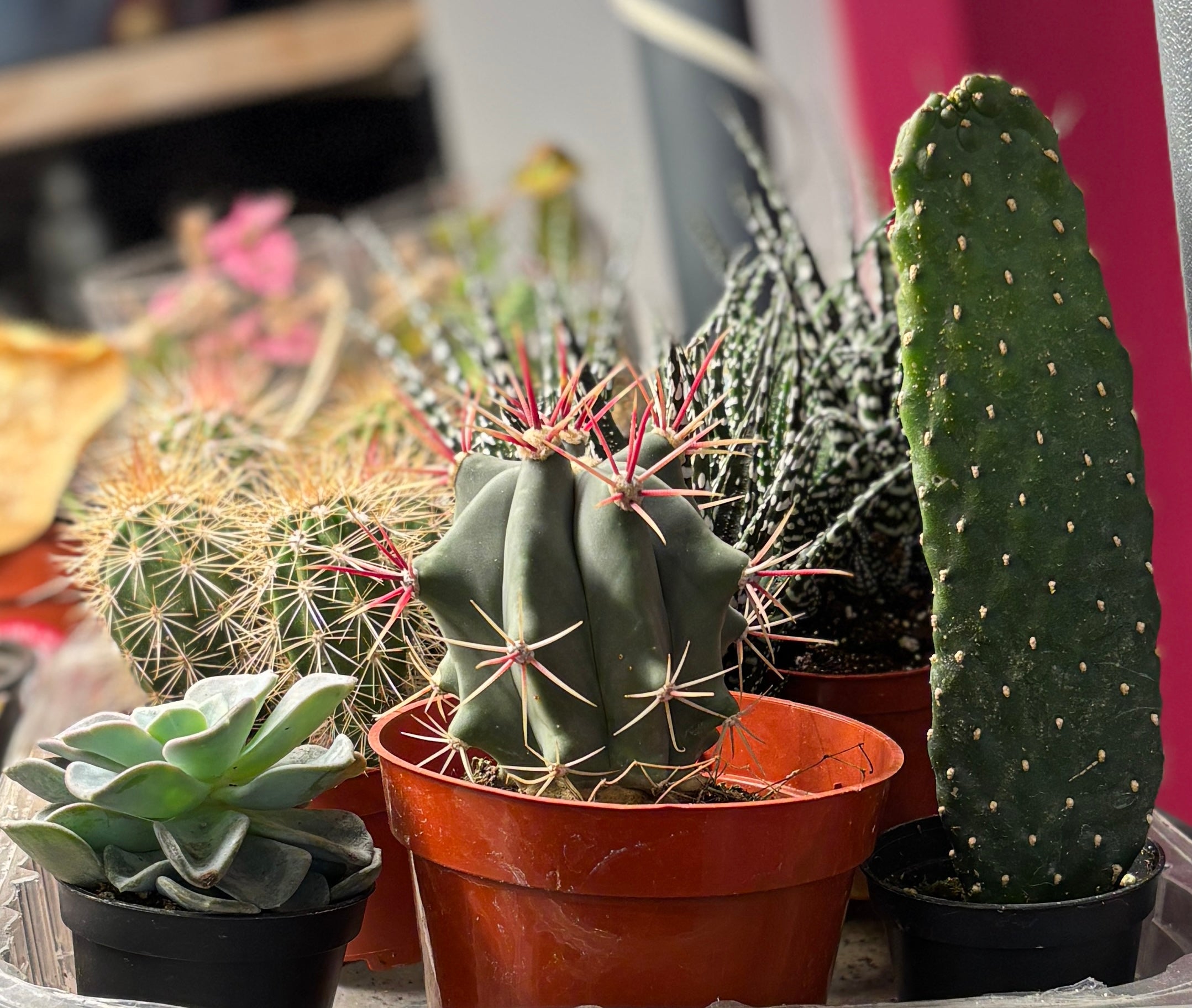
Enjoy a prickly friend to add interest to your space!
This Cactus is native to South Western United States and Mexico. They love their hillsides and deserts. Needless to say, this plant loves sunlight and dry conditions. If in the right conditions, this prickly plant can produce beautiful flowers!
The name comes from the Ancient Greek (echinos), meaning "sea urchin", and the Latin meaning "candle".
Scientific Name: Echinopsis terscheckii
Common Name: Pachycereus Pringlei / Hedgehog Cacti
Growth: They Can grow up to 23 inches
Light: Bright indirect light to full sun
Watering: Let dry out between watering, water sparingly
Pet Safe: Yes (be careful of the spines!)
Care: Easy


Cacti store water in their stems, which is why they are thrive in the desert. The spines on cacti are actually modified leaves. They help to protect the plant from animals and reduce water loss by shading the stem.
Scientific Name: Mammillaria Hahniana
Common Name: Old Lady Pincushion Cactus
Growth: 6-8 inches
Light: Bright, Indirect sun
Watering: Let the soil dry out completely before watering
Pet Safe: Yes
Care: Easy


This is a star-shaped rosette with wavy leaves that are typically pink, red, and green. This plant is actually in the pineapple family! Originating from the rainforests of Brazil, they will not like to be in complete sun, their leaves will burn.
Name: Cryptanthus Bivittatus
Common Name: Earth Star
Growth: 4-5 inches in height
Light: Bright indirect light
Watering: When top soil is dry, be sure not to over water
Pet safe: Yes
Care: Intermediate
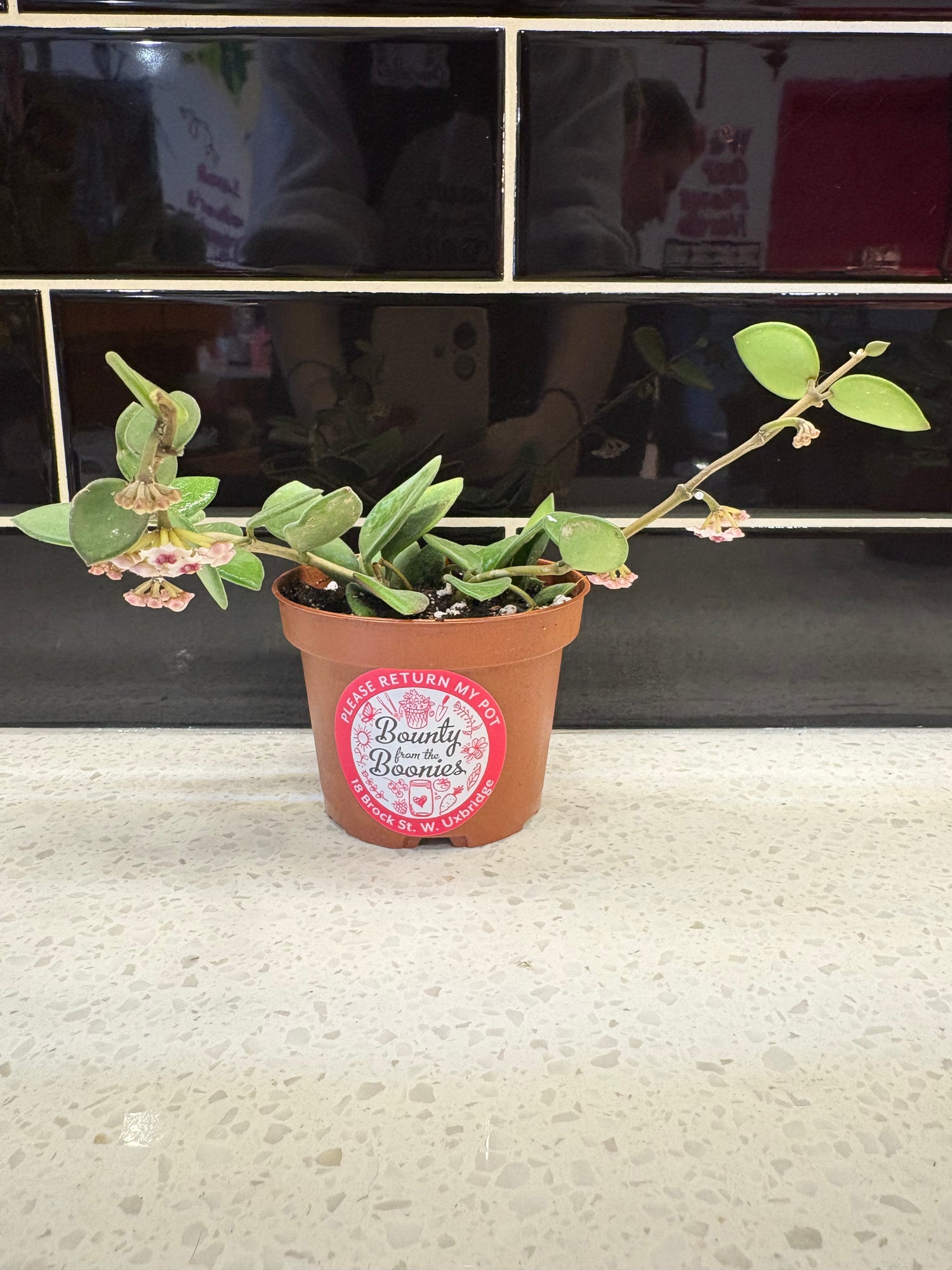
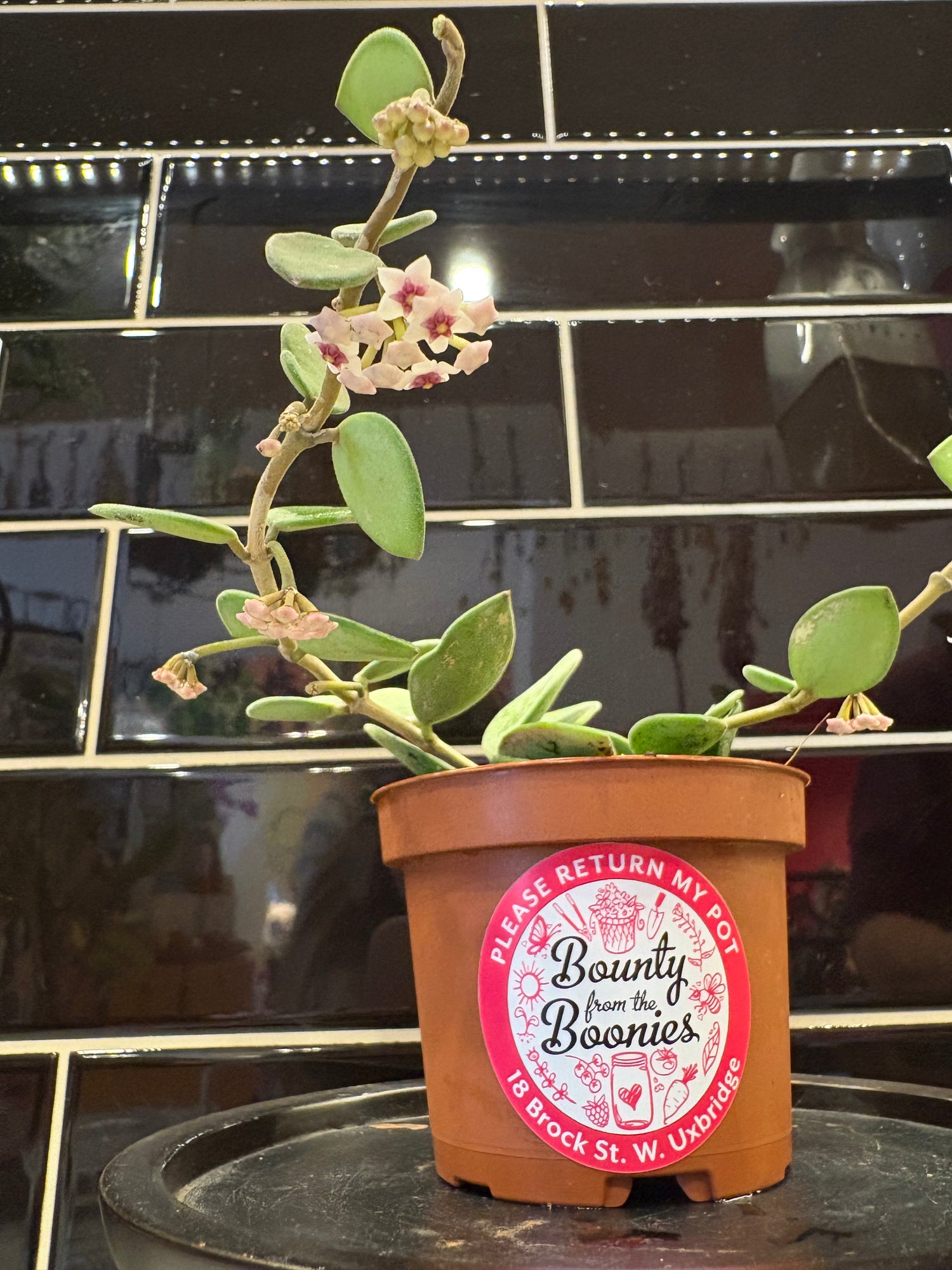
Also known as Wax Plants, hoyas are collectible tropical succulents native to Asia + Australia, and have a cult following! Their compact little flowers are highly fragrant!
Scientific Name: Hoya australis ssp. tenuipes 'Lisa'
Common Name: Hoya Lisa, Wax Plant Lisa, Porcelain Flower
Light: Low-medium light
Growth: Vining up to 3 ft long; requires a trellis or hanging planter
Watering: Let soil almost completely dry out between watering
Pet Safe: No
Care: Easy
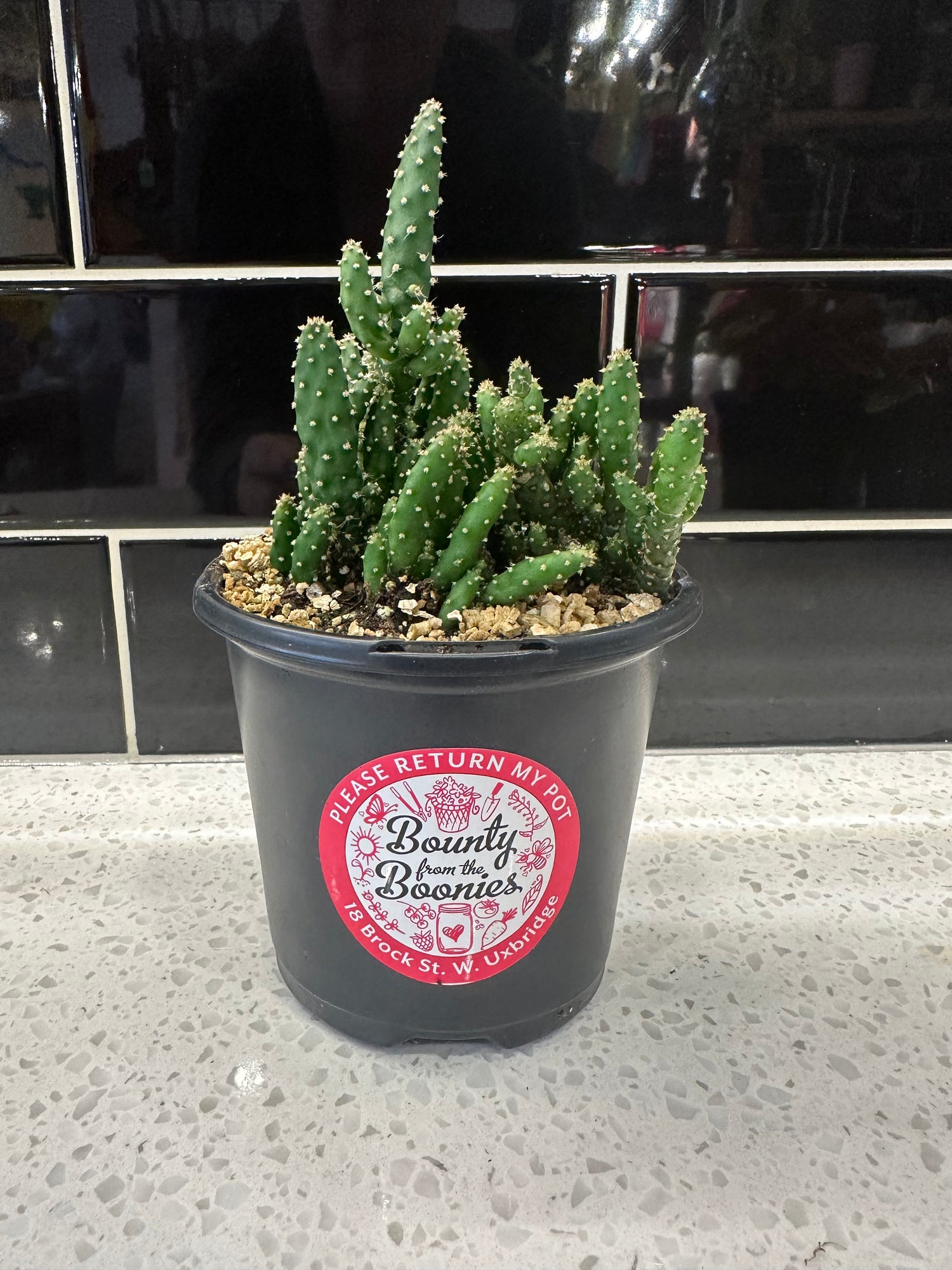
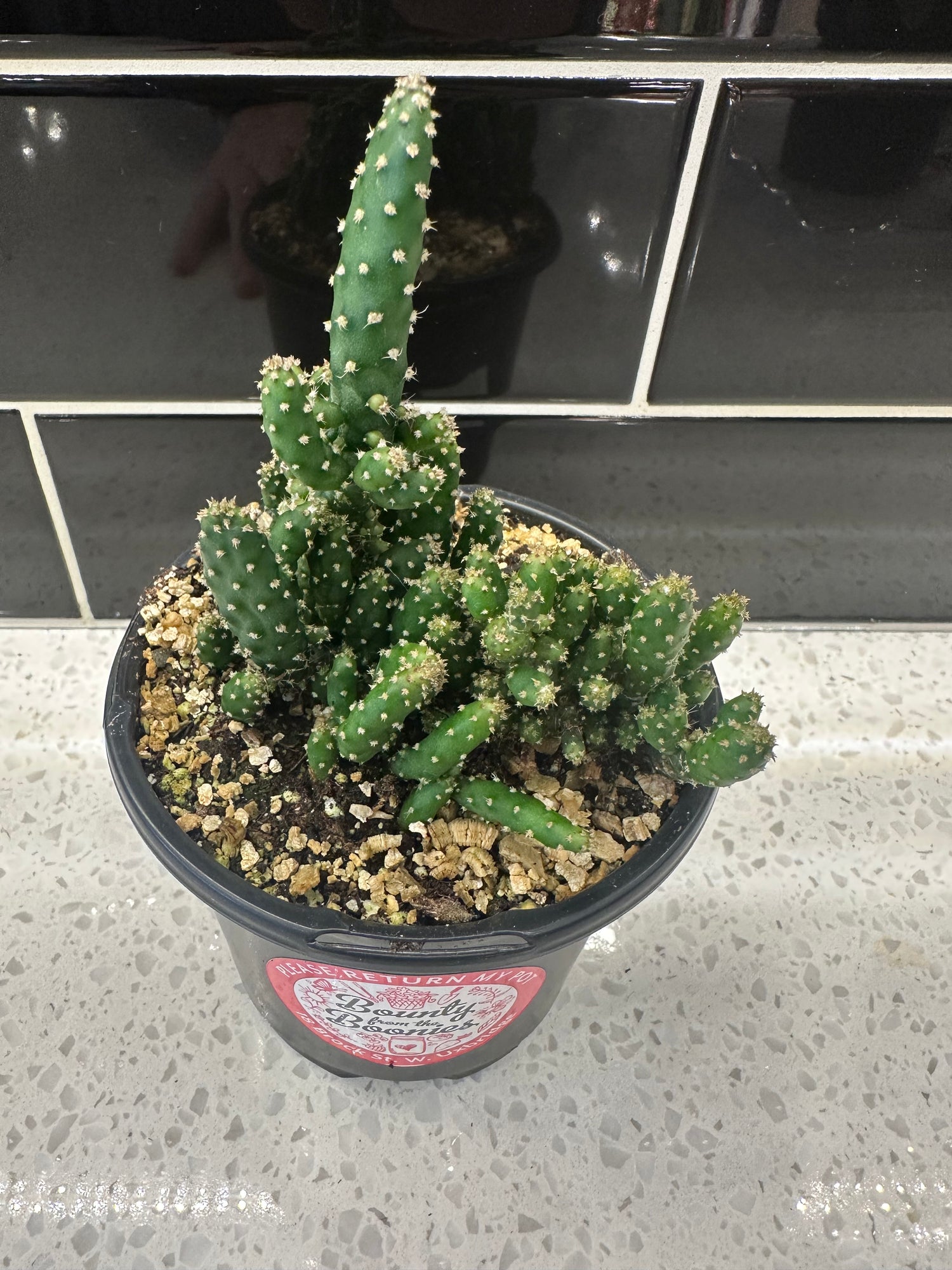
Native to South America, this cactus is a slow-growing, dwarf prickly pear cactus that forms unusual, shrub-like, or tree-like shapes and requires bright light, good drainage, and frost protection, but can tolerate slightly more frequent watering than some other cacti.
Scientific Name: Opuntia monacantha
Common Name: Maverick Cactus
Growth: very slow
Light: Bright light
Watering: Once soil has completely dried out, then soak
Pet Safe: Yes
Care: Easy
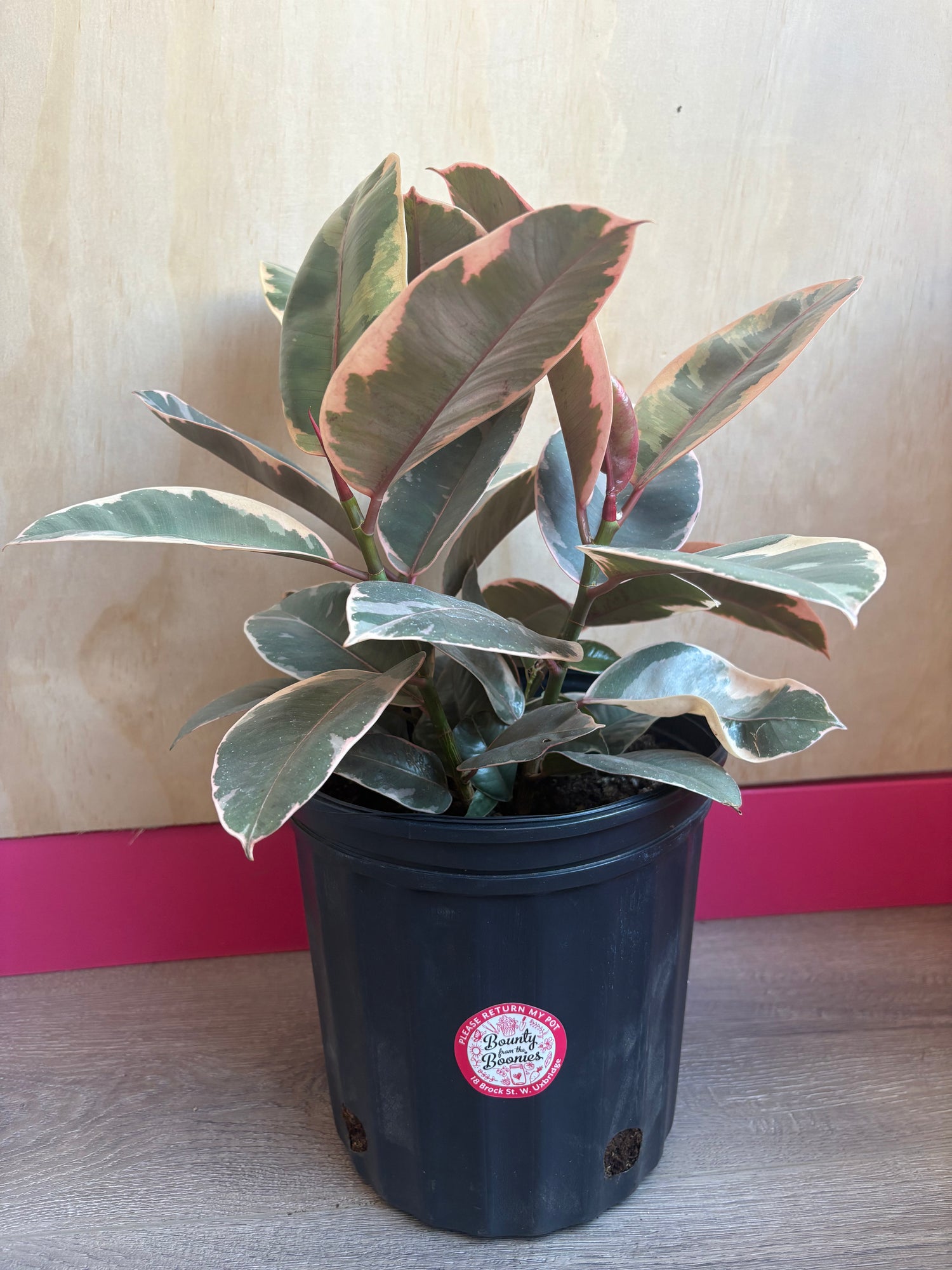
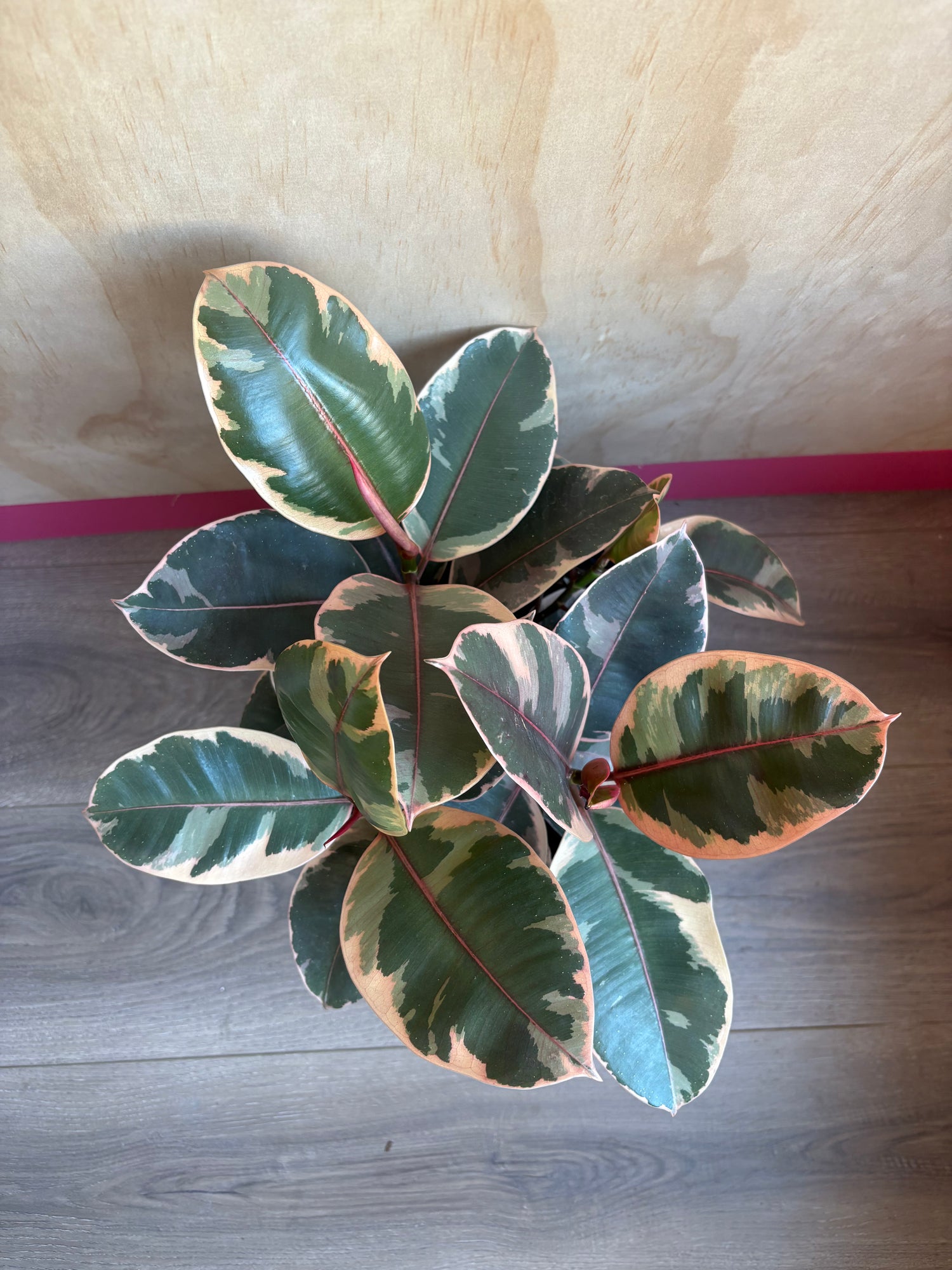
Native to parts in Southeast Asia, known for symbolizing abundance, happiness and wealth. This plant is a great addition to your plant collection with its beautifully pink tinted leaves.
Scientific Name: Ficus Ruby
Common Name: Rubber Fig, Rubber Tree, Rubber Plant
Light: Bright, Indirect light
Growth: Can grow 2-5 Feet
Watering: When the top two inches are dry
Pet Safe: No
Care: Easy