









Cacti + Succulents
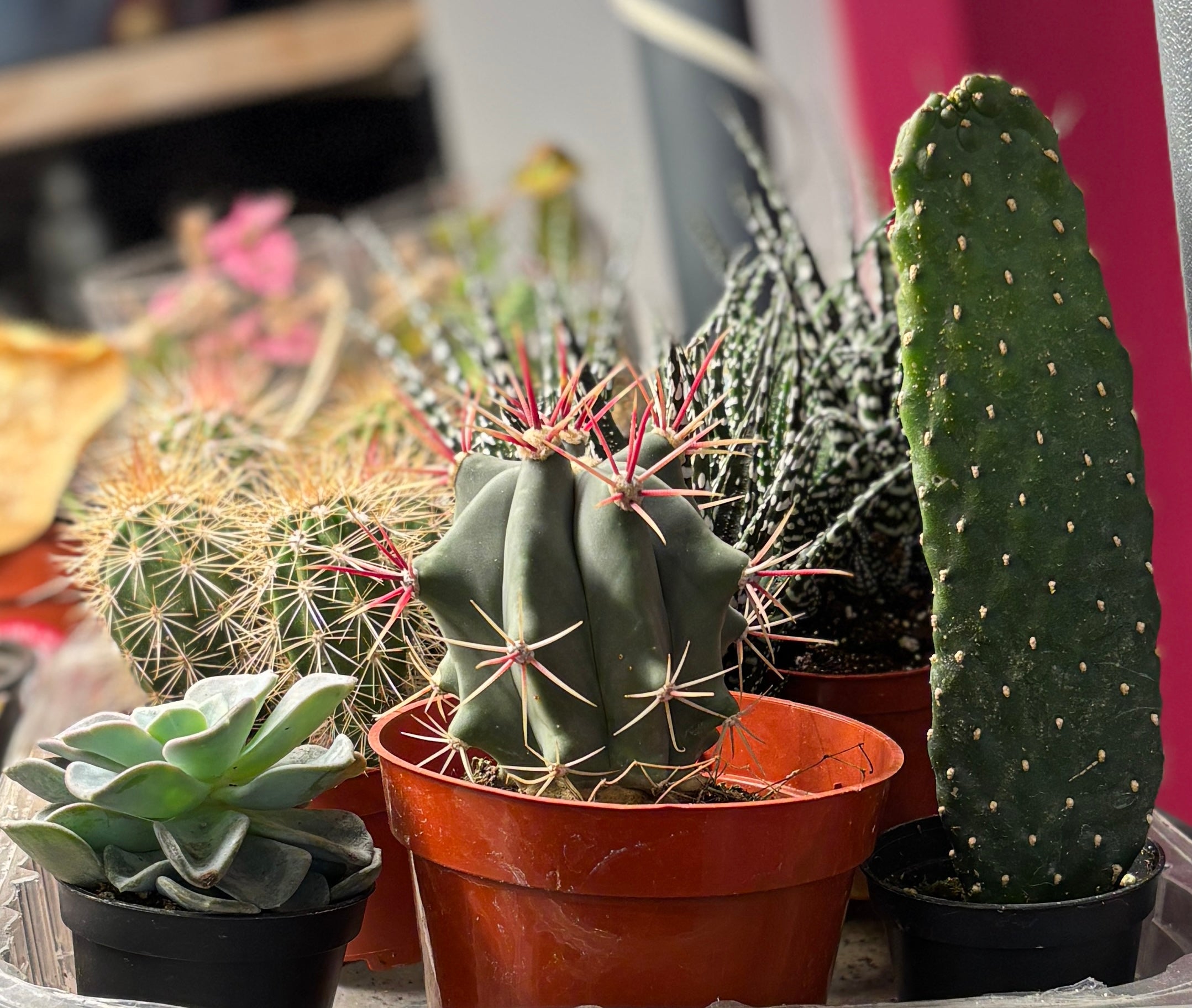
Easy to care for plants in all shape and sizes
Sort by:
74 products
74 products


This is a very pretty Aloe with edges lined with little spines which are not sharp. Leaves are speckled with white. It is native to Kenya.
Scientific Name: Aloe juvenna
Common Name: Tiger Tooth Aloe
Growth: 12 inches tall and wide, grows slowly
Light: Bright light. If they are not receiving enough light they will get taller and reach for the sun. The brighter the light, the more compact they will remain. However, the leaves can burn if in too much hot sun, especially in the summer.
Watering: Let it dry out between watering
Pet safe: Yes
Care: Easy


A fun Cactus with an interesting growth habit, producing multiple curved stems which resemble turrets of a castle, hence its common name. It is native to southern Florida and the Lower Rio Grande Valley of Texas, the Caribbean and South America.
Scientific Name: Acanthocereus Tetragonus
Common Name: Fairy Castle Cactus
Growth: Slow growing. While it can reach great heights in the wild, 6 feet or more, it will remain much smaller when grown indoors.
Light: Very bright indirect light. Too much sun can cause scorching.
Flowering: Lovely white flowers only open for one night. In the wild these flowers attack moths.
Watering: Let it dry out completely before watering and limit watering in the winter and increase during the summer.
Pet Safe: Non toxic however because of its sharp spines, it should be kept where pets can not be poked accidentally.
Care: Easy. Repotting every 2-3 years is recommended because its root system is large and tends to extend outwards.


Monanthes polyphylla is a small, low growing succulent native to the Canary Islands. It's known for forming dense clumps of tiny rosettes. They have small green, cylindrical leaves that often develop reddish hues in good light. They can also bloom star-shaped flowers in yellow, orange, or purple.
Scientific Name: Monanthes Polyphylla
Common Name: Monanthes Polyphlla
Light: Bright, indirect light
Growth: 12 cm tall
Watering: Let dry between watering
Pet Safe: Yes
Care: Easy


This beautiful cactus grows incredible bright flowers!
Light: Bright indirect light. Avoid full sun because they will get scorched
Watering: Ideally, you want the top 1/3 of the potting mix to dry out before watering. In winter, reduce watering and move the plant to a cooler location. This will help produce healthy, large flowers the next season.
Pet Safe: Yes, but still recommended to keep out of reach. Ingesting too much can get your pet sick.
Care: Easy


Starfish Cactus or Carrion flower cactus, produces amazing star shaped, reddish flowers six inches in diameter. While spectacular visually, they do produce a 'rotting meat' scent to attract flies for pollination. The flowers are short lived so you can enjoy the beauty and hold your nose.
Scientific Name: Stapelia grandiflora
Growth: Stems can reach 12 inches tall
Light: Place near a sunny window for lots of light
Watering: Let the soil dry out completely before watering
Pet Safe: Yes
Care: Easy


Dancing Bones Cactus is an interesting looking tropical epiphytic- meaning it grows on other plants. In the wild it grows on trees in high elevation forests of Brazil. In the spring it has yellow flowers.
Scientific Name: Hatiora Salicornioides
Common Name: Dancing Bones Cactus, Bottle Cactus
Growth: 6-12 " Slow growing
Light: Low to medium bright light. Try to mimic the understory of trees.
Watering: requires higher humidity and moisture than most cacti since it grows naturally in the jungle. However it is still a succulent so do not leave it sitting in water. Water when the top inch or so feels dry. Water more in the summer than during the winter
Pet Safe: No
Care: Easy to Moderate


A very cool looking plant! Hanging branches are thornless, making this a pleasant cacti to have in the house!
Scientific Name: Rhipsalis spp.
Common Name: Mistletoe Cactus
Growth: Hanging branches can range from 3 to 10 feet
Light: These cacti grow in the jungle, so providing them with morning sunlight and a dappled light scenario, will be best.
Watering: this cactus actually likes to be on the wet side. Water when top is dry- do not allow it to dry out completely, but do not stand in water.
Pet Safe: yes
Care: Easy


Let soil dry out before watering again. This plants likes more water in the summer and very little in the winter months.
Scientific Name: Aloe Descoingsii x Haworthioides
Common Name: Aloe Pepe
Growth: Slow growing. Forms rosettes. 3-5 inches tall, 6 inches width. Rarely needs repotting.
Light: Bright, Indirect light
Watering: Let soil dry out before watering again. This plant likes more water in the summer and very little in the winter months.
Pet safe: No
Care: Easy

Cacti store water in their stems, which is why they are thrive in the desert. The spines on cacti are actually modified leaves. They help to protect the plant from animals and reduce water loss by shading the stem. The Rattail Cactus originates from South Western Mexico.
Scientific Name: Disocactus flagelliformis
Common Name: Rattail Cactus
Growth: Can grow 3-6 feet long
Light: Bright, Indirect sun
Watering: Let the soil dry out completely before watering
Pet Safe: Yes
Care: Easy


Medusa Head Cactus has thick stems that resemble snakes on Medusa's head. This plant needs well draining soil to prevent root rot.
Once it reaches a certain size, this can produce pups on the ends of older arms. After a time, these pups can root on their own. The arm it grows off of rots and the pups roll away to root on their own. If they are cared for, you can end up with a greenhouse full of them!
Scientific Name: Euphorbia flanaganii and Euphorbia caput-medusae
Common Name: Medusa Head Cactus
Growth: It can grow as tall as 8 inches and can spread over several feet in diameter!
Light: Bright, Indirect light
Watering: Allow soil to completely dry out
Pet safe: No
Care: Easy

Assorted succulents planted in terra cotta pots- ready for their new homes in fresh soil with an upgraded size!
height: 2”
width: 2.5”
Light: Bright, Indirect
Watering: Water only when soil is completely dry. Then soak the soil right through. Always in a good draining pot.
Growth: 1-2 inches a year depending on the variety
Pet Safe: No
Care: Easy


A very cool looking plant!
Scientific Name: Euphorbia tirucalli
Growth: While it can grow quite large in the wild, it will typically grow to 3', up to 6' indoors when very happy
Light: Full sun. Keep warm.
Soil: Dry, well drained, nutrient deficient soil
Watering: Very little. 1-2 times per month in summer and less in the winter. Let soil dry out completely between watering.
Pet Safe: No
Care: Easy

Covered in white spines that are as soft as a feather!
Scientific Name: Mammillaria plumosa
Common Name: Feather Cactus
Growth: Approximately 5 inches tall. Grows as a cluster up to 10 inches indoors.
Light: Bright, indirect light. It will be happy to receive morning sun, or some afternoon sun, and then indirect light the rest of the day.
Watering: Water more during the spring and summer, reducing the amount in the fall and giving very little during the winter. ALWAYS allow your cactus to dry out completely between waterings.
Pet Safe: No, moderately toxic if ingested
Care: Easy
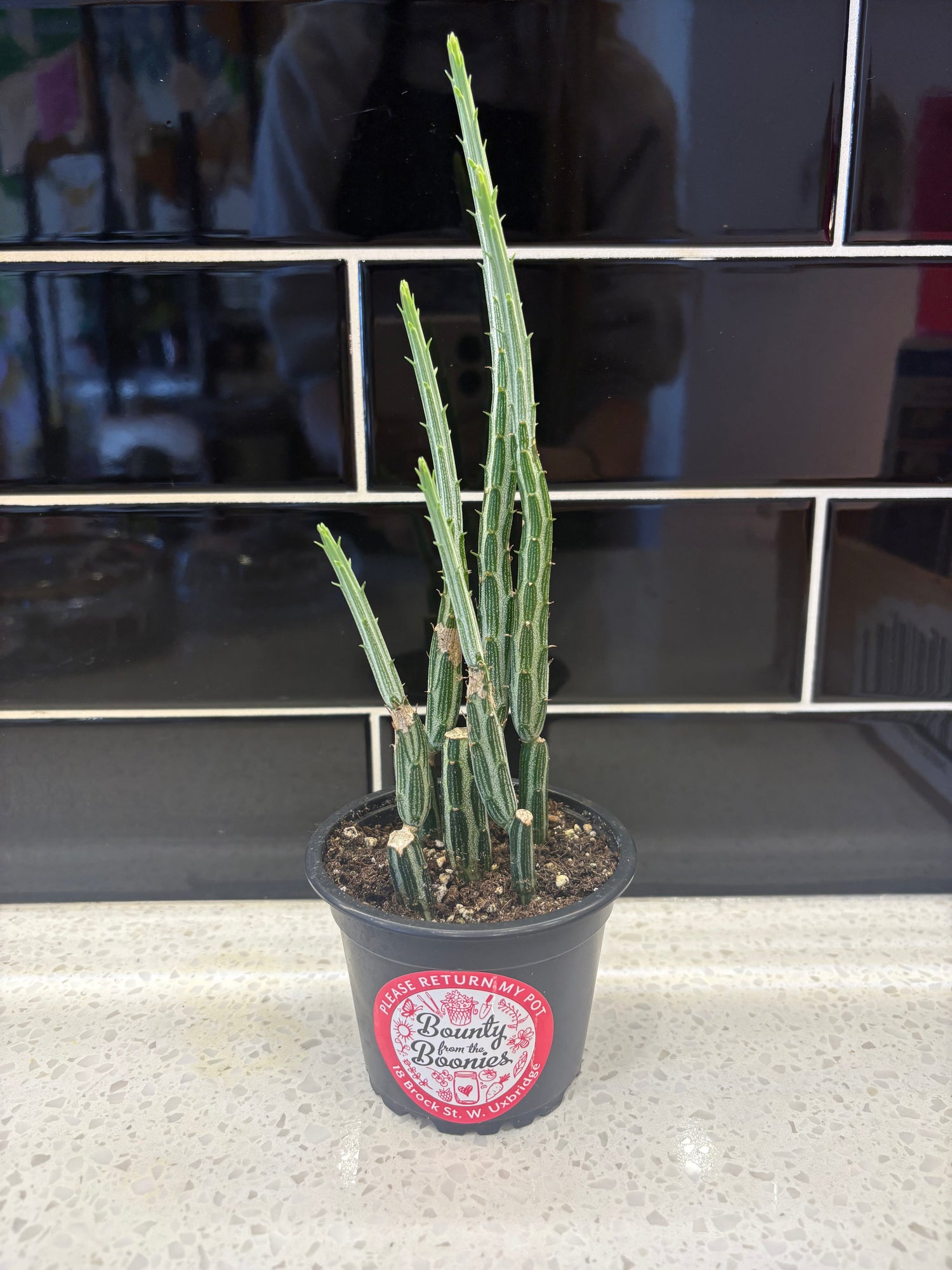
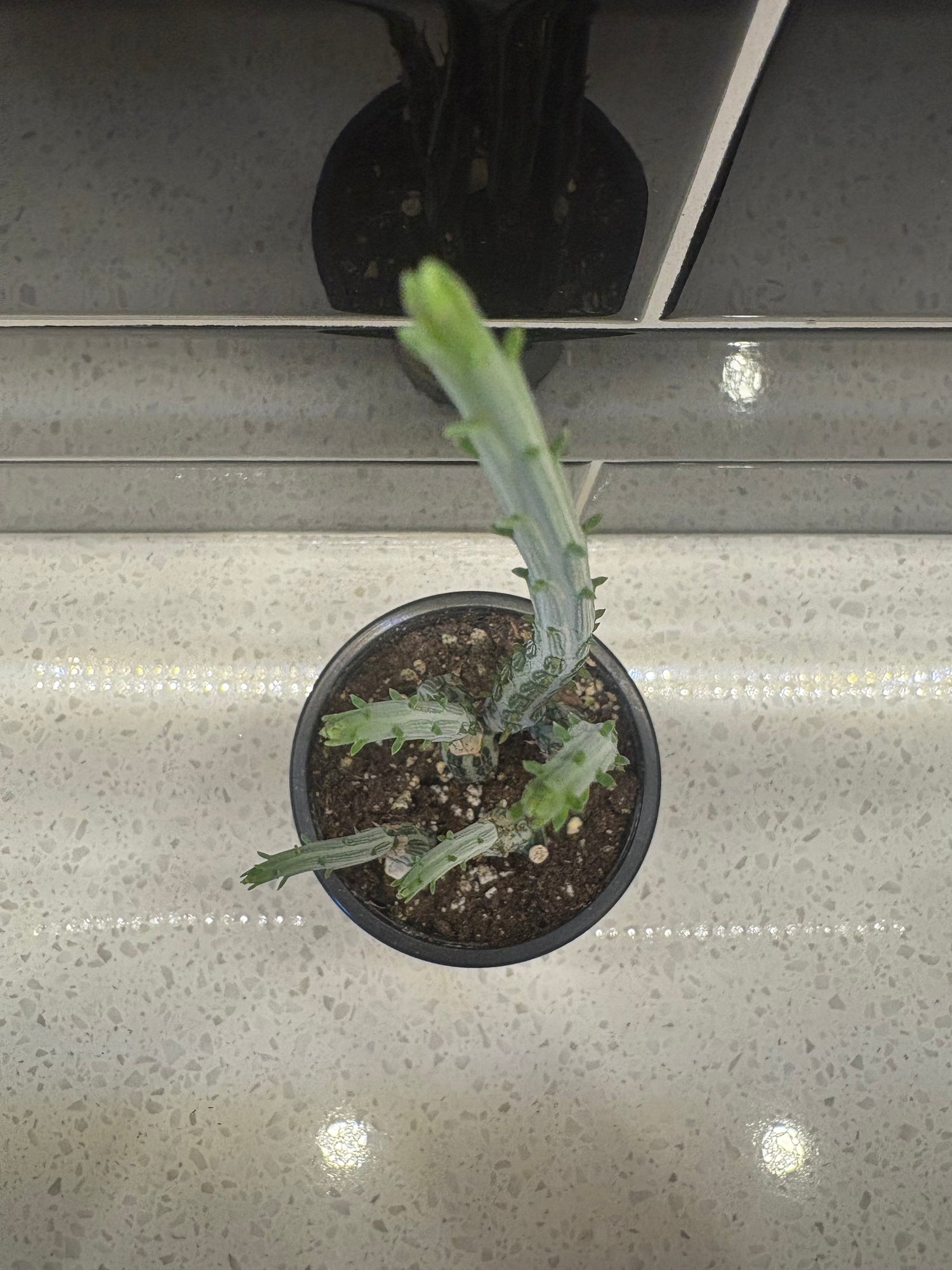
This plant is native to Southern Africa. If you look really close, you can see a cucumber pattern. This cool plant can have babies that grow off the stem, under the soil, and develop the dark green and silver coloration once exposed to the light. Ideally, place the pickle plant near a south or west-facing window that receives a few hours of direct sunlight per day.
Scientific Name: Kleinia Stapeliiformis
Common Name: Pickle Plant or Candle Stick Plant
Growth: 10 inches in length and 0.8 inches in thickness
Light: Bright, Indirect light
Watering: Let dry out between watering, water sparingly
Pet Safe: Yes
Care: Easy


This cacti sports sweet little "ears" and spines that looks like soft fur (It is not soft! Do not pet it!)
Scientific Name: Opuntia microdasys albispina
Common Name: White Bunny Ears
Growth: 6-12 inches
Light: Bright. Ideally, place near a south or west-facing window that receives a few hours of direct sunlight per day.
Watering: Water more during the spring and summer, reducing the amount in the fall and giving very little during the winter. ALWAYS allow your cactus to dry out completely between waterings.
Pet Safe: No, toxic if ingested
Care: Easy


Such a cute cactus! The pads look like little ears and the spines create a soft, fur like appearance, hence the common name.
Scientific Name: Opuntia microdasys pallida
Common Name: Yellow Bunny Ears
Growth: Clump forming, 4-6 inches tall
Light: Bright, indirect light. It will be happy to receive morning sun, or some afternoon sun, and then indirect light the rest of the day.
Watering: Water more during the spring and summer, reducing the amount in the fall and giving very little during the winter. ALWAYS allow your cactus to dry out completely between waterings.
Pet Safe: Yes, non toxic but spines can be hazardous.
Care: Easy


Lizard Tail is a popular, low-maintenance succulent known for its fleshy, dark green leaves covered in white bumps that form rosettes, resembling a lizard textured skin. Originates from South Africa, which is why this plant is drought tolerant. Under ideal conditions, it produces pale orange flowers on tall stalks.
Scientific Name: Gasteraloe
Common Name: Lizard Tail
Growth: Slow growing
Light: Bright, Indirect light
Watering: Let soil dry out before watering again.
Pet safe: No
Care: Easy


The Curly Locks Orchid Cactus is a slow growing cactus known for its bright green, twisting, ribbon-like stems. In the right conditions, it produces fragrant, white, night-blooming flowers that can be followed by edible, red fruit. This plant is native to Guatemala.
Scientific Name: Epiphyllum Guatemalense f. monstrosa
Common Name: Curly Locks Orchid Cactus
Light: Bright indirect light. Avoid full sun because they will get scorched
Watering: When top 1-2 inches are dry
Growth: 2-3 feet
Pet Safe: Yes, but still recommended to keep out of reach. Ingesting too much can get your pet sick.
Care: Easy


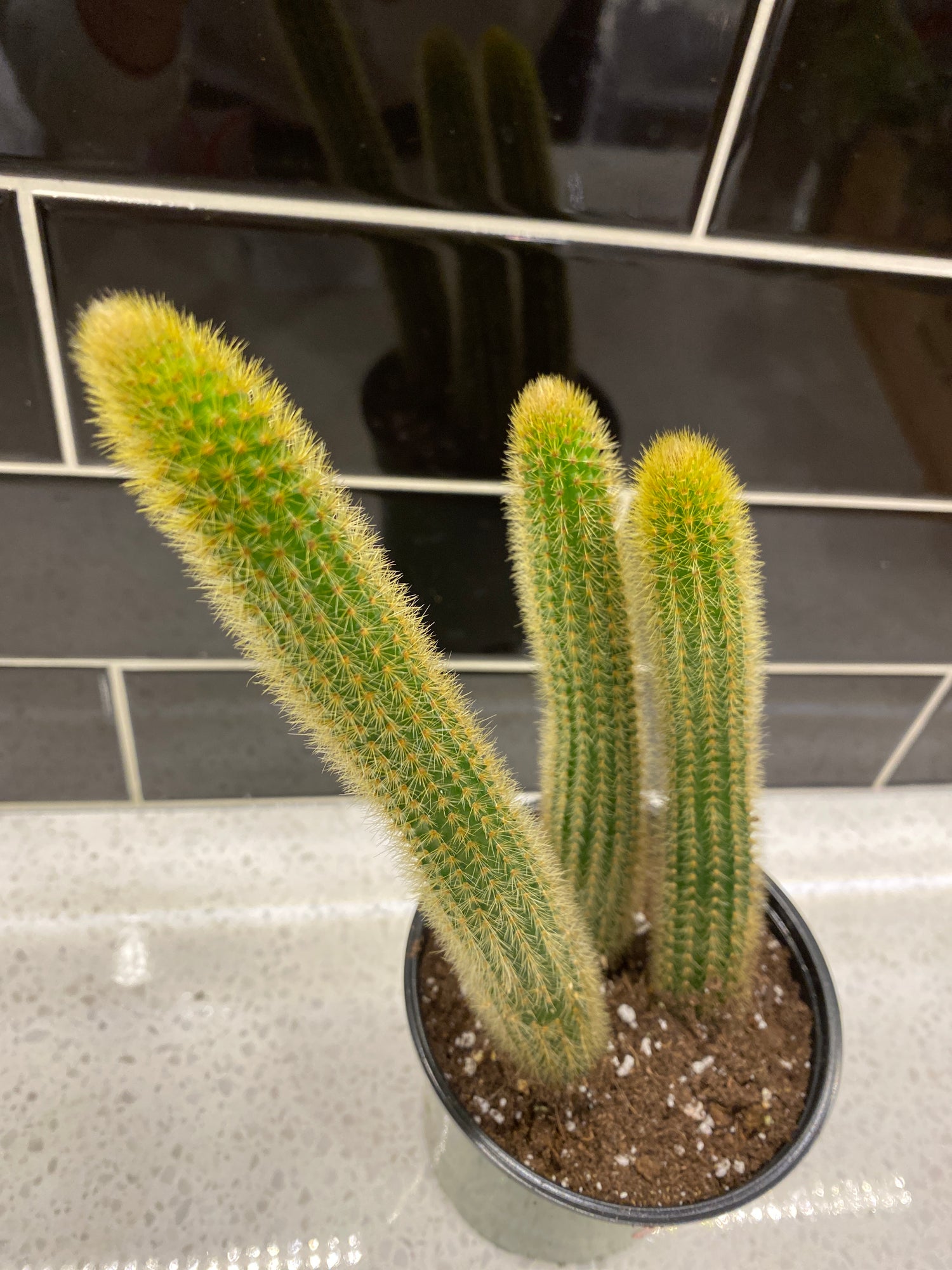
Cacti store water in their stems, which is why they are thrive in the desert. The spines on cacti are actually modified leaves. They help to protect the plant from animals and reduce water loss by shading the stem.
Scientific Name: Mammillaria Elongata
Common Name: Copper King
Growth: 6-8 inches
Light: Bright, Indirect sun
Watering: Let the soil dry out completely before watering
Pet Safe: Yes
Care: Easy