









Cacti + Succulents
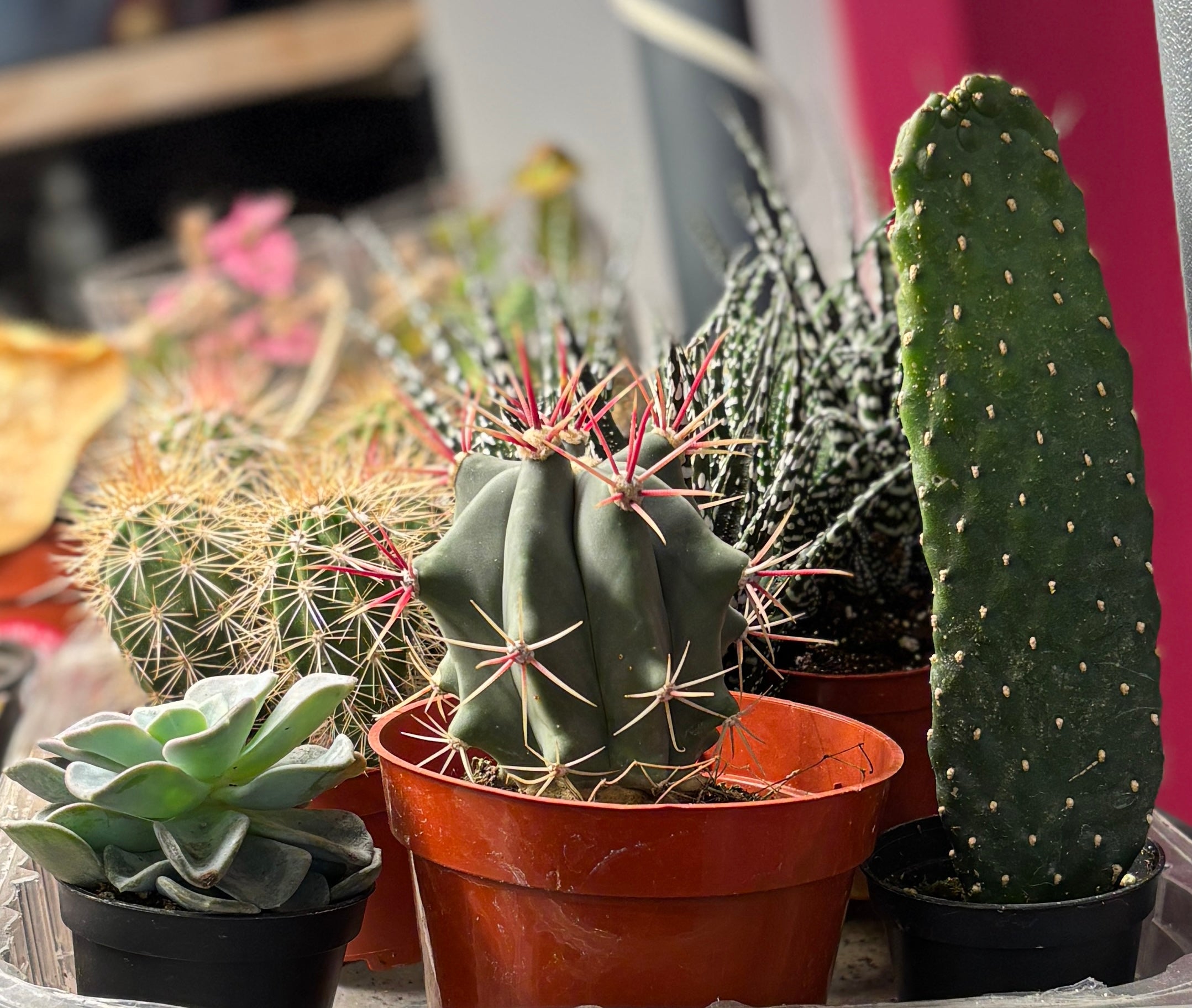
Easy to care for plants in all shape and sizes
Sort by:
74 products
74 products


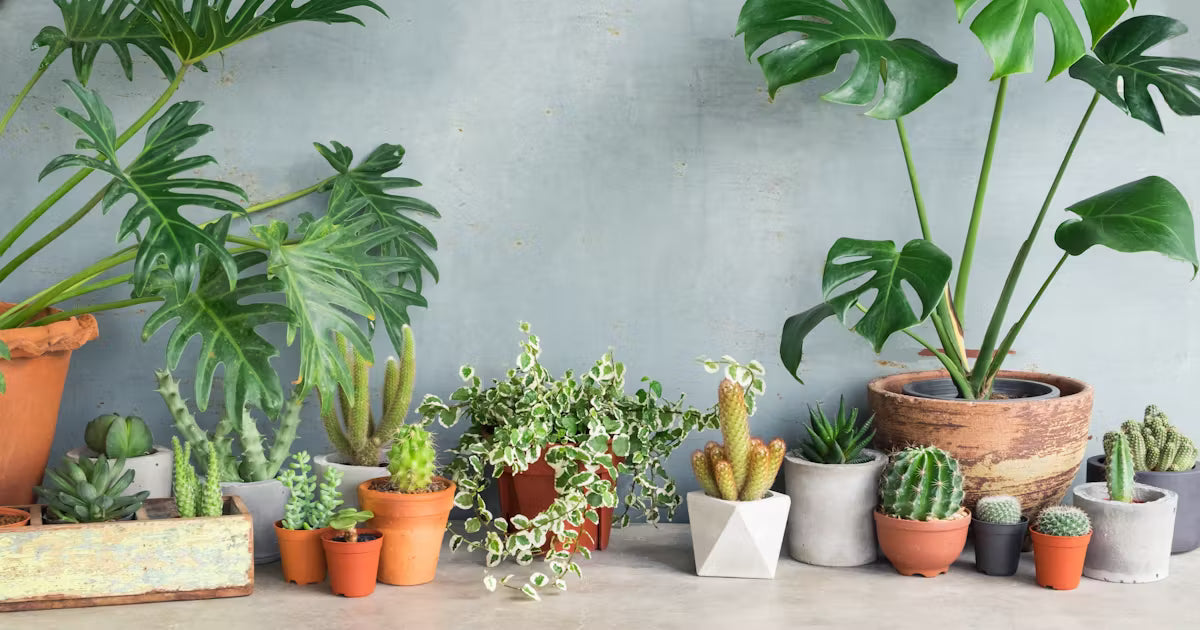
Cacti store water in their stems, which is why they are thrive in the desert. The spines on cacti are actually modified leaves. They help to protect the plant from animals and reduce water loss by shading the stem.
Scientific Name: Opuntia Microdasys
Common Name: Bunny Ear Cactus
Growth:
Light: Bright, Indirect sun
Watering: Let the soil dry out completely before watering
Pet Safe: Yes
Care: Easy


Prized for its grey-green, paddle-shaped leaves with purple spots that intensify with more sun. Native to South Africa, the Calico heart plant is slow growing and a low maintenance plant.
Scientific Name: Adromischus Triiflorus
Common Name: Calico Hearts
Light: Bright, indirect light
Growth: 2- 6 inches tall
Watering: Let dry between watering
Pet Safe: Yes
Care: Easy


Tiger Jaw is a south African succulent is known for its distinctive jaw-shaped leaves with soft tooth like edges. It can produce bright yellow flowers that look a lot like daisies. This plant originates from the sub-tropical deserts and rocky areas of South Africa. The fleshy "teeth" along its leaves are soft and help channel rainwater and dew directly to its roots.
Scientific Name: Faucaria Tigrinya
Common Name: Tiger Jaw
Light: Bright, direct, to indirect light
Growth: 6 inches tall
Watering: Let dry between watering
Pet Safe: Yes
Care: Easy


A pretty little succulent that is pet safe too! This plant originates from desert regions of Mexico. The Echeveria is a drought-tolerant succulent that thrives in high-elevation, rocky, and dry environments.
Scientific Name: Echeveria Elegans
Common Name: Echeveria
Light: Bright, indirect light
Growth: 2-3 inches tall
Watering: Let dry between watering
Pet Safe: Yes
Care: Intermediate

Haworthia Cooperi grows in clumps of small rosettes of tiny, fleshy, light green leaves. One of the interesting features about this plant is that the leaves have transparent streaks around their tips. Originating from the arid regions of South Africa.
It grows in the wild, often in the shade of rocks and other vegetation to protect its delicate, translucent leaves from the intense sun.
Scientific Name: Haworthia Cooperi
Common Name: Haworthia Cooperi
Lighting: 4-5 hours of bright indirect light in the morning sunlight per day
Watering: When the soil is completely dry, give it a good soak
Growth: 2-4 inches
Pet Safe: Yes
Care: Easy


It’s a chicken!! How can anyone resist this cute face!
Light: Bright, Indirect
Watering: Water only when soil is completely dry. Then soak the soil right through. Always in a good draining pot.
Growth: 1-2 inches a year depending on the variety
Pet Safe: No
Care: Easy


This super cute dragon is a friend that is guaranteed to put a smile on your face!
Light:Bright, Indirect
Watering: Water only when soil is completely dry. Then soak the soil right through. Always in a good draining pot.
Growth: 1-2 inches a year depending on the variety
Pet Safe: No
Care: Easy


This super cute heart shaped tea cup has a gorgeous butterfly and gold design to brighten up your day or someone else’s!
Light:Bright, Indirect
Watering: Water only when soil is completely dry. Then soak the soil right through. Always in a good draining pot.
Growth: 1-2 inches a year depending on the variety
Pet Safe: No
Care: Easy


Seymour the giraffe is happy to have this red fox tail cactus along for the ride.


Medusa Head Cactus has thick stems that resemble snakes on Medusa's head. This plant needs well draining soil to prevent root rot. Once it reaches a certain size, this can produce pups on the ends of older arms. After a time, these pups can root on their own. The arm it grows off of rots and the pups roll away to root on their own. If they are cared for, you can end up with a greenhouse full of them!
Scientific Name: Euphorbia flanaganii and Euphorbia caput-medusae
Common Name: Medusa Head Cactus
Growth: It can grow as tall as 8 inches and can spread over several feet in diameter!
Light: Bright, Indirect light
Watering: Allow soil to completely dry out
Pet safe: No
Care: Easy


Cuddly Cactus 4”
As the name states, this is a cactus you can hug! No spines equals a friendlier cactus- so great for kids or if you have curious furry friends.
Scientific Name: Cereus jamacaru
Growth: Tall in the wild, will grow slowly and remain shorter indoors
Light: Bright to sunny
Watering: Let the soil dry out completely before watering
Pet Safe: Yes
Care: Easy


This funky cactus has a zigzag pattern to its leaves and resembles a fishbone!
Unlike so many other Cacti, this little guy originates from the rainforests of Mexico. Found along the mountains just off the Pacific Coast,
It is an epiphyte, meaning it grows on trees, not in the ground in the wild. So it loves humid environments!
Diameter: 10”
Scientific Name: Epiphyllum anguliger
Common Name: Fishbone Cactus, Ric Rac Cactus
Growth: Approx. 1 foot, hanging
Light: Bright indirect light
Watering: Needs consistent moisture but not soggy.
Pet Safe: Yes
Care: Intermediate


This Euphorbia is found in the tropical areas of Asia.
Scientific Name: Euphorbia Lactea
Common Name: Dragon Bones Tree
Growth: In the wild, this plant grows into a large shrub. In your house it will grow very slowly, up to 1 foot height and width.
Light: Bright. Ideally, place near a south or west-facing window that receives a few hours of direct sunlight per day.
Watering: Water more during the spring and summer, reducing the amount in the fall and giving very little during the winter. ALWAYS allow your cactus to dry out completely between waterings.
Pet Safe: No, milky sap is toxic
Care: Fairly easy


This is the cactus we think of when we picture cacti in the deserts of Arizona and Mexico . Yes, they grow huge in the wild, and can live up to 150 years, however they are slow growing, especially indoors.
Scientific Name: Carnegiea gigantea
Common Name: Saguaro Cactus
Growth: 2 inches in the first 10 years.
Light: Bright light, sun for 6 hours
Watering: Water more during the spring and summer, reducing the amount in the fall and giving very little during the winter. ALWAYS allow your cactus to dry out completely between waterings.
Pet Safe: Non-toxic but spines can cause injury
Care: Easy


Native to southern regions of Africa, African Milk Tree looks like a cactus because of its spines, but is actually a succulent. It grows tear drop shaped leaves from it's upright trunk offering a nice spark of bright green to your indoor landscape!
Scientific Name: Euphorbia Trigona
Common Name: African Milk Tree
Growth: Slow growing. In the wild it will reach 9 feet but will only grow to half that height indoors, over a long period of time.
Light: Very bright indirect light. Full sun is okay in the summer but you may need to water more often.
Watering: Only when very dry.
Pet Safe: No. Milky, white sap is toxic and can cause skin irritation in humans.
Care: Easy


This cactus is a beautifully small cactus that grows with clustered cylindrical stems. They are covered in dense white hairs and can grow deep rose-pink funnel shaped flowers. This cactus originates from the dry shrub land of regions of Wester Central Mexico.
Scientific Name: Mammillaria Bombycina
Common Name: Silken Pincushion
Growth: Can grow up to 12 inches tall indoors
Light: Full sun
Watering: Let fully dry out between waterings. make sure soil drains well.
Pet Safe: Not toxic but watch out for spikes
Care: Easy


This cactus would be described as short, columnar stems (up to 2 ft) covered in long, white, hairy spines with reddish, yellow or brown central spines. Resembling an old man’s beard. This is a slow growing plant originating from Argentina and Bolivia. If you’re lucky, sometimes this plant can produce vibrant pink to crimson flowers if in ideal conditions!
Scientific Name: Oreocereus Trollii
Common Name: Old Man of The Andes Cactus
Growth: 10+ feet tall in ideal conditions
Light: Direct sun
Watering: Soak and then let fully dry out before watering again
Pet Safe: Non-toxic, but spikes can hurt
Care: Easy


Enjoy a prickly friend to add interest to your space!
This Cactus is native to South Western United States and Mexico. They love their hillsides and deserts. Needless to say, this plant loves sunlight and dry conditions. If in the right conditions, this prickly plant can produce beautiful flowers!
The name comes from the Ancient Greek (echinos), meaning "sea urchin", and the Latin meaning "candle".
Scientific Name: Echinopsis terscheckii
Common Name: Pachycereus Pringlei / Hedgehog Cacti
Growth: They Can grow up to 23 inches
Light: Bright indirect light to full sun
Watering: Let dry out between watering, water sparingly
Pet Safe: Yes (be careful of the spines!)
Care: Easy