








Houseplants

We're your home for all things plants. We have a unique, curated collection of all kinds of houseplants to add life to your home.
Sort by:
263 products
263 products


The leaves of this rare + gorgeous monstera are where it gets its name: Glossy, deep green with creamy white splashes shaped like a striking cobra snake
The variegation is random, giving each leaf a distinct pattern, causing excitement + anticipation with each new arrival!
Monsteras literally have the word monster in their names - these babies will get big! However, you can control their size with regular pruning. A moss/coconut coir pole is essential as they grow.
This rare and majestic cobra monstera is mounted on a bendable moss pole.
Scientific Name: Monstera standleyana ‘Albo Variegata’
Common Name: Monstera Thai Constellation, Variegated Monstera
Light: Medium-bright
Growth: 1 ft - 2 ft tall, 2 ft - 3 ft wide
Watering: Deep watering when mostly dry
Pet Safe: No
Care: Easy


The bird's nest fern is named this way because the centre of the plant resembles a bird's nest. It is also occasionally called a crow's nest fern. The Bird's Nest Fern is Native to the tropical regions of Southeast Asia, Eastern Australia and India. The name "Hurricane" comes from the way the leaves of this plant swirl together like the eye of a Hurricane!
Scientific Name: Asplenium Nidus ‘hurricane’
Common Name: Hurricane Bird's Nest Fern
Light: Bright indirect light
Watering: Water when the top inch of soil in the pot is getting dry. The soil should always feel cool and moist, never soggy or so dry that it is like dust.
Growth: Can grow up to 12 to 24 inches
Pet Safe: yes
Care: Easy


Gasteria Pillansii is a slow growing South African succulent. It's appearance is unique with its fleshy, strap shaped leaves. It forms dense clumps and is very drought tolerant.
Scientific Name: Gasteria pillansii
Common Name: Cow tongue, Cattle tongue, Lawyer's tongue
Light: Bright, indirect light
Growth: Can grow 8 inches
Watering: Let dry between watering
Pet Safe: Yes
Care: Intermediate


Delicate but hardy. Bring the forest inside with this adorable Button Fern. Originating from Australia and New Zealand, this little guy typically grows in moist, open forests, rocky crevices, and on limestone cliffs.
Scientific Name: Pellaea Rotundifolia
Common Name: Button Fern
Light: Bright indirect light
Watering: They need a very deep watering followed by letting them dry out.
Growth: Can grow up to 12 inches
Pet Safe: yes
Care: Easy


Medusa Head Cactus has thick stems that resemble snakes on Medusa's head. This plant needs well draining soil to prevent root rot. Once it reaches a certain size, this can produce pups on the ends of older arms. After a time, these pups can root on their own. The arm it grows off of rots and the pups roll away to root on their own. If they are cared for, you can end up with a greenhouse full of them!
Scientific Name: Euphorbia flanaganii and Euphorbia caput-medusae
Common Name: Medusa Head Cactus
Growth: It can grow as tall as 8 inches and can spread over several feet in diameter!
Light: Bright, Indirect light
Watering: Allow soil to completely dry out
Pet safe: No
Care: Easy

Scientific Name: Chlorophytum Comosum
Common Name: Spider Plant
Light: Bright, Indirect Light
Growth: 12-24 inches long
Watering: Water when top two inches of soil are dry
Pet Safe: Yes
Care: Easy


This beautiful plant has cascading vines and heart shaped leaves and sparkles in this disco planter.
Small, tubular, pinkish-purple flowers and they have tiny hairs that trap insects helping with pollination!
Scientific Name: Ceropegia Woodii
Common Name: String of Hearts/Rosary Vine/Chain of Hearts
Light: Bright indirect light to full sun
Watering: Let dry out between waterings
Pet Safe: Yes
Care: Easy


Sally Snail and her Baby Tears companion are eager to head home with you.
A member of the nettle family, this plant is known for its moss-like dense foliage. It drapes nicely in a hanging pot!
Baby tears originated in the Mediterranean Region. It's a creeping, mat-forming, evergreen perennial that thrives in damp, shaded area. It is known to have calming effects on some plant lovers due to the texture and softness of the foliage.
Scientific Name: Soleirolia Soleirolii
Common Name: Angel Tears/Baby Tears.
Light: Bright indirect light
Growth: it can spread 3-6 feet
Watering: Keep well watered, don’t let dry
Pet Safe: Yes
Care: Intermediate - they like high humidity

A funky succulent with a spiky look!
Haworthia attenuata, also known as zebra haworthia, is native to Southern Africa. This plant is very slow growing and has a life span of up to 50 years! In the wild, these plants grow in very harsh conditions and can be found buried in sand.
Scientific Name: Haworthia attenuata
Common Name: Zebra Haworthia
Growth: 1-6 inches in height
Light: Bright indirect light
Watering: Let dry out between watering
Pet Safe: Yes
Care: Easy


This funky cactus has a zigzag pattern to its leaves and resembles a fishbone!
Unlike so many other Cacti, this little guy originates from the rainforests of Mexico. Found along the mountains just off the Pacific Coast,
It is an epiphyte, meaning it grows on trees, not in the ground in the wild. So it loves humid environments!
Diameter: 10”
Scientific Name: Epiphyllum anguliger
Common Name: Fishbone Cactus, Ric Rac Cactus
Growth: Approx. 1 foot, hanging
Light: Bright indirect light
Watering: Needs consistent moisture but not soggy.
Pet Safe: Yes
Care: Intermediate

Pansies, 3 colour varieties available.
Pot outside once it is 5-10 degrees.
Diameter: 3.5”
Pet safe: Yes (Considered safe, though eating large quantities of any plant material may cause mild gastrointestinal issues (vomiting/diarrhea).


Delilah is looking regal with her crown of thorns. Take this Queen home to your palace.


Native to warm and humid South American rainforests. They will be happiest in your home if you can replicate these conditions. This selection has striking variegated foliage.
Scientific Name: Maranta leuconeura
Common Name: Prayer Plant
Light: Bright but indirect. North or East facing windows are ideal.
Watering: Water when top inch of soil is dry. To increase humidity, consider using a humidifier or placing the plant on a tray of pebbles and water. Do not let the pot sit in the water though,
Growth: Slow growing up to 1 foot indoors
Pet Safe: Yes
Care: Experienced


A cute little airplant paired with our sparkly suncatcher. Makes a beautiful addition to your window.
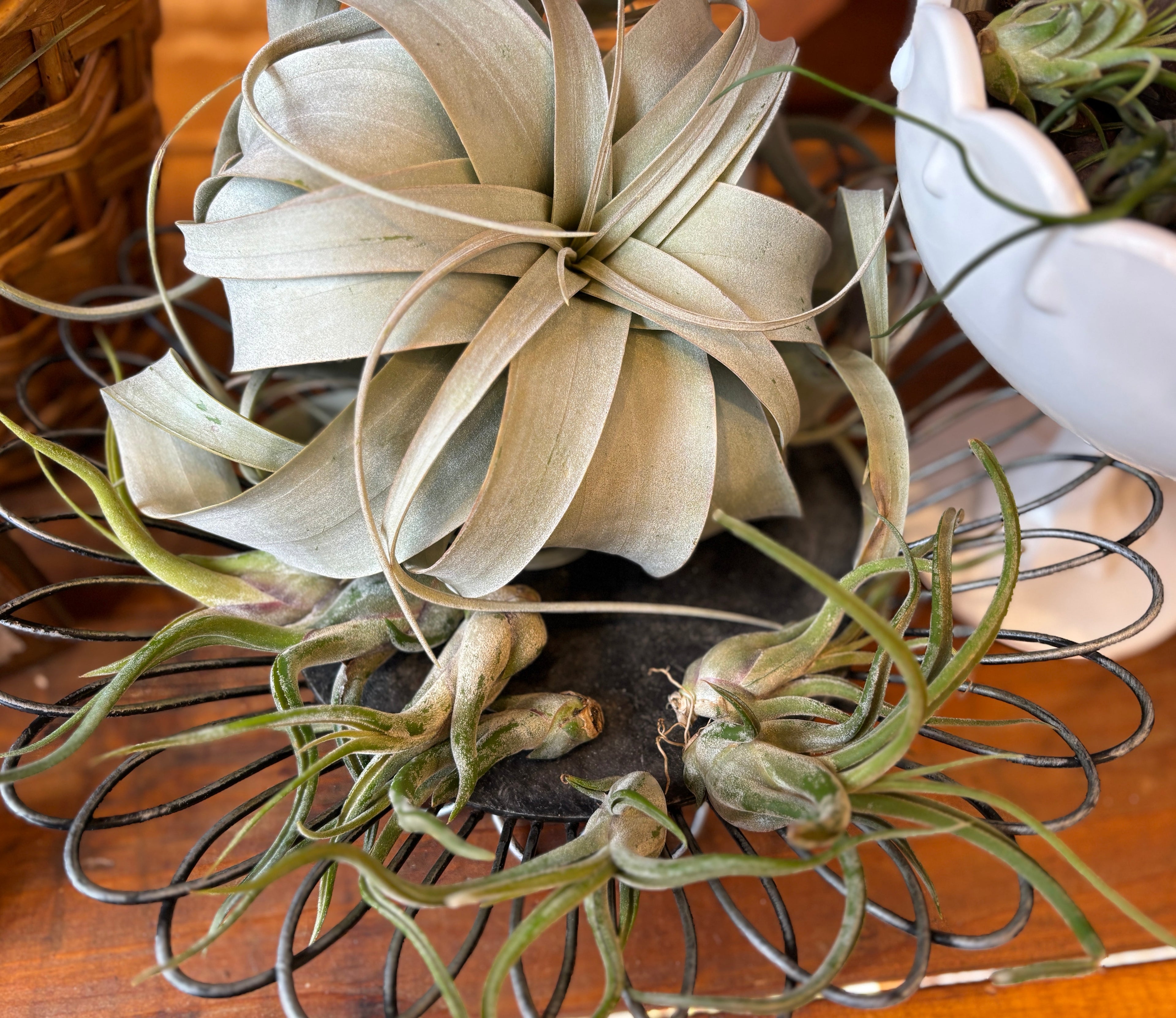
Air Plants
The lowest of care plants! A variety of shapes and sizes add dramatic flair to any living space.
Light: Bright, indirect light.
Watering: Soak in water once a week and let completely dry.
Care: Easy
Pet Safe: Yes
If purchasing online, the air plant may vary. You will receive the size purchased but exact look can vary.


This Euphorbia is found in the tropical areas of Asia.
Scientific Name: Euphorbia Lactea
Common Name: Dragon Bones Tree
Growth: In the wild, this plant grows into a large shrub. In your house it will grow very slowly, up to 1 foot height and width.
Light: Bright. Ideally, place near a south or west-facing window that receives a few hours of direct sunlight per day.
Watering: Water more during the spring and summer, reducing the amount in the fall and giving very little during the winter. ALWAYS allow your cactus to dry out completely between waterings.
Pet Safe: No, milky sap is toxic
Care: Fairly easy


This is the cactus we think of when we picture cacti in the deserts of Arizona and Mexico . Yes, they grow huge in the wild, and can live up to 150 years, however they are slow growing, especially indoors.
Scientific Name: Carnegiea gigantea
Common Name: Saguaro Cactus
Growth: 2 inches in the first 10 years.
Light: Bright light, sun for 6 hours
Watering: Water more during the spring and summer, reducing the amount in the fall and giving very little during the winter. ALWAYS allow your cactus to dry out completely between waterings.
Pet Safe: Non-toxic but spines can cause injury
Care: Easy


Native to southern regions of Africa, African Milk Tree looks like a cactus because of its spines, but is actually a succulent. It grows tear drop shaped leaves from it's upright trunk offering a nice spark of bright green to your indoor landscape!
Scientific Name: Euphorbia Trigona
Common Name: African Milk Tree
Growth: Slow growing. In the wild it will reach 9 feet but will only grow to half that height indoors, over a long period of time.
Light: Very bright indirect light. Full sun is okay in the summer but you may need to water more often.
Watering: Only when very dry.
Pet Safe: No. Milky, white sap is toxic and can cause skin irritation in humans.
Care: Easy


Pilea Involucrata " Norfolk" is a tropical plant with dark green/brown-purple leaves with silvery-white steaks. It is a relatively low-maintenance plant but does prefer high humidity. This plant is ideal for terrariums and bottle gardens. The Norfolk Pilea is native to Central and South America.
Scientific Name: Pilea Involucrata
Common Name: Friendship plant, Norfolk Pilea
Growth: 6-12 inches
Light: Bright indirect light
Watering: When top soil is dry, ensure good drainage
Pet Safe: Yes
Care: Intermediate


What are Clippings?
Clippings are pieces cut from existing mature plants. They are then placed in water and allowed to build roots. Some grow quickly while others take longer to propagate (grow roots). Once there are several new roots growing and they are at least 1" long it's time to plant. They are great for experimenting, trying new varieties or even adding to aquariums and water features.
Planting
When ready to plant you'll place your clipping in a pot with dirt. You'll want to make sure that the soil stays extra moist for several days to help it acclimatize to its new environment. Congratulations! You have a new plant baby.
Shrimp Plant
It's the Shrimp Plant! This quirky plant has beautifully interesting flowers that resemble shrimps! Native to Mexico, it is a tropical evergreen shrub that has made an interesting house plant. With its constant flowering, you can enjoy the flowers all year round.
Scientific Name: Justicia Brandegeeana
Common Name: Shrimp Plant or False Hop
Light: Part shade or indirect light
Watering: Keep soil consistently wet but not soggy.
Growth: Can grow to 4 feet tall
Pet Safe: Yes, but consuming large amounts can cause your pet to get sick.
Care: Easy