







Houseplants

We're your home for all things plants. We have a unique, curated collection of all kinds of houseplants to add life to your home.
Sort by:
263 products
263 products


African Violet comes in many different colours. Native to the cloud forests of East Africa. They grow in humid, sheltered, indirect lighting conditions. Often on moss-covered rocks under the shade of tall trees. Keeping the leaves dry while watering is important. If the leaves are wet and the sun shines on the leaves it can cause burn marks on the leaves.
Scientific Name: Streptocarpus 'Rivermist Galaxy'
Common Name: Rivermist Galaxy African Violet
Light: Bright, indirect light
Watering: Water only the soil and not the leaves. Best to bottom water when top inch is dry.
Growth: Up to 8 inches
Pet Safe: Yes
Care: Intermediate


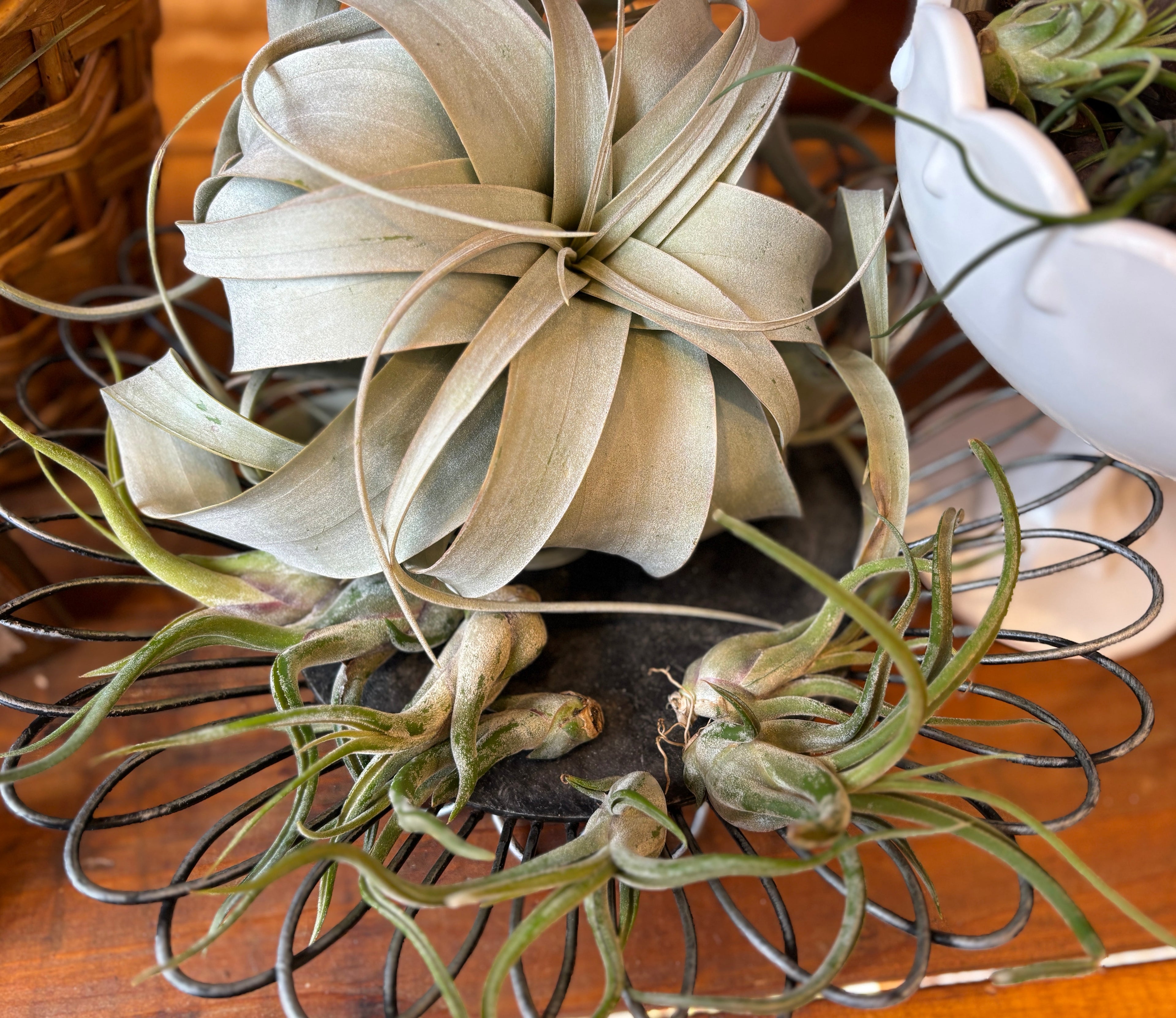
The lowest of care plants!
A variety of shapes and sizes add dramatic flair to any living space.
Scientific Name: Tillandsia caput-medusae
Common Name: Air Plant
Light Requirements: Bright Indirect Light, direct sun for too many hours can scorch the leaves.
Water: Once a week, submerge in water and then be sure to completely dry out.
Pet Safe: Yes
Care: Easy

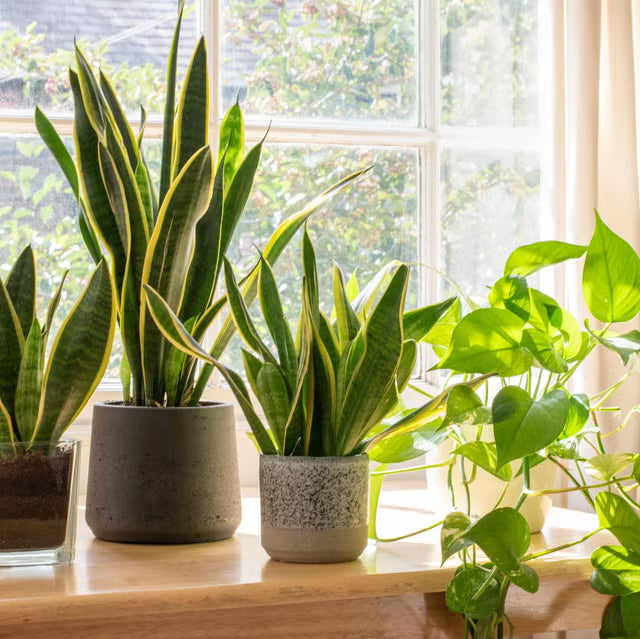
A gorgeous variety with dark, green leaves. Snake plants need little water and are great in low light
Scientific Name: sansevieria trifasciata "Black Diamond"
Common Name: Snake Plant
Light: Bright Indirect light to low light.
Growth: Upright growth up to 1-2 feet, more in bright light
Watering: Sparingly. Allow to dry out before watering
Pet Safe: No
Care: Easy


Big, bold and waxy leaves make this house plant a knockout!
Scientific Name: Homalomena camouflage
Light: Bright Indirect light. Will grow slower in lower light conditions. Never expose to direct sunlight or leaves will scorch.
Growth: 12-30" tall
Watering: Careful watering will ensure a happy plant. Let top 1" of soil dry out before watering and never allow the plant to sit in water.
Pet Safe: No
Care: Intermediate

We have never seen a variegated variety before - we had to bring it in for you!
The Goldfish plant is a quirky, fun and interesting little plant. Yes, it looks like goldfish with its orange flowers in the shape of a fish! It originates from the tropical forests of Brazil. Under the right conditions and lots of bright light, this plant will flower on and off throughout the year. The vines are great for hanging baskets. In the language of flowers, this one symbolizes prosperity and abundance. Pruning after flowering and the occasional cleaning of the leaves will help this plant flourish!
Scientific Name: Nematanthus Gregarius It is also sometimes referred to as Nematanthus Nervosus.
Common Name: Goldfish Plant
Light: Bright Indirect light
Growth: Potentially 3 feet long
Watering: Consistent Moisture but not soggy
Pet Safe: Considered non toxic
Care: Intermediate


This beautiful plant has cascading vines and heart shaped leaves. This variety has lovely green leaves with white veining. This plant stores water in its leaves and roots making it drought tolerant.
Scientific Name: Ceropegia Woodii
Common Name: String of Hearts/Rosary Vine/Chain of Hearts
Light: Bright indirect light
Watering: Let dry out between waterings
Pet Safe: Yes
Care: Easy

Lipstick Plant
This is a dangling plant that has beautiful bright purple flowers that look like tubes of lipstick! The Krakau is a variety of the Lipstick Plant. Known for its
trailing stems, dark green and purple leaves, and striking red, tubular flowers that resemble lipstick emerging from a tube. This plant is native to Southwest Asia, specifically Indonesia and Malaysia.
Scientific Name: Aeschynanthus Radicans
Common Name: Lipstick Plant
Light: Bright indirect light
Watering: Keep evenly hydrated, likes to be misted
Growth: 2-3 feet long indoors
Pet Safe: Yes
Care: Intermediate


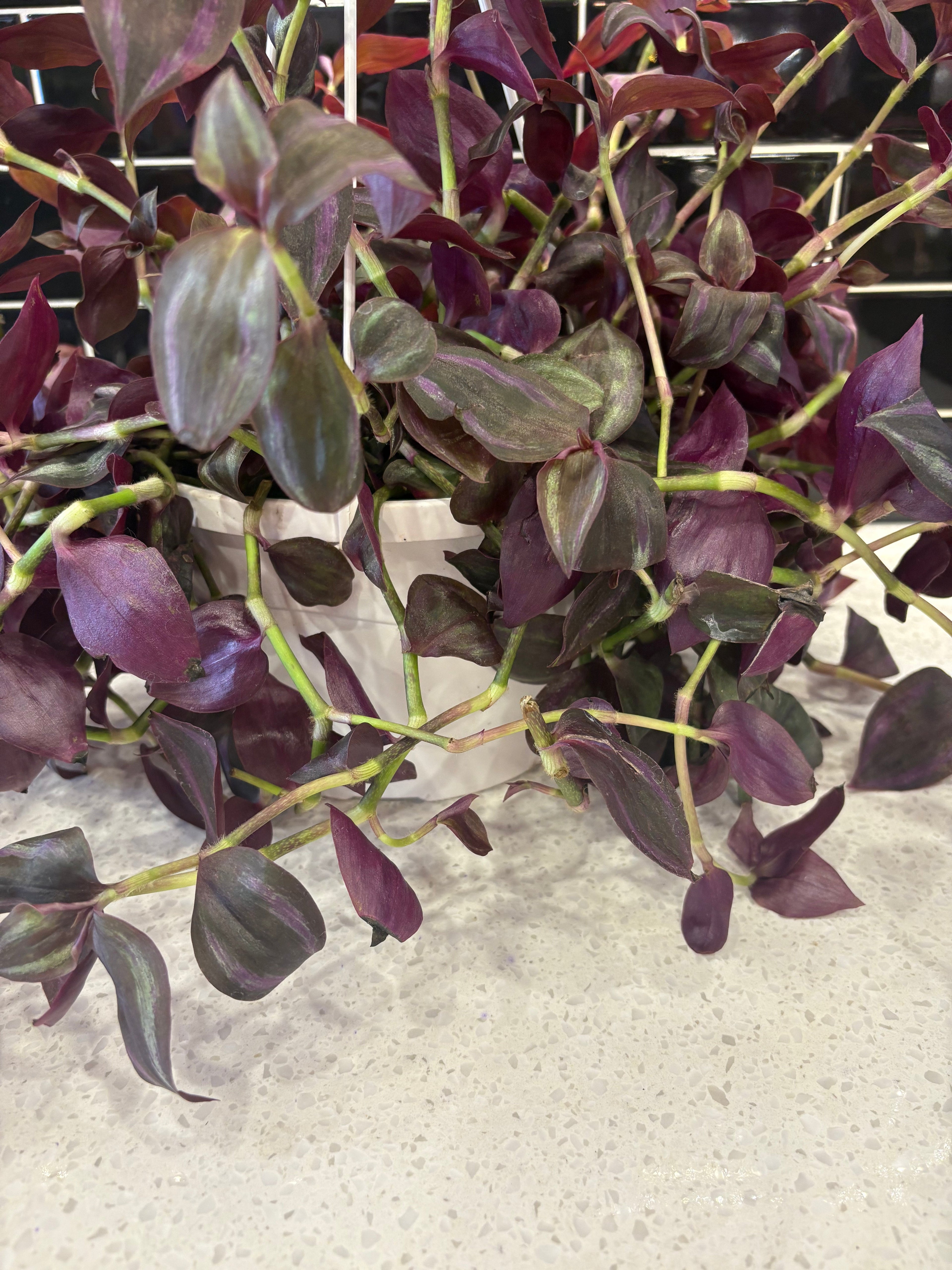
Leaves have a silvery green, camo appearance while the undersides are deep purple!
Light: Bright, indirect light. In it's native habitat it would get Dappled light from growing under larger trees.
Watering: Keep evenly hydrated, but do not let it sit in water or the plant will rot. They like high humidity so a bathroom would be ideal.
Growth: 10 to 15 inches
Pet Safe: No
Care: Easy

Oregano has a strong antioxidant called rosmarinic acid, packing 42 times the antioxidant punch of an apple and making it great for your immune system. It’s also the secret ingredient for taking your veggie dishes to the next level!
A classic must have plant in the dry or scented garden!
Scientific Name: origanum vulgate subsp. hirtum
Growth: This is a perennial herb in the mint family, so it can be planted outdoors but as it likes to spread, it is best planted in a pot.
Light: Full sun
Watering: This is a Mediterranean herb and so it is happily drought tolerant.
Pet Safe: No
Care: Easy
Harvest:. pick several branches, lay flat on a cookie tray or tie together and hang in a bunch. Once the leaves have dried, crumble them into a container.


Beautiful variegation resembling a camouflage pattern, make this Dieffenbachia a collector's dream.
Light: Bright, indirect- north or east facing window is ideal
Watering: Water once top 1-2" of soil feels dry. Dieffenbachia like to be hydrated but not soggy. Sitting in wet soil will cause the plant to rot.
Growth: 2-3' indoors
Pet Safe: No
Care: Easy

The Manjula Pothos is a lovely variety of Pothos, popular for being a low-maintenance houseplant. This variety features large heart shaped leaves with cream, green and white variegation. Pothos loves to climb -allow it to climb and the leaves will mature quicker! Originating from the Philippines, this plant can tolerate neglect, but thrives in bright, indirect light and loves regular watering. This plant is great for beginners and works well in hanging baskets and climbing supports.
Scientific Name: Epipremnum aureum ‘Manjula’
Light: Bright indirect light to low light
Watering: Keep evenly hydrated, ensure good drainage
Growth: In ideal conditions this plant can grow 12-18 inches a year.
Pet Safe: No
Care: Easy


Parsley is a wonderful herb to have on hand to flavour dishes. Leaves can be added to soups, rice dishes etc.
Scientific Name: Petroselinum crispum
Growth: 6" tall
Light: Full sun (6+ hours)
Watering: Keep soil moist
Pet Safe: Yes
Care: Easy
Harvesting: Cut leaves from the outer stems


The leaves of this succulent are soft and fuzzy, perhaps like a bear? The edges of the grey leaves are outlined with cute little brown dots. Native to Madagascar.
Scientific Name: Kalanchoe tomentosa
Light: Bright light- south window is ideal. Very hot, direct sun can scorch the leaves.
Growth: Can slowly grow up to 2 feet
Watering: Water thoroughly when dry and let drain well. Do not sit in water.
Pet Safe: No
Care: Moderate


African Violet comes in many different colours. Native to the cloud forests of East Africa. They grow in humid, sheltered, indirect lighting conditions. Often on moss-covered rocks under the shade of tall trees. Keeping the leaves dry while watering is important. If the leaves are wet and the sun shines on the leaves it can cause burn marks on the leaves.
Scientific Name: Saintpaulia Ionantha
Common Name: African Violet
Light: Bright, indirect light
Watering: Water only the soil and not the leaves. Best to bottom water when top inch is dry.
Growth: Up to 8 inches
Pet Safe: Yes
Care: Intermediate

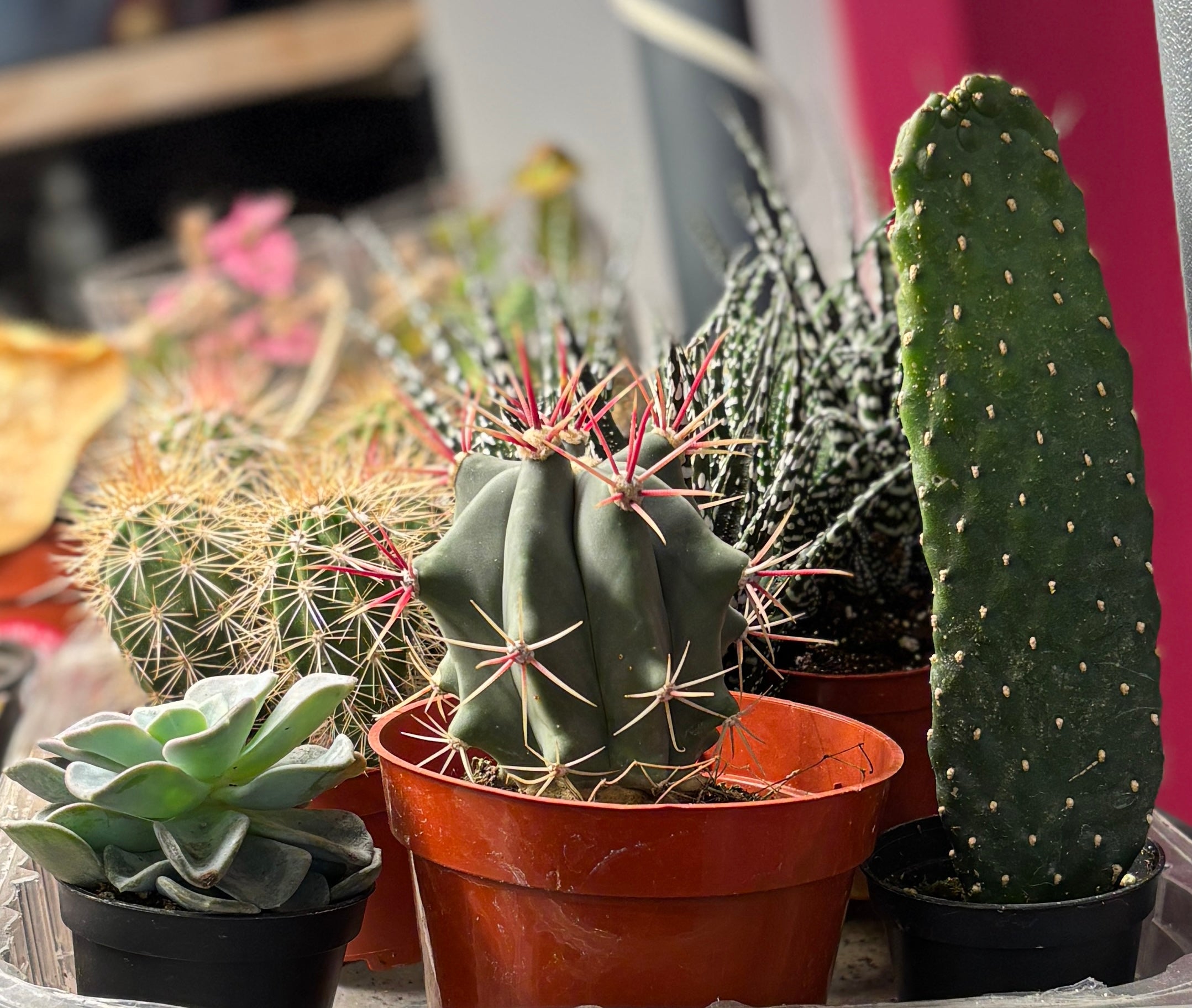
Covered in white spines that are as soft as a feather!
Scientific Name: Mammillaria plumosa
Common Name: Feather Cactus
Growth: Approximately 5 inches tall. Grows as a cluster up to 10 inches indoors.
Light: Bright, indirect light. It will be happy to receive morning sun, or some afternoon sun, and then indirect light the rest of the day.
Watering: Water more during the spring and summer, reducing the amount in the fall and giving very little during the winter. ALWAYS allow your cactus to dry out completely between waterings.
Pet Safe: No, moderately toxic if ingested
Care: Easy


This cacti sports sweet little "ears" and spines that looks like soft fur (It is not soft! Do not pet it!)
Scientific Name: Opuntia microdasys albispina
Common Name: White Bunny Ears
Growth: 6-12 inches
Light: Bright. Ideally, place near a south or west-facing window that receives a few hours of direct sunlight per day.
Watering: Water more during the spring and summer, reducing the amount in the fall and giving very little during the winter. ALWAYS allow your cactus to dry out completely between waterings.
Pet Safe: No, toxic if ingested
Care: Easy


Such a cute cactus! The pads look like little ears and the spines create a soft, fur like appearance, hence the common name.
Scientific Name: Opuntia microdasys pallida
Common Name: Yellow Bunny Ears
Growth: Clump forming, 4-6 inches tall
Light: Bright, indirect light. It will be happy to receive morning sun, or some afternoon sun, and then indirect light the rest of the day.
Watering: Water more during the spring and summer, reducing the amount in the fall and giving very little during the winter. ALWAYS allow your cactus to dry out completely between waterings.
Pet Safe: Yes, non toxic but spines can be hazardous.
Care: Easy


What are Clippings?
Clippings are pieces cut from existing mature plants. They are then placed in water and allowed to build roots. Some grow quickly while others take longer to propagate (grow roots). Once there are several new roots growing and they are at least 1" long it's time to plant. They are great for experimenting, trying new varieties or even adding to aquariums and water features.
Planting
When ready to plant you'll place your clipping in a pot with dirt. You'll want to make sure that the soil stays extra moist for several days to help it acclimatize to its new environment. Congratulations! You have a new plant baby.


What are Clippings?
Clippings are pieces cut from existing mature plants. They are then placed in water and allowed to build roots. Some grow quickly while others take longer to propagate (grow roots). Once there are several new roots growing and they are at least 1" long it's time to plant. They are great for experimenting, trying new varieties or even adding to aquariums and water features.
Planting
When ready to plant you'll place your clipping in a pot with dirt. You'll want to make sure that the soil stays extra moist for several days to help it acclimatize to its new environment. Congratulations! You have a new plant baby.
Chinese Evergreen Red Siam
The Chinese Evergreen, also known as the Aglaonema, is a very easy plant to care for and they are a great choice for beginners!
This plant is native to the tropical and subtropical rainforests of Southeast Asia and New Guinea, where it grows in low-light, humid conditions.
Scientific Name: Aglaonema
Common Name: Chinese Evergreen
Growth: 2-3 feet
Light: Bright indirect light though it can withstand lowlight conditions
Watering: They need to be watered when the top layer of soil drys out.
Pet Safe: no
Care: Easy


Lizard Tail is a popular, low-maintenance succulent known for its fleshy, dark green leaves covered in white bumps that form rosettes, resembling a lizard textured skin. Originates from South Africa, which is why this plant is drought tolerant. Under ideal conditions, it produces pale orange flowers on tall stalks.
Scientific Name: Gasteraloe
Common Name: Lizard Tail
Growth: Slow growing
Light: Bright, Indirect light
Watering: Let soil dry out before watering again.
Pet safe: No
Care: Easy