








Sort by:
48 products
48 products


These mini yellow and white daffodil bulbs have been forced to produce early blooms to be enjoyed indoors! We’ve planted them with lecca and decrotive rocks so you can watch the roots grow, along with Curly Willow twine and an colourful spring bird! Bring a pop of joy, colour and early spring scent indoors! When done blooming dry out the bulbs and plant in your garden in the fall.


Dancing Bones Cactus is an interesting looking tropical epiphytic- meaning it grows on other plants. In the wild it grows on trees in high elevation forests of Brazil. In the spring it has yellow flowers.
Scientific Name: Hatiora Salicornioides
Common Name: Dancing Bones Cactus, Bottle Cactus
Growth: 6-12 " Slow growing
Light: Low to medium bright light. Try to mimic the understory of trees.
Watering: requires higher humidity and moisture than most cacti since it grows naturally in the jungle. However it is still a succulent so do not leave it sitting in water. Water when the top inch or so feels dry. Water more in the summer than during the winter
Pet Safe: No
Care: Easy to Moderate

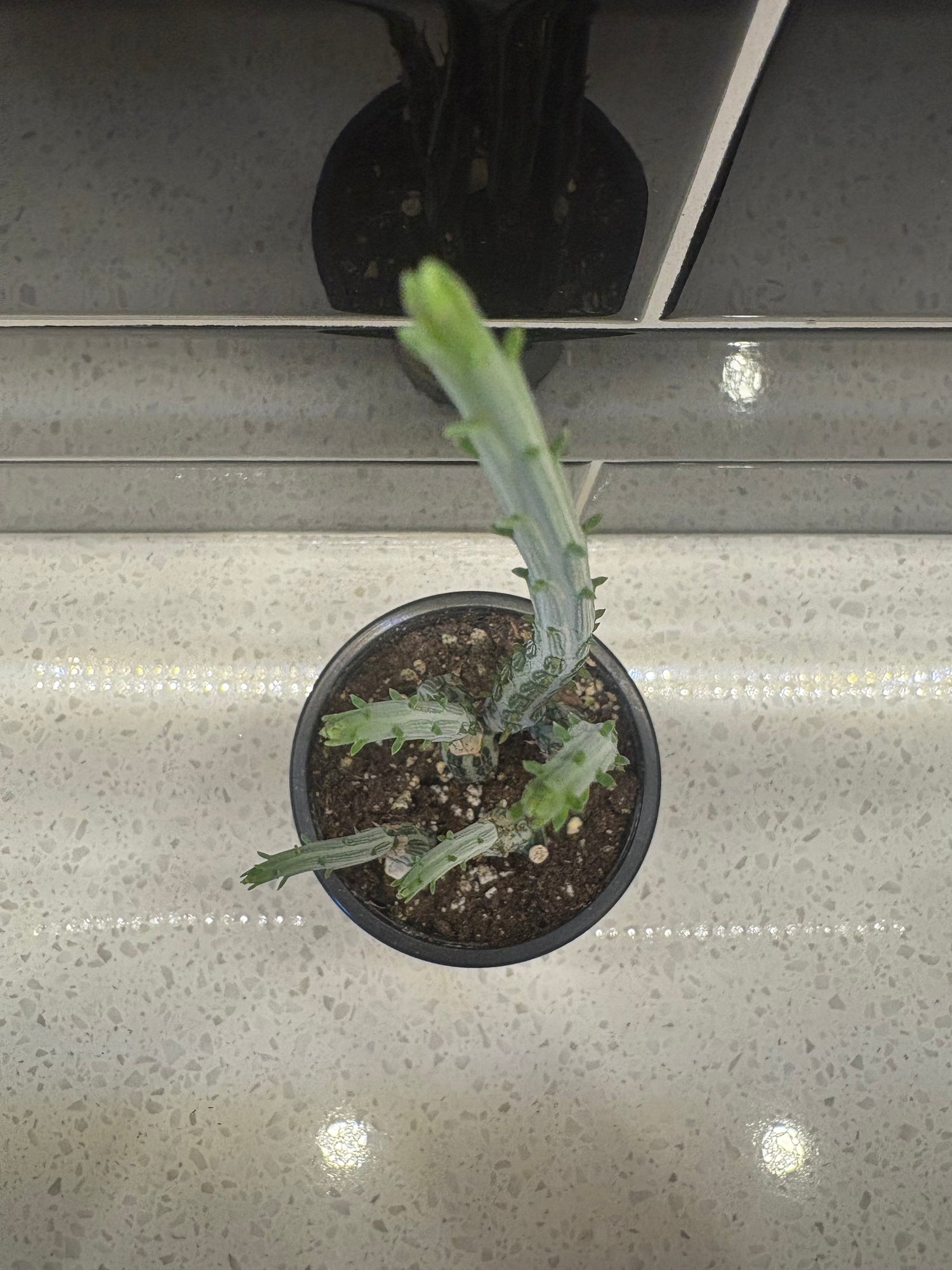
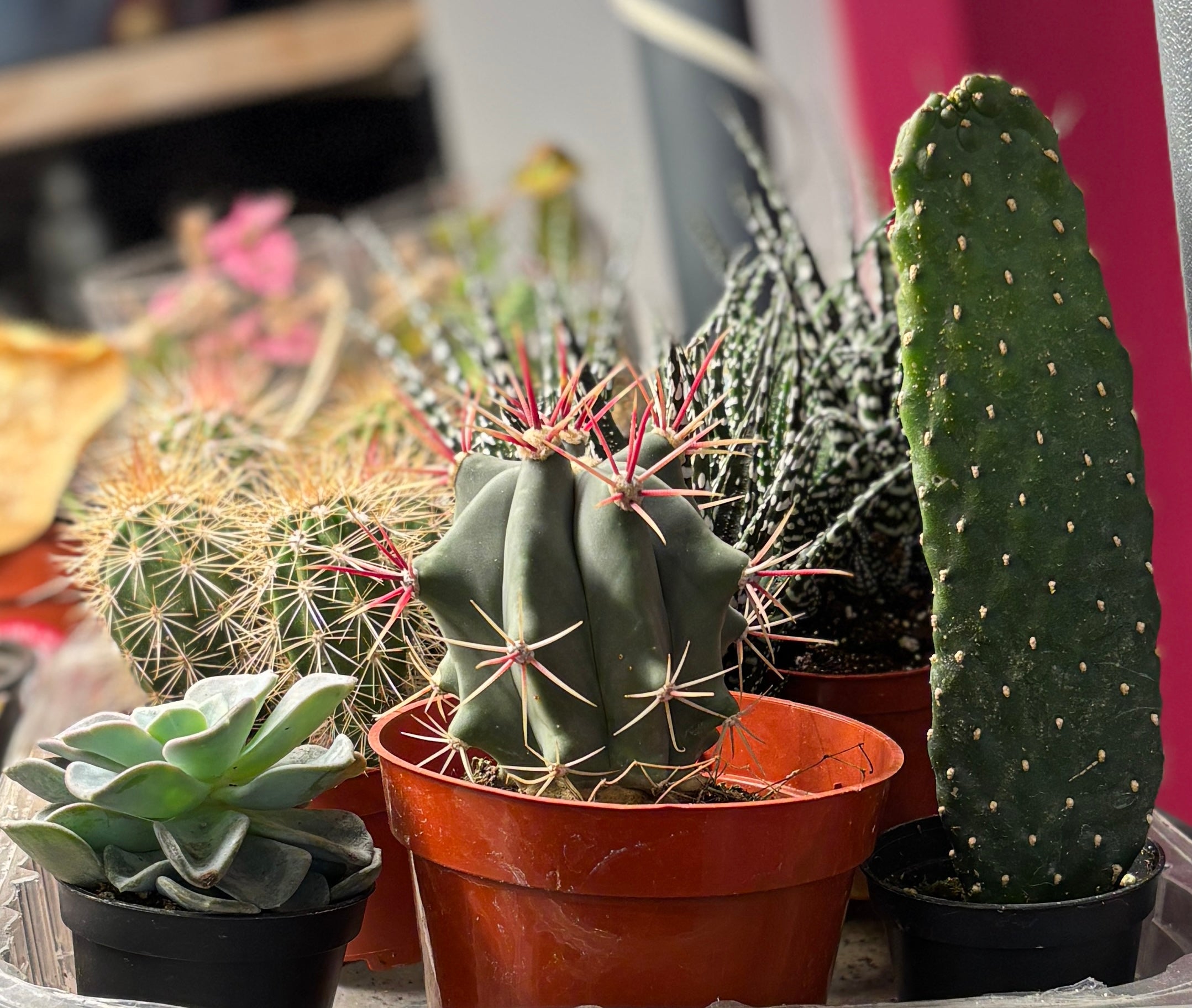
This plant is native to Southern Africa. If you look really close, you can see a cucumber pattern. This cool plant can have babies that grow off the stem, under the soil, and develop the dark green and silver coloration once exposed to the light. Ideally, place the pickle plant near a south or west-facing window that receives a few hours of direct sunlight per day.
Scientific Name: Kleinia Stapeliiformis
Common Name: Pickle Plant or Candle Stick Plant
Growth: 10 inches in length and 0.8 inches in thickness
Light: Bright, Indirect light
Watering: Let dry out between watering, water sparingly
Pet Safe: Yes
Care: Easy


This cacti sports sweet little "ears" and spines that looks like soft fur (It is not soft! Do not pet it!)
Scientific Name: Opuntia microdasys albispina
Common Name: White Bunny Ears
Growth: 6-12 inches
Light: Bright. Ideally, place near a south or west-facing window that receives a few hours of direct sunlight per day.
Watering: Water more during the spring and summer, reducing the amount in the fall and giving very little during the winter. ALWAYS allow your cactus to dry out completely between waterings.
Pet Safe: No, toxic if ingested
Care: Easy


Such a cute cactus! The pads look like little ears and the spines create a soft, fur like appearance, hence the common name.
Scientific Name: Opuntia microdasys pallida
Common Name: Yellow Bunny Ears
Growth: Clump forming, 4-6 inches tall
Light: Bright, indirect light. It will be happy to receive morning sun, or some afternoon sun, and then indirect light the rest of the day.
Watering: Water more during the spring and summer, reducing the amount in the fall and giving very little during the winter. ALWAYS allow your cactus to dry out completely between waterings.
Pet Safe: No, moderately toxic if ingested
Care: Easy


This Euphorbia is found in the tropical areas of Asia.
Scientific Name: Euphorbia Lactea
Common Name: Dragon Bones Tree
Growth: In the wild, this plant grows into a large shrub. In your house it will grow very slowly, up to 1 foot height and width.
Light: Bright. Ideally, place near a south or west-facing window that receives a few hours of direct sunlight per day.
Watering: Water more during the spring and summer, reducing the amount in the fall and giving very little during the winter. ALWAYS allow your cactus to dry out completely between waterings.
Pet Safe: No, milky sap is toxic
Care: Fairly easy


This is the cactus we think of when we picture cacti in the deserts of Arizona and Mexico . Yes, they grow huge in the wild, and can live up to 150 years, however they are slow growing, especially indoors.
Scientific Name: Carnegiea gigantea
Common Name: Saguaro Cactus
Growth: 2 inches in the first 10 years.
Light: Bright light, sun for 6 hours
Watering: Water more during the spring and summer, reducing the amount in the fall and giving very little during the winter. ALWAYS allow your cactus to dry out completely between waterings.
Pet Safe: Non-toxic but spines can cause injury
Care: Easy


A cute little prickly friend from Central Mexico!
Scientific Name: Mammillaria voburnensis
Common Name: Birds Nest Pincushion Cactus
Growth: This cactus will retain it's globe shape and will slowly grow outwards up to 2-3" in diameter
Light: Very bright, indirect light. It does not want sun all day.
Watering: Water more during the spring and summer, reducing the amount in the fall and giving very little during the winter. ALWAYS allow your cactus to dry out completely between waterings.
Pet Safe: Moderately toxic if ingested
Care: Easy


Native to southern regions of Africa, African Milk Tree looks like a cactus because of its spines, but is actually a succulent. It grows tear drop shaped leaves from it's upright trunk offering a nice spark of bright green to your indoor landscape!
Scientific Name: Euphorbia Trigona
Common Name: African Milk Tree
Growth: Slow growing. In the wild it will reach 9 feet but will only grow to half that height indoors, over a long period of time.
Light: Very bright indirect light. Full sun is okay in the summer but you may need to water more often.
Watering: Only when very dry.
Pet Safe: No. Milky, white sap is toxic and can cause skin irritation in humans.
Care: Easy


A fun Cactus with an interesting growth habit, producing multiple curved stems which resemble turrets of a castle, hence its common name. It is native to southern Florida and the Lower Rio Grande Valley of Texas, the Caribbean and South America.
Scientific Name: Acanthocereus Tetragonus
Common Name: Fairy Castle Cactus
Growth: Slow growing. While it can reach great heights in the wild, 6 feet or more, it will remain much smaller when grown indoors.
Light: Very bright indirect light. Too much sun can cause scorching.
Flowering: Lovely white flowers only open for one night. In the wild these flowers attack moths.
Watering: Let it dry out completely before watering and limit watering in the winter and increase during the summer.
Pet Safe: Non toxic however because of its sharp spines, it should be kept where pets can not be poked accidentally.
Care: Easy. Repotting every 2-3 years is recommended because its root system is large and tends to extend outwards.


These nourishing handcrafted and hand-poured lip balms are made with infused oils with flowers from Carly’s garden!
Ingredients Calendula Lip Balm: Calendula infused sunflower oil, Uxbridge Beeswax, Vitamin E (Tocopherol)
Ingredients Lavender Lip Balm: Lavender infused olive oil, Uxbridge Beeswax, Vitamin E (Tocopherol)


Michaelmoelleria Vietnamensis is a rare plant from Southern Vietnam. It has silvery patterned foliage and light purple flowers. This plant in the wild has threatened habitat loss due to eucalyptus plantations. It is found in Vietnam's broad leaved forests on granitic mountains where it grows on rocks. This plant propagates well from stem cuttings or leaf cuttings!
Scientific Name: Michaelmoelleria Vietnamensis
Common Name: Michaelmoelleria Vietnamensis
Light: Bright, indirect light
Watering: Water only the soil and not the leaves. Best to bottom water when top inch is dry.
Growth: Fast growing plant
Pet Safe: Yes
Care: Intermediate


This cactus is a beautifully small cactus that grows with clustered cylindrical stems. They are covered in dense white hairs and can grow deep rose-pink funnel shaped flowers. This cactus originates from the dry shrub land of regions of Wester Central Mexico.
Scientific Name: Mammillaria Bombycina
Common Name: Silken Pincushion
Growth: Can grow up to 12 inches tall indoors
Light: Full sun
Watering: Let fully dry out between waterings. make sure soil drains well.
Pet Safe: Not toxic but watch out for spikes
Care: Easy


This cactus would be described as short, columnar stems (up to 2 ft) covered in long, white, hairy spines with reddish, yellow or brown central spines. Resembling an old man’s beard. This is a slow growing plant originating from Argentina and Bolivia. If you’re lucky, sometimes this plant can produce vibrant pink to crimson flowers if in ideal conditions!
Scientific Name: Oreocereus Trollii
Common Name: Old Man of The Andes Cactus
Growth: 10+ feet tall in ideal conditions
Light: Direct sun
Watering: Soak and then let fully dry out before watering again
Pet Safe: Non-toxic, but spikes can hurt
Care: Easy


Enjoy a prickly friend to add interest to your space!
This Cactus is native to South Western United States and Mexico. They love their hillsides and deserts. Needless to say, this plant loves sunlight and dry conditions. If in the right conditions, this prickly plant can produce beautiful flowers!
The name comes from the Ancient Greek (echinos), meaning "sea urchin", and the Latin meaning "candle".
Scientific Name: Echinopsis terscheckii
Common Name: Pachycereus Pringlei / Hedgehog Cacti
Growth: They Can grow up to 23 inches
Light: Bright indirect light to full sun
Watering: Let dry out between watering, water sparingly
Pet Safe: Yes (be careful of the spines!)
Care: Easy


This very attractive Ladyfinger Cactus is native to Mexico and develops dense clusters of cylindrical stems that have brown/yellow spines. Its stems look like fingers and it can bloom in pink and yellow coloured flowers.
Scientific Name: Mammillaria elongata
Common Name: Ladyfinger Cactus, Gold Lace Cactus, Golden Stars
Growth: 6-8 inches
Light: Bright, Indirect sun
Watering: Let the soil dry out completely before watering
Pet Safe: Yes
Care: Easy


Supercharge your soil garden with HydraGreens, a sea kelp-based plant food that nourishes plants, improves soil structure, and boosts overall garden vitality.
Key Features:
- Nutrient-Rich Formula: Over 60 micronutrients from natural kelp for complete plant nourishment.
- Enhanced Absorption: Low-salt formula ensures optimal nutrient uptake, promoting faster, healthier growth.
- Vegetative Growth Booster: Specially formulated to accelerate leaf and stem development before flowering.

