









Weird + Wonderful Plants
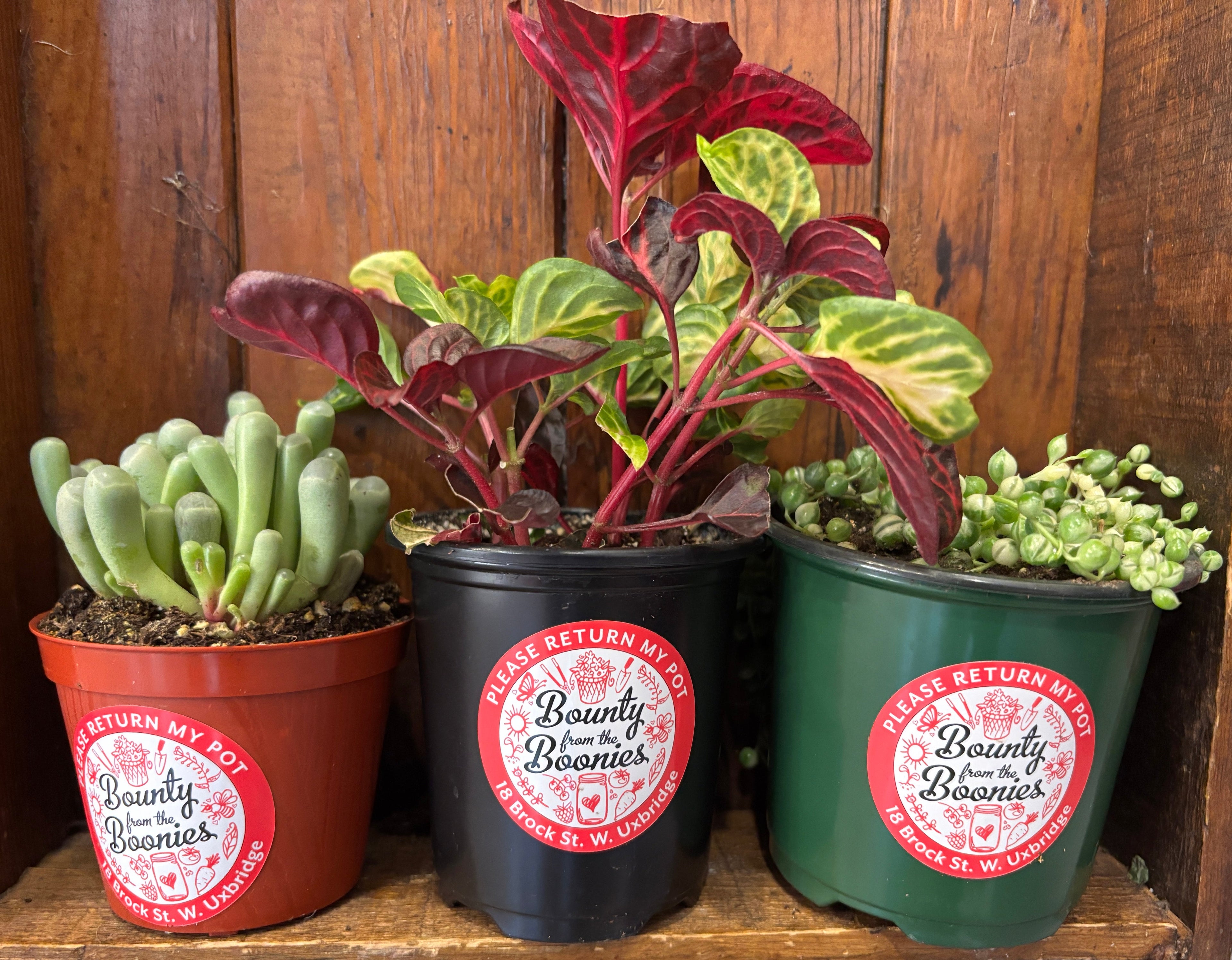
We love colour + unusual + weird + rare houseplants! Browse our collection here. Check back often, as we bring in new plants every week. And if you're looking for a particular plant, let us know - we offer private shopping + love a challenge!
Sort by:
82 products
82 products


The bird's nest fern is named this way because the centre of the plant resembles a bird's nest. It is also occasionally called a crow's nest fern. The Bird's Nest Fern is Native to the tropical regions of Southeast Asia, Eastern Australia and India.
Scientific Name: Asplenium Nidus
Common Name: Bird's Nest Fern
Light: Bright indirect light
Watering: They need a very deep watering followed by letting them dry out.
Growth: Can grow up to 12 inches
Pet Safe: yes
Care: Easy


This easy care, non-toxic beauty has the best party trick: Its dark green leaves are a deep wine red underneath! Delight in flipping it upside down for a visual shock.
An eye-catching plant with thick, weighty stems that will eventually trail. Looks beautiful in a contrasting white planter.
Scientific Name: Peperomia verticilla
Common Name: Whorled Peperomia, Red Log, Belly Button
Size: 12" indoors
Growth: Trailing stems start upright, then spill over
Watering: Loves humidity + evenly hydrated soil
Pet Safe: Yes
Care: Bright, indirect light. Prune stems to keep bushy
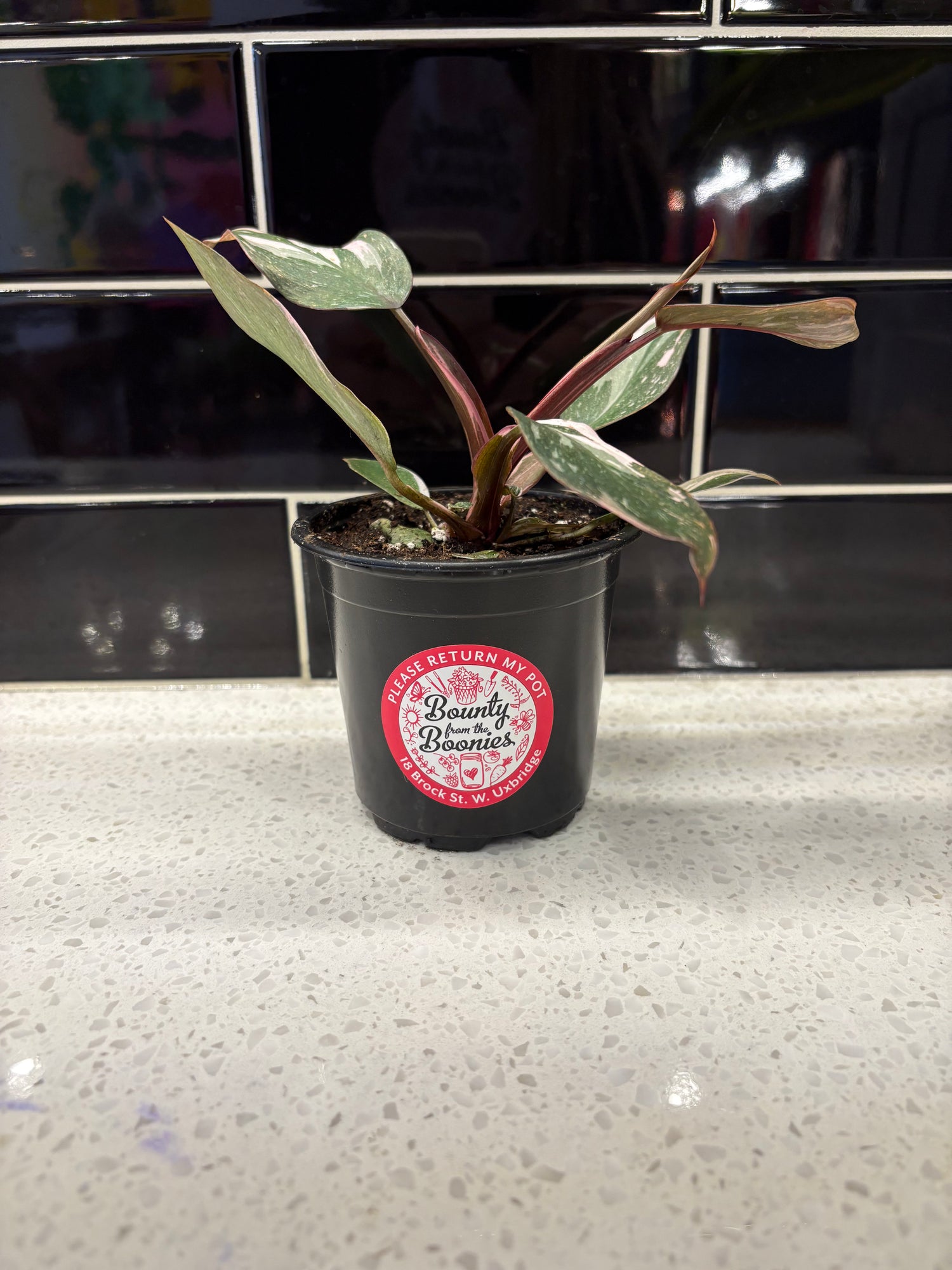
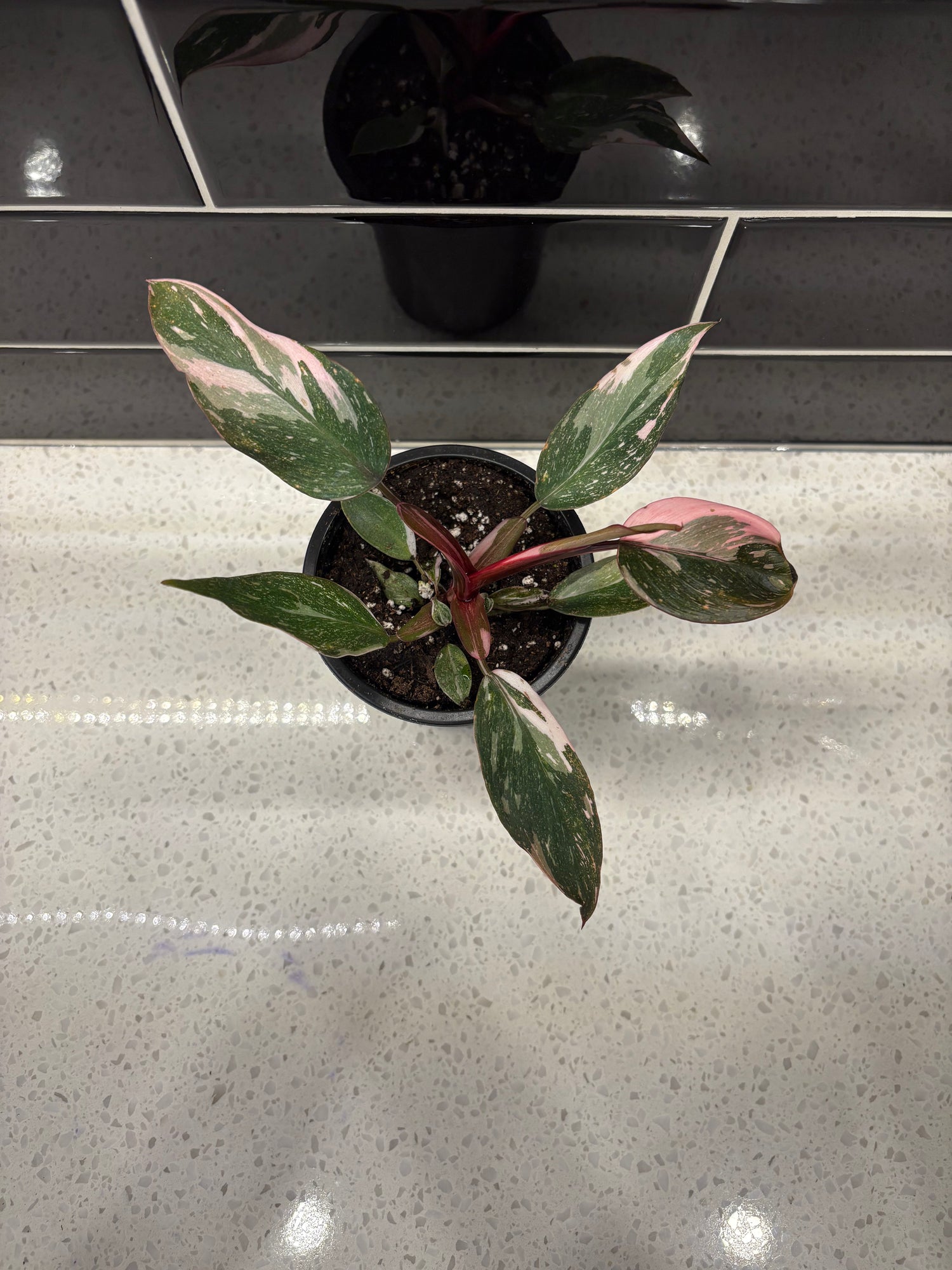
Rare pink variegated leaves make this philodendron variety a prize to be proud of! Originating from Columbia, this plant, in the early 2000's, was a rare and expensive plant often traded in small circles.
Scientific Name: Philodendron erubescens 'pink princess'
Common Name: Philodendron pink princess, blushing philodendron
Light: Direct-bright, indirect light
Growth: 3-4 ft tall, 1-2 ft wide
Watering: Let the top several inches dry between waterings; ensure proper drainage with airy, well-draining soil
Pet Safe: No
Care: Intermediate


The Sand Rose succulent is native to South Africa where it thrives in arid conditions, found in rocks and stony soils. Like many other succulents, the Sand Rose is extremely drought-tolerant. It can survive long periods without water making it an excellent choice for plant owners who sometimes forget to keep up with watering.
Scientific Name: Anacampseros Rufescens
Common Name: Sand Rose
Light: Bright indirect light
Growth: 3 inches
Watering: Let dry between watering
Pet Safe: Yes
Care: Easy

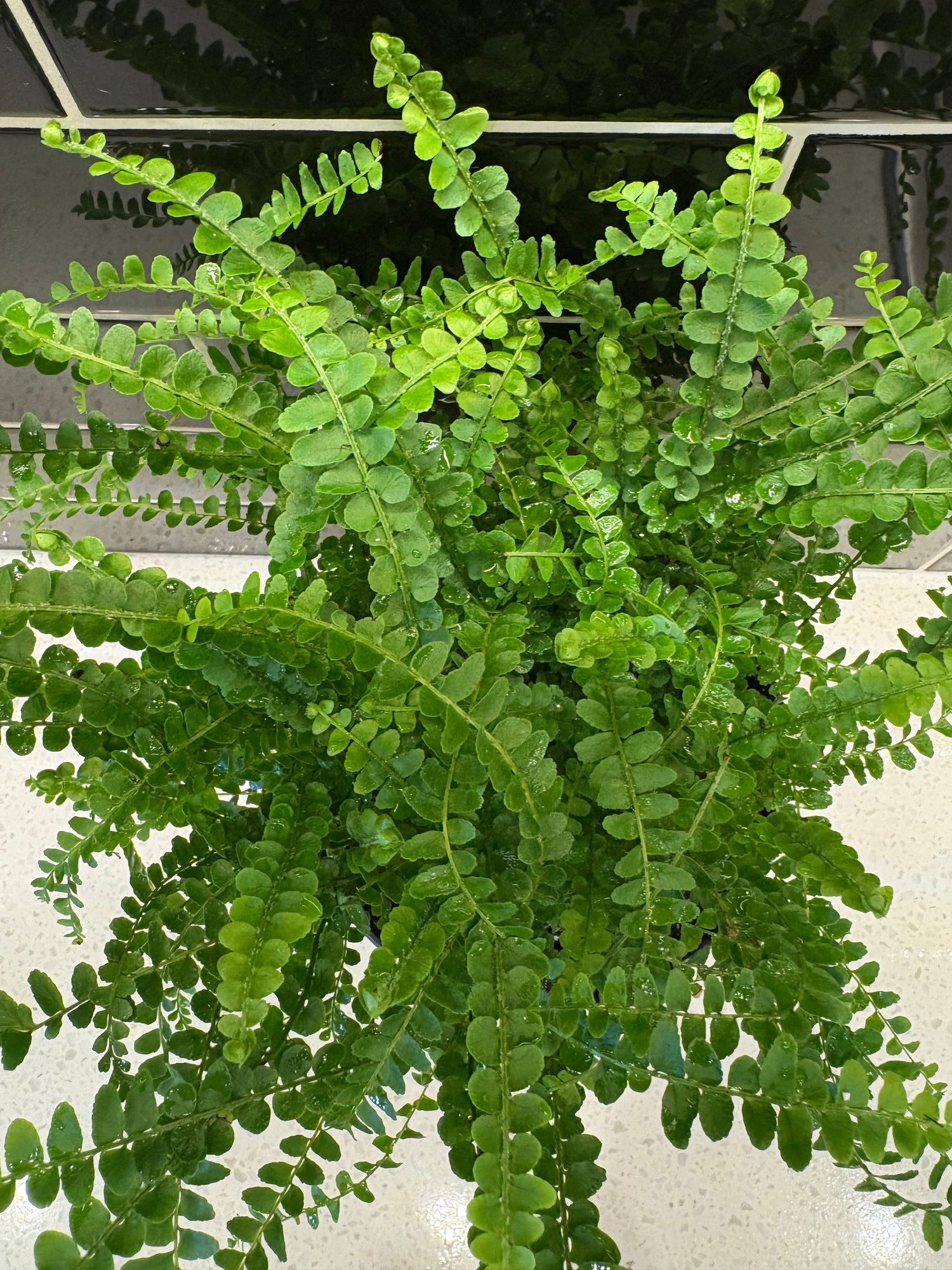
The Lemon Button Fern, originating from the tropical regions of Asia, Australia, and Africa. It thrives in shady, damp, and humid forest floor environments within these tropical habitats.
Scientific Name: Nephrolepis cordifolia 'Duffii'
Common Name: Lemon Button Fern
Light: Medium to bright, indirect light
Watering: When the top inch of soil is dry but do not let the soil stay soggy.
Growth: 12-18 inches spread
Pet Safe: Yes
Care: Easy
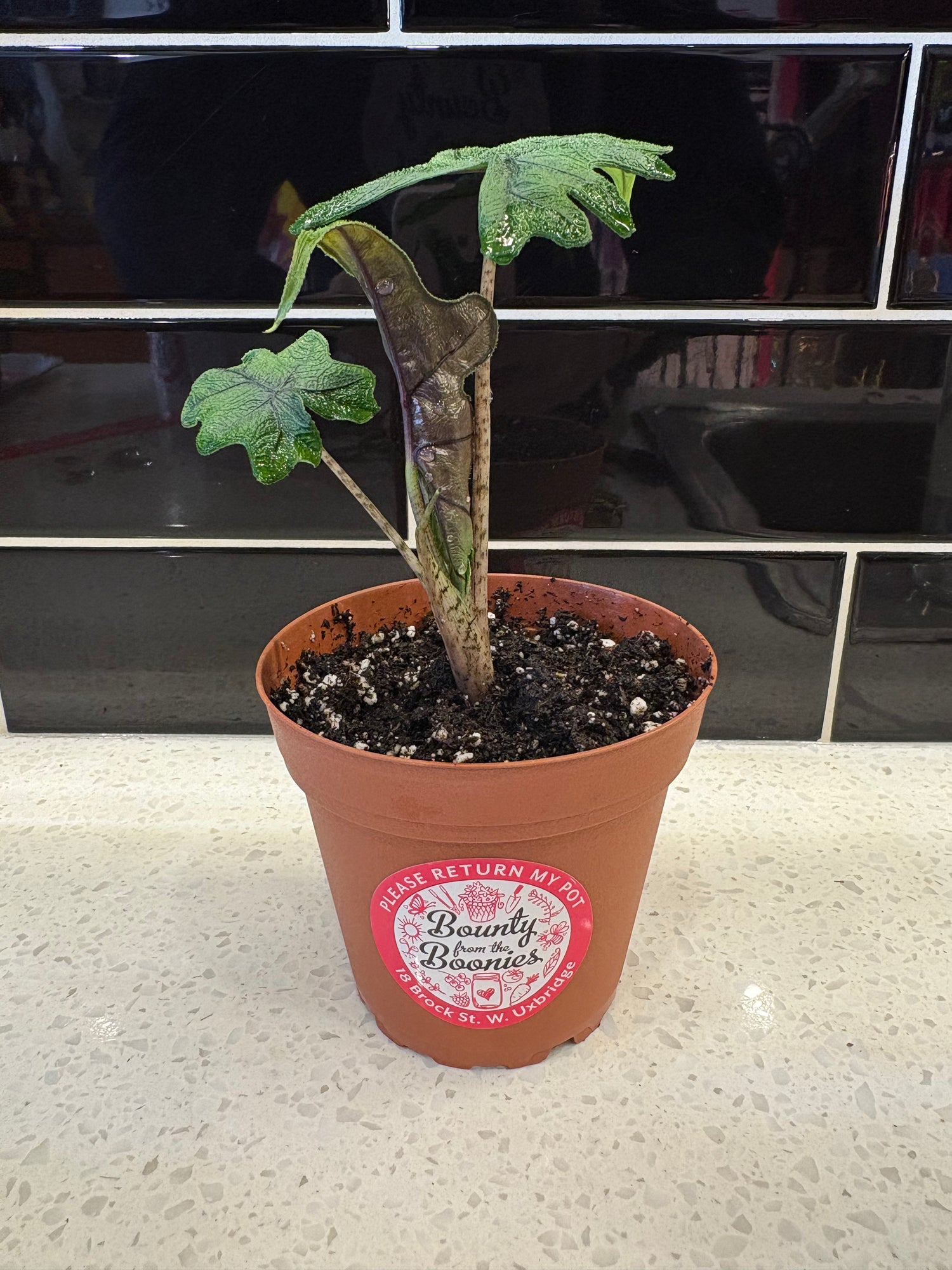
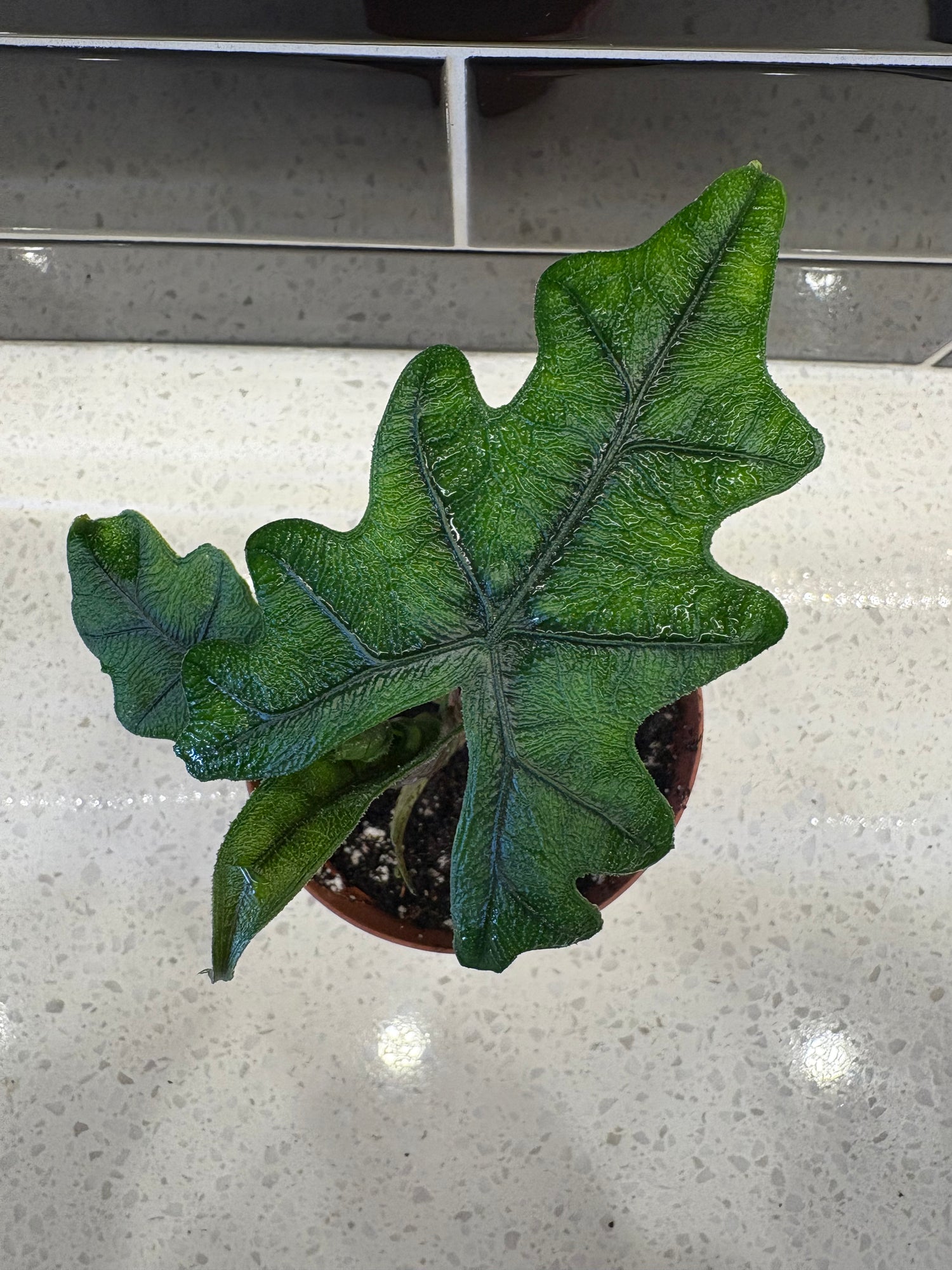
Alocasia Jacklyn originates from the tropical rainforests of Indonesia. It is officially known as Alocasia Tandurusa and its local name, "Tandurusa," translates to "deer antlers" in Indonesian, referring to its unique leaf shape. The name Jacklyn comes from the fact that a woman named Jacklyn shared the plant online giving it a surge in popularity.
Scientific Name: Alocasia Sulawesi and Alocasia Tandurusa
Common Name: Alocasia Jacklyn
Light: Bright, Indirect Light
Watering: Water when the top inch of soil are dry. They thrive in high humidity. Keep evening moist but not waterlogged.
Growth: Moderate to fast depending on if it is in ideal conditions
Pet Safe: No
Care: Moderate to difficult


A peperomia variety that has fun textured leaves of red, maroon and deep purple
Growth: 8 inches tall
Light: Bright indirect light to low light
Watering: When top soil is dry, ensure good drainage
Pet Safe: Yes
Care: Intermediate

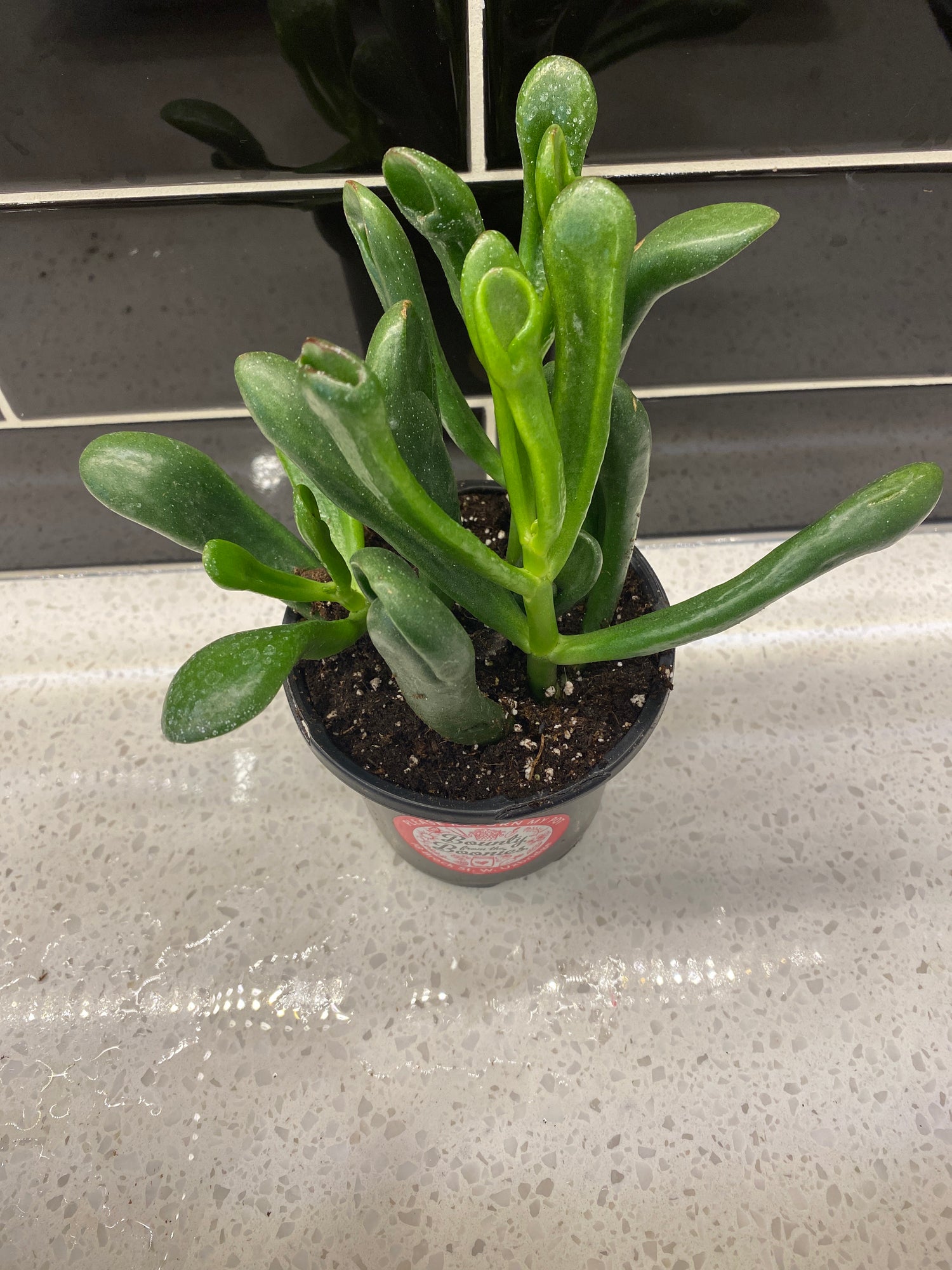
This succulent is very reminiscent of a certain green fellow wouldn’t you say?
It originated in cultivation, not from a specific natural habitat, though its parent plant, Crassula ovata. The most distinguishing feature is the unique, leaves with a slight inward curve, resembling suction cups or fingers!
Scientific Name: Crassula ovata
Common Name: Gollum, Shrek Ears
Growth: Up to 3 ft (30 cm to 91 cm) tall, and up to 2 ft (30 cm to 60 cm) wide
Light: Bright indirect light to full sun
Watering: Let dry out between waterings
Pet Safe: No
Care: Easy
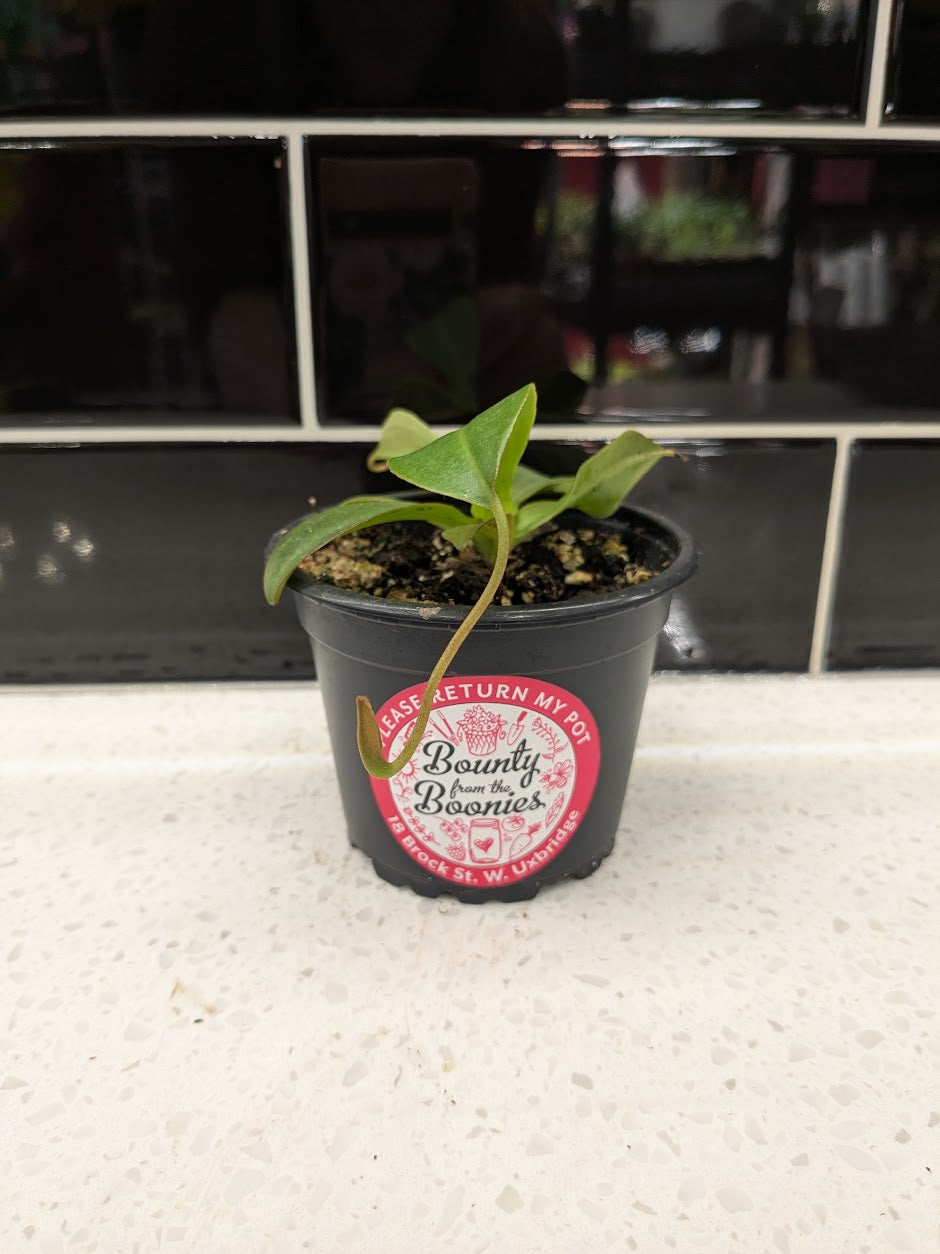
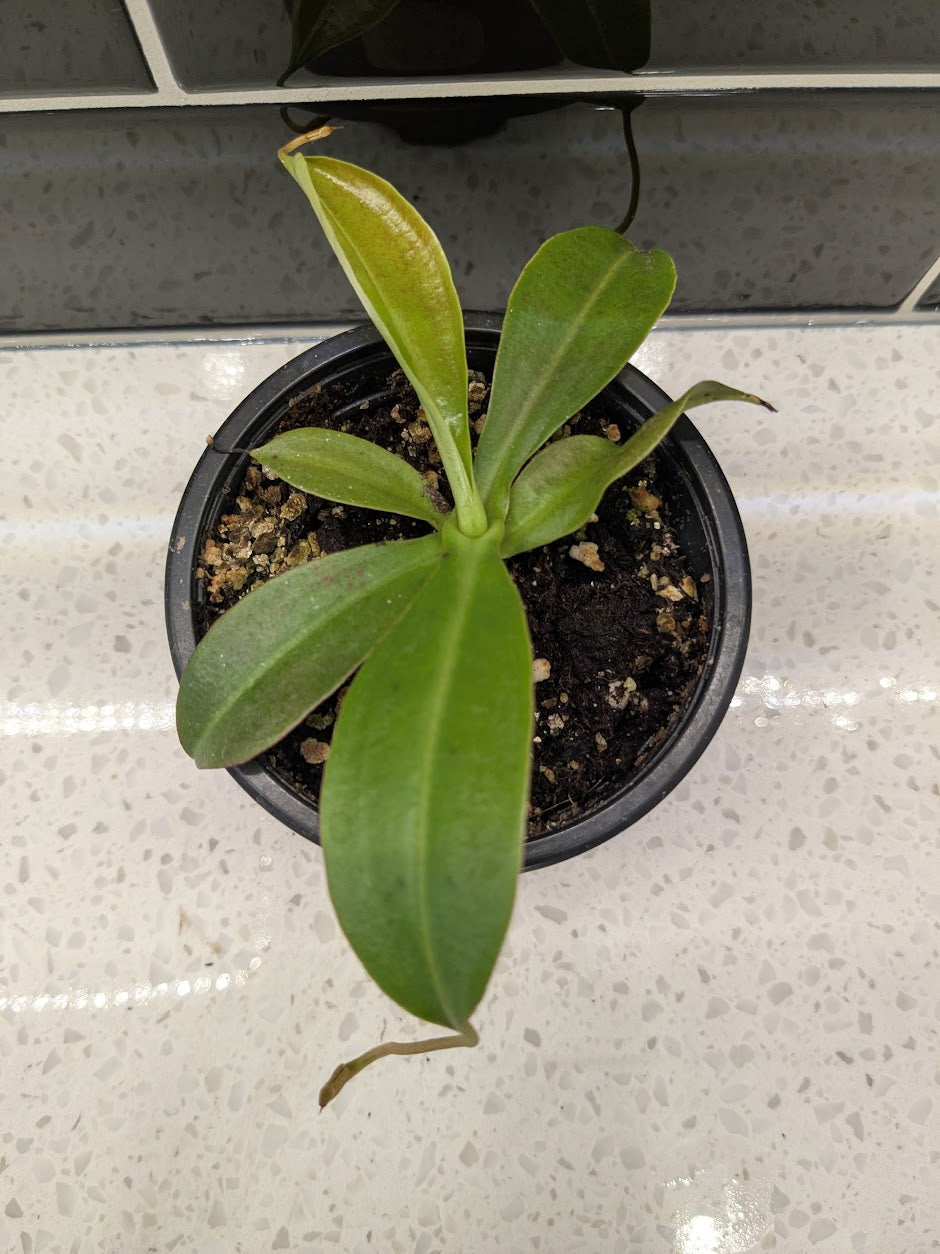
A carnivorous plant with deep maroon pitchers. Native to Southeast Asia, this plant is so unique in the fact that they use they're pitcher leaves to catch their food. These pitchers lure, trap, and digest insects to supplement their nutrient intake in nutrient-poor soil. Since they are from a tropical climate, they do thrive with lots of moisture and humidity.
Scientific Name: Nepenthes
Common Name: Asian Pitcher Plant
Light: Bright indirect light
Watering: Use ONLY distilled, rain or reverse osmosis water. Keep evenly hydrated, likes being misted.
Growth: Slow growing, can take 5-10 years to mature.
Pet Safe: Yes
Care: Intermediate


An elegant variety of ficus, with pink/cream coloured leaves. Originating from Southeast Asia.
Scientific Name: Ficus Shivereana
Common Name: Ficus Moonshine
Light: Bright indirect light
Growth: Can grow quite tall indoors
Watering: When Top of soil is dry, ensure good drainage
Pet Safe: No
Care: Intermediate


The Anthurium is known for their glossy, heart-shaped leaves with vibrant coloured waxy flowers. These "flowers" are actually called spathes. These spathes comes in all different colours such as red, pink, white and black. These plants are native to South and Central America.
Scientific Name: Anthurium Andraeanum
Common Name: Anthurium
Light: Medium-bright indirect
Growth: 1-2 feet tall
Watering: Likes a humid environment - keep evenly hydrated + mist regularly
Pet Safe: No
Care: Easy

Originating from South Africa, this Jade is known for its easy care, low maintenance qualities. One of most popular succulents around!
Scientific Name: Crassula Ovata
Common Name: Jade, Lucky Plant, Money Tree
Growth: about 2 inches of height per year indoors
Light: Bright indirect light to full sun
Watering: Let dry out between waterings
Pet Safe: No
Care: Easy


The circular leaves of this plant sprout from the main stem like fireworks! Known in some cultures as a good luck plant, you can also spread the luck as it is very easy to propagate and it constantly has little babies!
Scientific Name: Pilea Peperomioides
Common Name: Pilea
Growth: Can grow up to 12 inches high
Light: Bright, indirect light
Watering: When top soil is dry, be sure to have good drainage
Pet Safe: Yes
Care: Easy


In the Prayer family, its beautifully patterned leaves are sure to impress! Originating in the tropical rainforests of Brazil where it thrives under a canopy of dense forest and moisture. One of the beautiful things about this plant is that it opens up and displays its colours during the day but then closes up at night. This one has dark leaves painted with pink stripes.
Scientific Name: Calathea roseopicta
Light: Bright indirect light
Growth: 12-24 inches tall
Watering: Keep evenly hydrated, likes to be misted
Pet Safe: Yes
Care: Moderate


The Heart Fern is a unique houseplant known for its glossy, heart shaped leaves on delicate black stems. It’s native to Southeast Asia which is why this plant requires high humidity. It thrives in terrariums!
Scientific Name: Hemionitis Arifolia
Common Name: Heart Fern
Light: Indirect/filtered sunlight
Watering: When top inch of soil is dry.
Growth: 12-18 inches tall
Pet Safe: Yes
Care: Easy


The Bear Claw succulent is a plant with thick, fuzzy green leaves that have distinct, claw-like teeth along the edges, resembling bear paws. The plant is native to South Africa. The tips of the plants, under bright sunlight, can turn red!
Scientific Name: Cotyledon Tomentosa
Common Name: Bear Claw Succulent
Light: Bright, indirect light
Growth: 12-16 inches tall
Watering: Let dry between watering
Pet Safe: No
Care: Easy


Monanthes polyphylla is a small, low growing succulent native to the Canary Islands. It's known for forming dense clumps of tiny rosettes. They have small green, cylindrical leaves that often develop reddish hues in good light. They can also bloom star-shaped flowers in yellow, orange, or purple.
Scientific Name: Monanthes Polyphylla
Common Name: Monanthes Polyphlla
Light: Bright, indirect light
Growth: 12 cm tall
Watering: Let dry between watering
Pet Safe: Yes
Care: Easy


The Chanin is a beautiful plant that has slender, pointed leaves that radiate outwards in a fan-like formation. It is a matte green, almost frozen mint colour. The leaves are plump, fleshy, and exceptionally pleasing to the touch. This plant originates from Thailand and is also in the family of the common Snake Plant.
Scientific Name: Dracaena trifasciata
Common Name: Sansevieria Chanin, Silver Syreni
Light: Can tolerate low light but thrives in indirect light
Growth: Slow growth rate
Watering: Allow soil to dry out completely before watering.
Pet Safe: No
Care: Easy
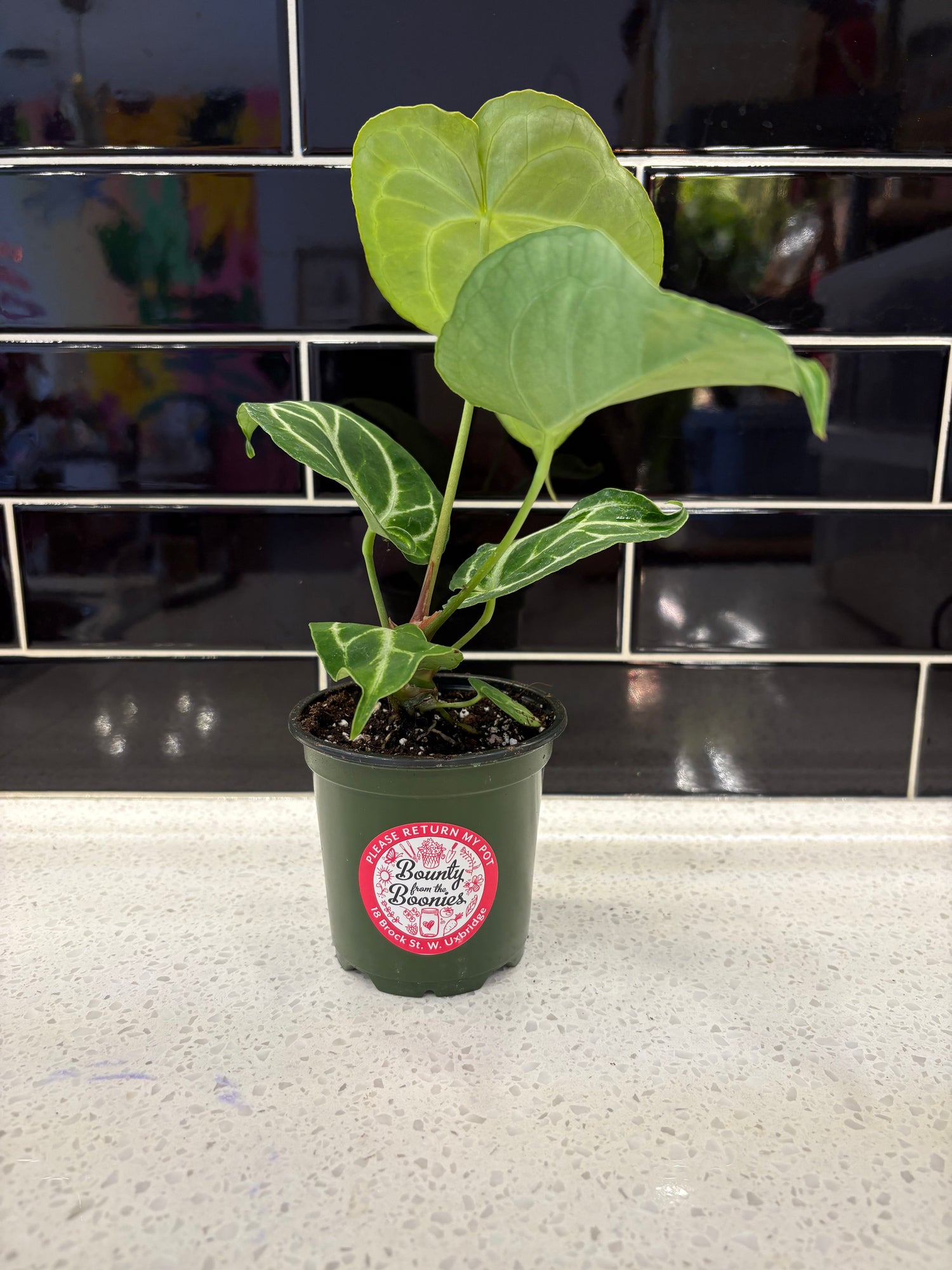
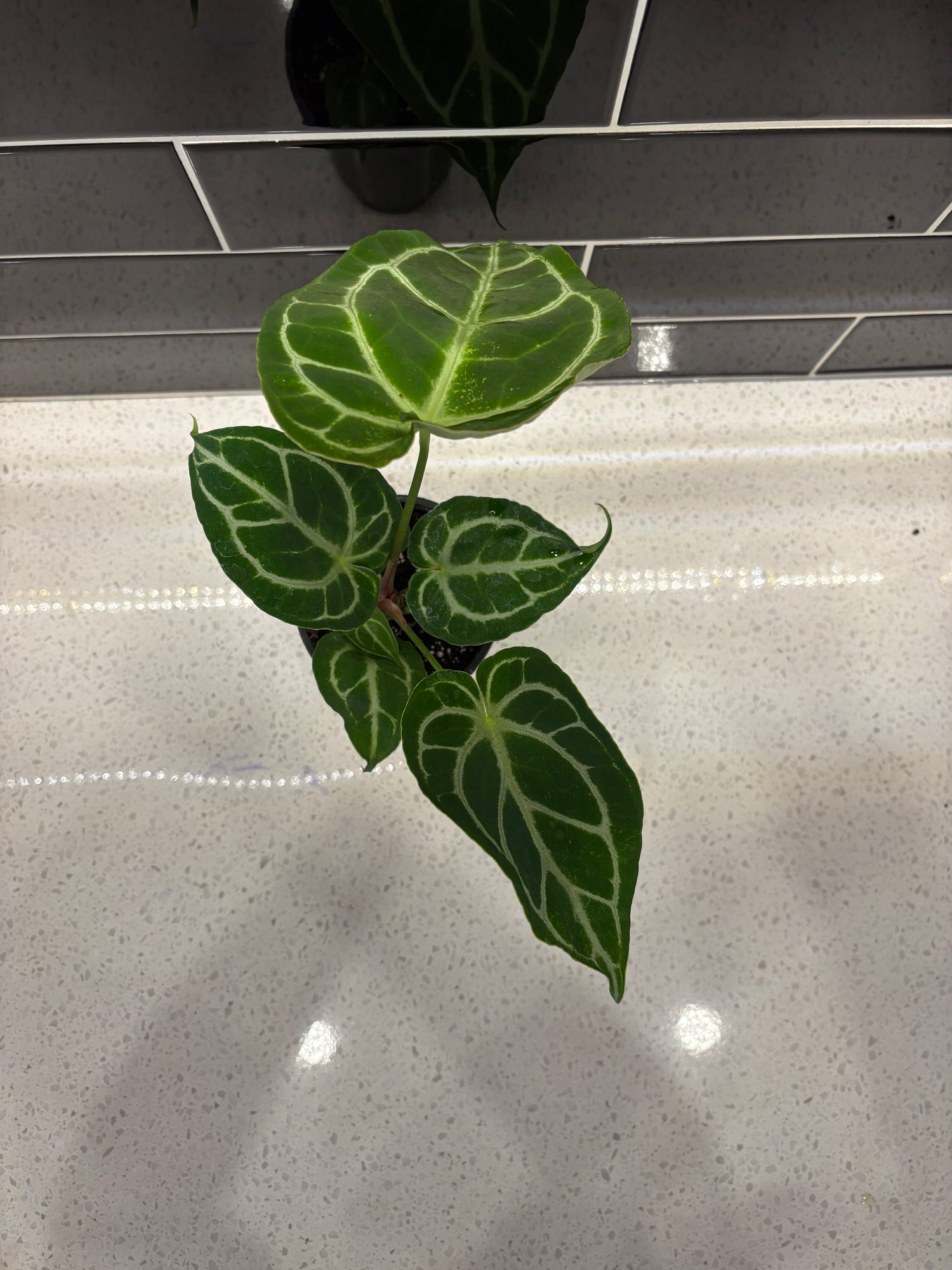
This show-stopping plant has giant, velvet leaves reminiscent of sea turtle shells - the silver veining streaks across the top + sparkles in the sunlight. The heart-shaped foliage is lush + eye-catching, making it a sought-after collector's plant. Would thrive in a bright bathroom!
Scientific Name: Anthurium crystallinum 'Turtle'
Common Name: Turtle Leaf Anthurium
Light: Medium-bright indirect
Growth: 1-1.5 ft tall - the leaves can grow 6-10" long
Watering: Likes a humid environment - keep evenly hydrated + mist regularly
Pet Safe: No
Care: Intermediate


This beautiful cactus grows incredible bright flowers!
Light: Bright indirect light. Avoid full sun because they will get scorched
Watering: Ideally, you want the top 1/3 of the potting mix to dry out before watering. In winter, reduce watering and move the plant to a cooler location. This will help produce healthy, large flowers the next season.
Pet Safe: Yes, but still recommended to keep out of reach. Ingesting too much can get your pet sick.
Care: Easy