










Sort by:
824 products
824 products


Cacti store water in their stems, which is why they are thrive in the desert. The spines on cacti are actually modified leaves. They help to protect the plant from animals and reduce water loss by shading the stem.
Scientific Name: Opuntia Microdasys
Common Name: Bunny Ear Cactus
Growth:
Light: Bright, Indirect sun
Watering: Let the soil dry out completely before watering
Pet Safe: Yes
Care: Easy


Native to dry cliffs in Honduras and Mexico, this cool looking plant is very easy care. The less you do for it the happier it will be!
Scientific Name: Sedum Morganianum/Sedum burrito
Common Name: Burro’s Tail
Light: Bright light, morning sun is best
Growth: Slow growing and trailing habit. Up to 4 feet in the wild, it will remain much smaller indoor. Burro's tail is a very long lived plant.
Watering: Let dry between watering
Pet Safe: Yes
Care: Easy
Sedum burrito - blue green rice shaped leaves
sedum morganianum - spiky banana leaves

This butterfly table cloth will be a beautiful addition to your Easter/Spring dinners and events.
100% Cotton
Dimensions:
Oblong 52” x 72”
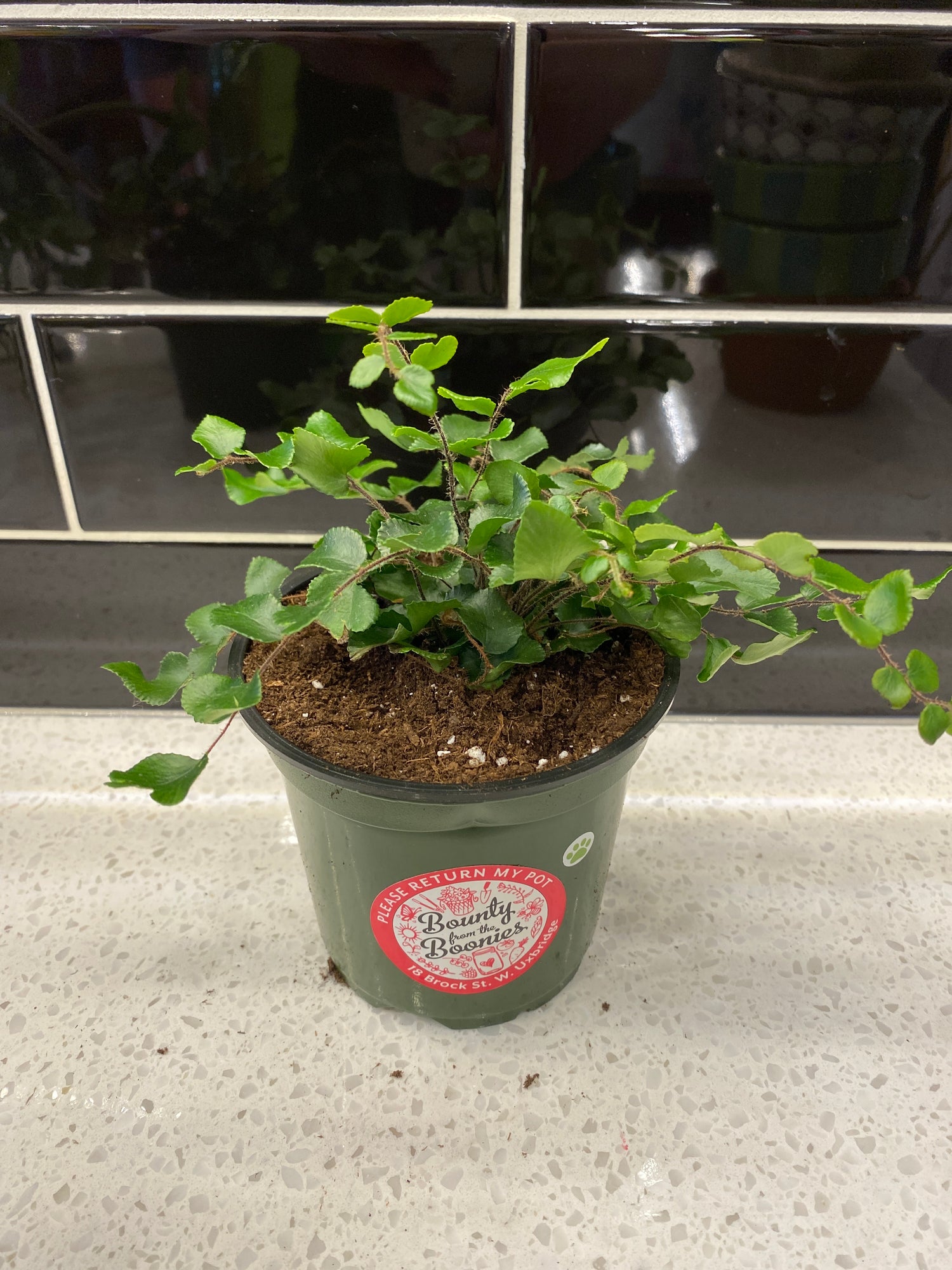
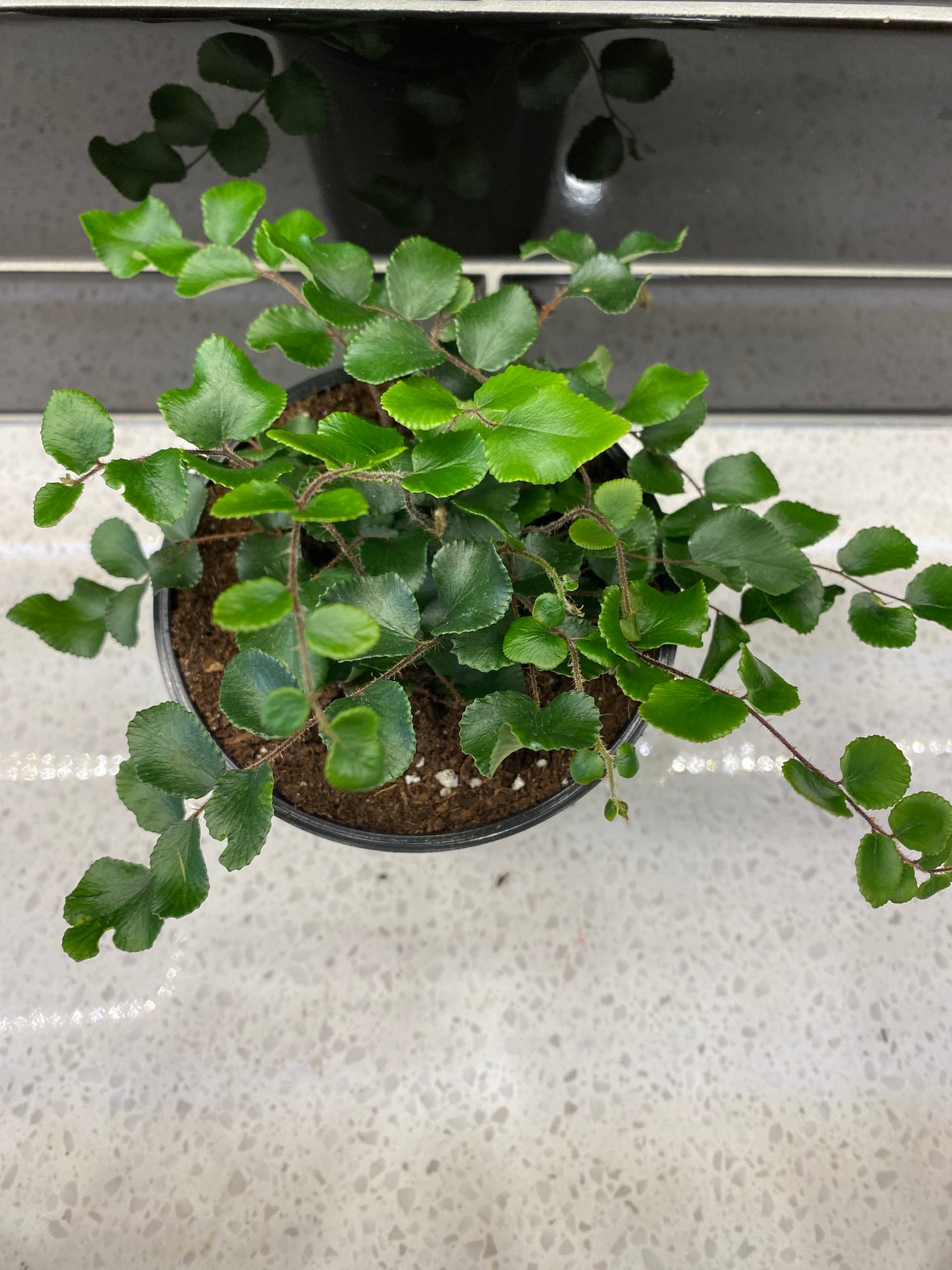
Delicate but hardy. Bring the forest inside with this adorable Button Fern. Originating from Australia and New Zealand, this little guy typically grows in moist, open forests, rocky crevices, and on limestone cliffs.
Scientific Name: Pellaea Rotundifolia
Common Name: Button Fern
Light: Bright indirect light
Watering: They need a very deep watering followed by letting them dry out.
Growth: Can grow up to 12 inches
Pet Safe: yes
Care: Easy


This specialty potting mix is formulated specifically for cacti and succulents. Non-compacting formula is made with peat, perlite, and vermiculite to have great air circulation and a well-draining substrate.
350mL


A very cool looking plant! Hanging branches are thornless, making this a pleasant cacti to have in the house!
Scientific Name: Rhipsalis spp.
Common Name: Mistletoe Cactus
Growth: Hanging branches can range from 3 to 10 feet
Light: These cacti grow in the jungle, so providing them with morning sunlight and a dappled light scenario, will be best.
Watering: this cactus actually likes to be on the wet side. Water when top is dry- do not allow it to dry out completely, but do not stand in water.
Pet Safe: yes
Care: Easy


A very cool looking plant!
Scientific Name: Euphorbia tirucalli
Growth: While it can grow quite large in the wild, it will typically grow to 3', up to 6' indoors when very happy
Light: Full sun. Keep warm.
Soil: Dry, well drained, nutrient deficient soil
Watering: Very little. 1-2 times per month in summer and less in the winter. Let soil dry out completely between watering.
Pet Safe: No
Care: Easy


This houseplant is considered one of the most elegant types of calatheas. It's known for its wide, pointed dark green leaves marked with sets of thin stripes in creamy white or pink. It originates from Central and South America where it's used to the wet conditions of a tropical climate.
Scientific Name: Calathea Ornata
Common Name: Pinstripe Plant/ Calathea Pinstripe
Light: Bright, indirect light
Growth: 2-3 feet high
Watering: Keep soil moist but not soggy
Pet Safe: Yes
Care: Difficult


Originating from the rainforests of Brazil, in its native habitat, it thrives in the warm, humid, and shaded conditions found on the rainforest floor, growing under the canopy of taller vegetation. With its stunning spotted leaves with beautiful dark and light green colours, this is sure to be a plant that everyone admires in your home.
Scientific Name: Calathea Burle Marxii
Common Name: Rattlesnake Calathea
Light: Bright,indirect light
Growth: Can spread 2-3 feet
Watering: When the soil in the pot is dry halfway down
Pet Safe: Yes
Care: Difficult


In the Prayer family, its beautifully patterned leaves are sure to impress! Originating in the tropical rainforests of Brazil where it thrives under a canopy of dense forest and moisture. One of the beautiful things about this plant is that it opens up and displays its colours during the day but then closes up at night. This one has dark leaves painted with pink stripes.
Scientific Name: Calathea roseopicta
Light: Bright indirect light
Growth: 12-24 inches tall
Watering: Keep evenly hydrated, likes to be misted
Pet Safe: Yes
Care: Moderate


The Calathea White Fusion is a rare houseplant known for its striking, variegated leaves with green and white markings and purple underside. It can be sensitive to chemicals in the tap water and direct sun can burn the leaves. This plant is native to Central and South America.
Scientific Name: Calathea lietzei
Common Name: Calathea White Fusion
Light: Bright, indirect light
Growth: 2-3 feet high
Watering: Keep soil consistently moist with well draining soil
Pet Safe: Yes
Care: Moderate to difficult


One of the easier Calathea's to grow indoors, making a great entry level "Prayer" plant. Like all Calathea's the leaves are open during the day and then close up at night time. Very cool! "Network" has a fascinating yellow, almost pixilated pattern on the leaves.
Scientific Name: Calathea musaica
Light: Bright, indirect light. This Calathea will tolerate a little bit of morning sun.
Growth: 2-3 feet high
Watering: Water once the top inch feels dry. Soak well and let it drain completely. Using filtered water is best as the chlorine and fluoride in most tap water can cause leaf browning.
Pet Safe: Yes
Care: Moderate

$4 each or 3 for $10 (save $2!)
Calendula are a happy daisy, which once planted in the garden will self sow around in joyful abundance (but not in a weedy way)! The flowers can be dried and placed in oil for a lovely balm to soothe dry or irritated skin.
Oopsy Daisy blooms have an unusual bi-coloured flower.
Type: annual
Height: 12-18"
Soil: average soil, quite drought tolerant.
Light: Full sun
Planting: Transplant outdoors after the last frost. Be sure to harden off*.
Care: low maintenance. Deadhead regularly
Bloom time: early summer - hard frost
*Hardening off refers to the process of gently and gradually acclimatizing indoor grown seedlings to the great outdoors! Don't throw your new babies straight into the elements! Over the course of a week, take them outside for a few hours at a time, bringing them back indoors afterwards. First sit them in the shade and then slowly introduce them to the sun. Increase the length of time they are outside and are exposed to the sun, until you feel they are ready to face the big outside world!
$4 each or 3 for $10 (save $2!)
Calendula are a happy daisy, which once planted in the garden will self sow around in joyful abundance (but not in a weedy way)! The flowers can be dried and placed in oil for a lovely balm to soothe dry or irritated skin.
Oopsy Daisy blooms have an unusual bi-coloured flower.
Type: annual
Height: 12-18"
Soil: average soil, quite drought tolerant.
Light: Full sun
Planting: Can be directly sown outdoors after danger of frost or can be started indoors 4 weeks before the last frost. Transplant outdoors after the last frost. Be sure to harden off*.
Care: low maintenance. Deadhead regularly
Bloom time: early summer - hard frost
*Hardening off refers to the process of gently and gradually acclimatizing indoor grown seedlings to the great outdoors! Don't throw your new babies straight into the elements! Over the course of a week, take them outside for a few hours at a time, bringing them back indoors afterwards. First sit them in the shade and then slowly introduce them to the sun. Increase the length of time they are outside and are exposed to the sun, until you feel they are ready to face the big outside world!


Prized for its grey-green, paddle-shaped leaves with purple spots that intensify with more sun. Native to South Africa, the Calico heart plant is slow growing and a low maintenance plant.
Scientific Name: Adromischus Triiflorus
Common Name: Calico Hearts
Light: Bright, indirect light
Growth: 2- 6 inches tall
Watering: Let dry between watering
Pet Safe: Yes
Care: Easy


This 6” succulent, delightfully named Calico Kitten, is a lovely trailing succulent with variegated leaves.
Scientific Name: Crassula Pellucida ‘Variegata’
Common Name: Calico Kitten
Light: Bright, indirect light. Too much sun may cause scorching of the leaves.
Watering: Let it dry out between watering. Water more during the spring and summer and very sparingly during the winter.
Growth: Up to 12 inches- can be trimmed back if growing too long
Pet Safe: Yes, although can cause gastro upset if ingested. Best kept away from pets
Care: easy


The Cape Sundrew is a rosette-forming carnivorous herb in the flowering plant family Droseraceae. This interesting plant has a unique look. They're known for their long, strap-like leaves covered in glistening, sticky tentacles that trap and digest insects. They can then supplement nutrients that they aren't getting from the poor soil. The tentacles secrete a sugary mucilage that lures prey in such as gnats. The gnats get stuck in the sticky substance and the leaf slowly curls around the bug then digests it.
Native to the Cape region of South Africa where it grows in permanently wet, nutrient poor habitats.
Substrate for the Sundews: Use a nutrient poor, mineral free substrate that retains moisture but drains well. The mix is 1:1 using peat moss/ sphagnum moss and perlite. Keep consistently hydrated with distilled water only.
Scientific Name: Drosera capensis
Common Name: Cape Sundrew
Light: 6+ hours of direct sun daily
Watering: Keep consistently hydrated
Growth: 4-6 inches
Pet Safe: Yes
Care: Difficult


The best for indoor plants, herbs, cutting flowers - I have a pair in every pocket!
Stainless steel blades. Plastic handle. 6.5" long including handle.

Yup, I am real. No nasty thorns, just whimsical me!
Opuntia consolea falcata