







Houseplants

We're your home for all things plants. We have a unique, curated collection of all kinds of houseplants to add life to your home.
Sort by:
263 products
263 products


The circular leaves of this plant sprout from the main stem like fireworks! Known in some cultures as a good luck plant, you can also spread the luck as it is very easy to propagate and it constantly has little babies!
Scientific Name: Pilea Peperomioides
Common Name: Pilea
Growth: Can grow up to 12 inches high
Light: Bright, indirect light
Watering: When top soil is dry, be sure to have good drainage
Pet Safe: Yes
Care: Easy

Known as a "prayer" plant because the leaves fold together in the evening like hands in prayer. In the morning they will open up again. This variety has lovely gold and cream variegation on the leaves.
Scientific Name: Ctenanthe lubbersiana golden mosaic
Common Name: Never never plant, bamburanta
Light: Bright Indirect light with some morning sunlight. East facing window is ideal but a north facing window is okay too.
Growth: 2-4' tall
Watering: Water when the top 1-2" of the soil is dry, then water well and let the water drain away.
Pet Safe: Yes
Care: Intermediate


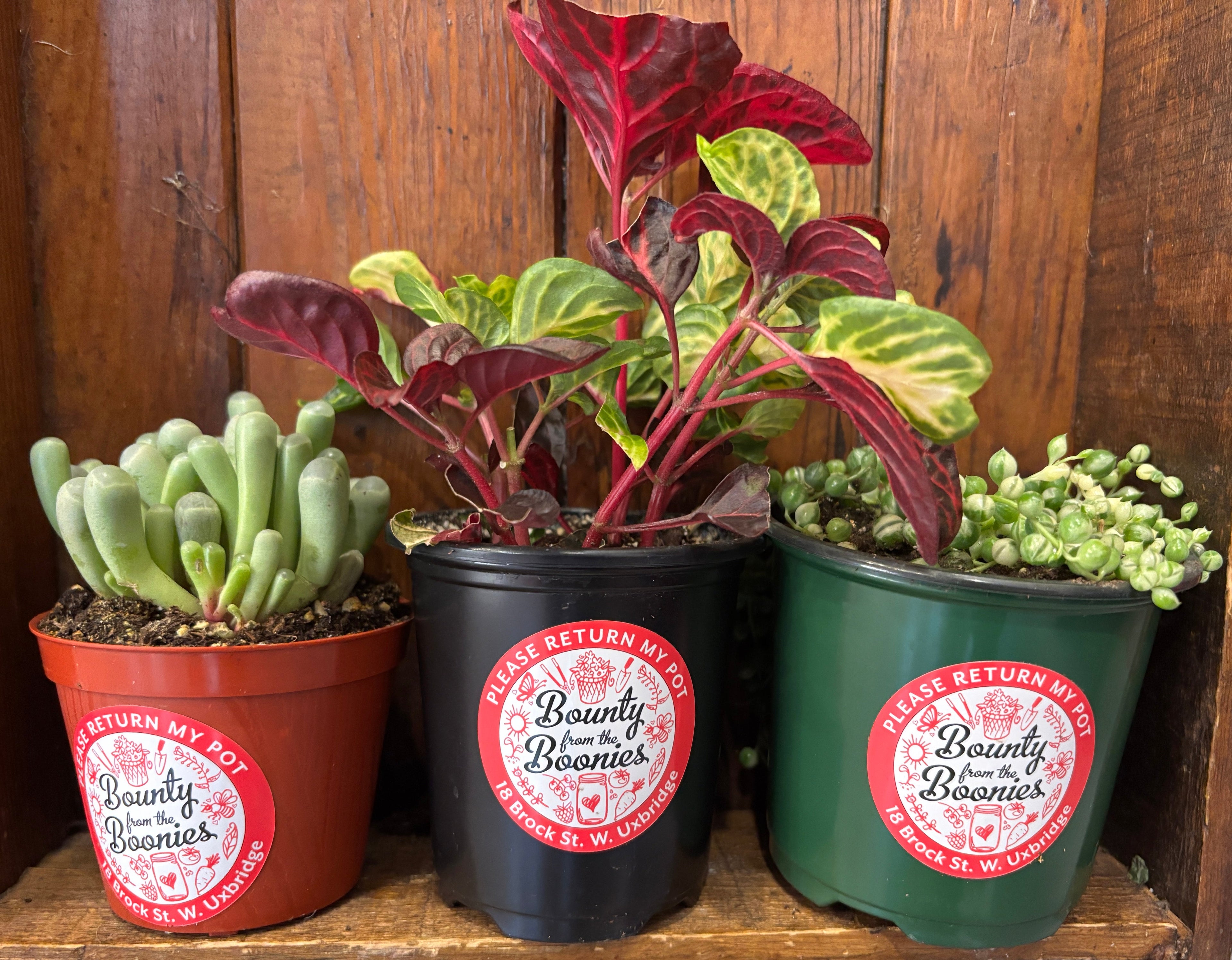
The String of Beads is a cute little plant that resembles beads.
Scientific Name: Senecio rowleyanus
Common Name: String of Beads
Growth: Could reach 12 inches long
Light: Bright indirect light
Watering: When top soil is dry, ensure good drainage
Pet Safe: No
Care: Intermediate


This beautiful plant has cascading vines and heart shaped leaves. This plant stores water in its leaves and roots making it drought tolerant. In the spring and fall the String of Hearts actually produces flowers!
Small, tubular, pinkish-purple flowers and they have tiny hairs that trap insects helping with pollination!
Scientific Name: Ceropegia Woodii
Common Name: String of Hearts/Rosary Vine/Chain of Hearts
Light: Bright indirect light to full sun
Watering: Let dry out between waterings
Pet Safe: Yes
Care: Easy


A Peperomia variety that has long green leaves rimmed with hot pink edges. Native to Jamaica where it thrives in humid environments, this plant is a stunning piece for your home. It's worry-free as it is safe for your pets and it looks great in your window or even in a terrarium!
Scientific Name: Peperomia Clusiifolia
Common Name: Metallica Peperomia
Light: Bright indirect light
Watering: When top soil is dry, ensure good drainage
Growth: 6-12 inches tall but can grow quite bushy
Pet Safe: Yes
Care: Intermediate


Scientific Name: Crassula muscosa
Common Name: Baby Necklace
Growth: up to 12 inches
Light: Bright. Ideally, place near a south or west-facing window that receives a few hours of direct sunlight per day.
Watering: Water more during the spring and summer, reducing the amount in the fall and giving very little during the winter. ALWAYS allow your cactus to dry out completely between waterings.
Pet Safe: Yes
Care: Easy


N Joy is a popular, low-maintenance houseplant that is known for its green leaves with creamy white variegation. This will make your space look bright and stylish! It thrives in hanging baskets and originates from Southeast Asian tropical rainforests where it would crawl and vine down the vegetation.
Scientific Name: Epipremnum aureum
Common Name: Pothos ‘N’ Joy
Light: Bright indirect light to low light
Watering: Keep evenly hydrated, ensure good drainage
Growth: In ideal conditions this plant can grow 12-18 inches a year.
Pet Safe: No
Care: Easy


The Heart Fern is a unique houseplant known for its glossy, heart shaped leaves on delicate black stems. It’s native to Southeast Asia which is why this plant requires high humidity. It thrives in terrariums!
Scientific Name: Hemionitis Arifolia
Common Name: Heart Fern
Light: Indirect/filtered sunlight
Watering: When top inch of soil is dry.
Growth: 12-18 inches tall
Pet Safe: Yes
Care: Easy


The Bear Claw succulent is a plant with thick, fuzzy green leaves that have distinct, claw-like teeth along the edges, resembling bear paws. The plant is native to South Africa. The tips of the plants, under bright sunlight, can turn red!
Scientific Name: Cotyledon Tomentosa
Common Name: Bear Claw Succulent
Light: Bright, indirect light
Growth: 12-16 inches tall
Watering: Let dry between watering
Pet Safe: No
Care: Easy


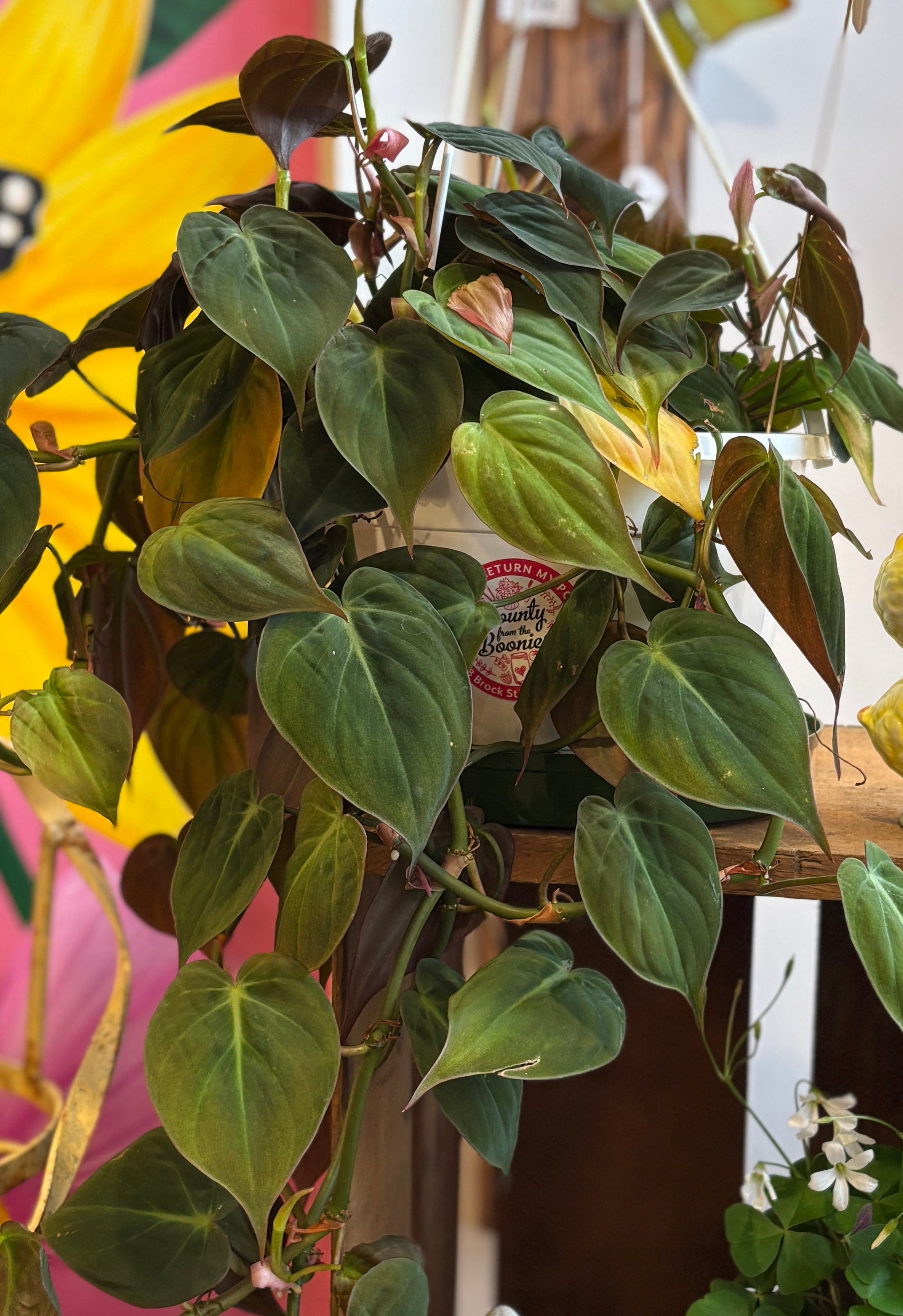
The Philodendron 'McColley’s Finale' is an eye catching hybrid Philodendron known for its striking new growth that starts as orange-brown and matures into shades of Orange and Green.
Scientific Name: Philodendron
Common Name: Philodendron McColley's Finale
Light: Bright, indirect light
Growth: Can grow one to two feet per year
Watering: When top 2 inches are dry
Pet Safe: No
Care: Intermediate
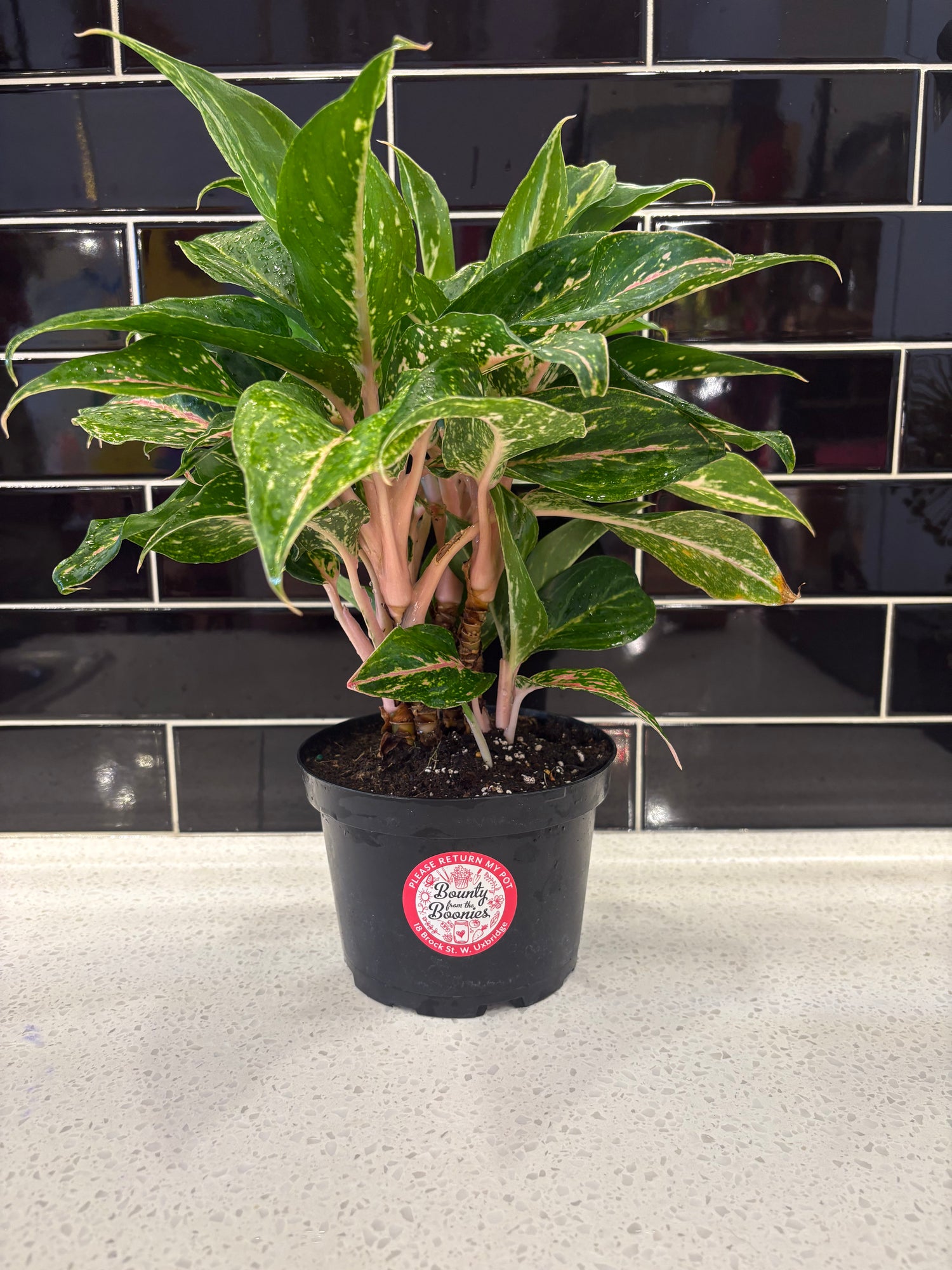
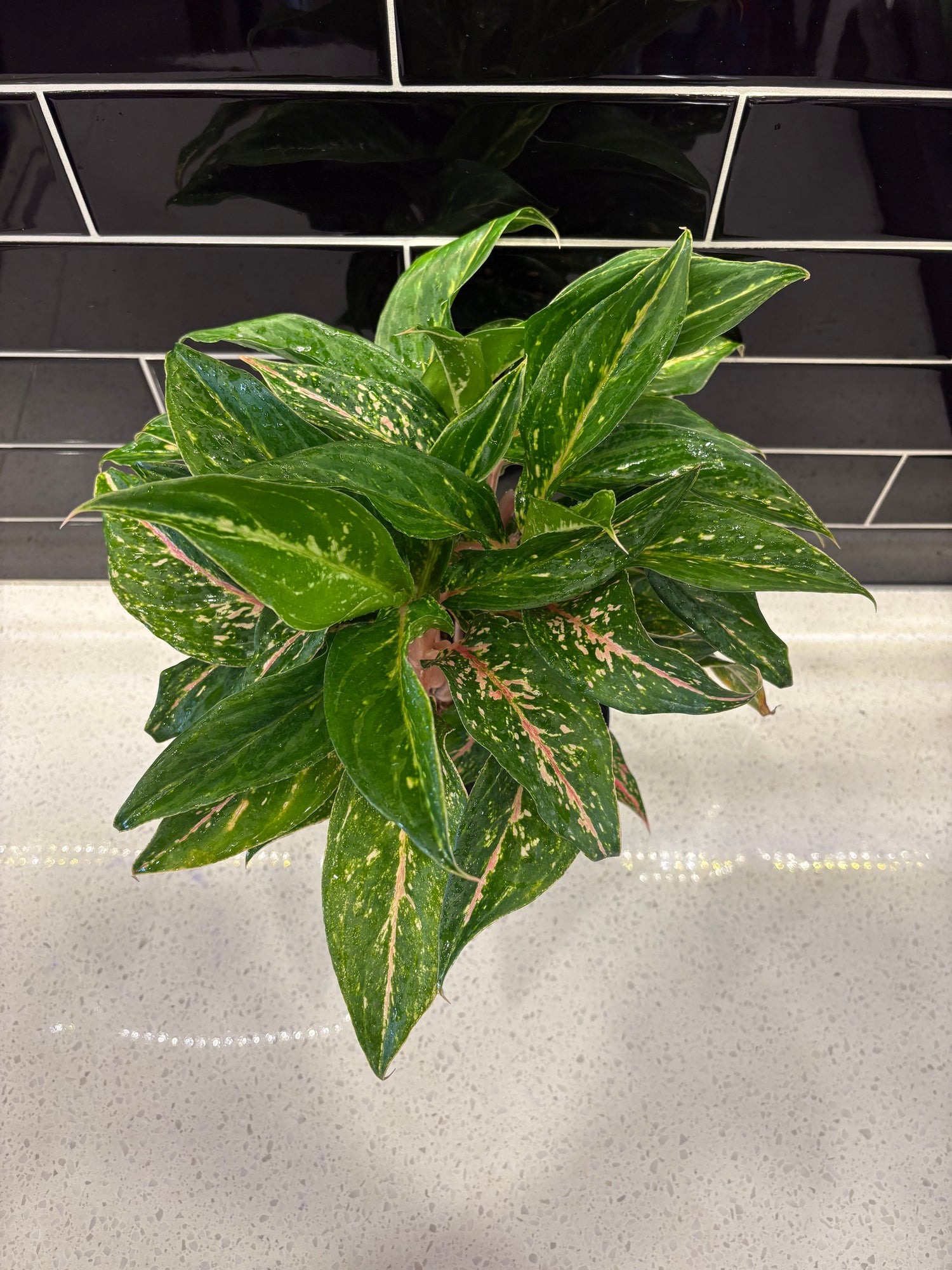
The Chinese Evergreen also known as the Aglaonema - Sparkling Sarah is a vary easy plant to care for and they are a great choice for beginners! This plant
is native to the tropical and subtropical rainforests of Southeast Asia and New Guinea, where it grows in low-light, humid conditions.
Scientific Name: Aglaonema
Common Name: Chinese Evergreen
Growth: 2-3 feet
Light: Bright indirect light though it can withstand lowlight conditions
Watering: They need to be watered when the top layer of soil drys out.
Pet Safe: no
Care: Intermediate


This plant originates from the tropical rainforests of Southeast Asia. With it's beautiful green, heart-shaped leaves with silver shimmery pattern, this pothos stands out. Their painted looking leaves is why this plant was named "pictus," which is Latin for "painted"!
In its natural habitat, this pothos grows as an epiphyte, climbing tree trunks using aerial roots, or trailing along the forest floor.
Silver Satin Pothos is known for its ability to help purify indoor air by removing common pollutants like formaldehyde and benzene.
Scientific Name: Scindapsus Pictus
Common Name: Silver/Satin Pathos
Light: Medium to bright, Indirect light
Growth: Can grow 4-10 feet long
Water: Let dry out between waterings. Water thoroughly when the top inch or two of soil is dry, allowing excess water to drain away to prevent root rot.
Pet Safe: Mildly toxic. It's best to keep your pets away!
Care: Easy


The Variegated Peperomia Obtusifolia is a popular, easy care houseplant with glossy, fleshy leaves featuring a marbled pattern of green, cream and yellow. This plant is somewhat drought-tolerant due to its water-storing leaves and stems but is susceptible to overwatering, which can lead to root rot. This plant is native to the tropical regions of Southern Florida and Mexico.
Scientific Name: Peperomia tetraphylla
Common Name: Peperomia hope
Light: Bright, Indirect light
Watering: When the top two inches are dry
Pet Safe: Yes
Care: Easy


A small statured plant with beautiful foliage. Leaves are heavily veined in white or sometimes pink or red.
Scientific Name: Fittonia albivenis
Common Name: Nerve plant, mosaic plant, fittonia, painted net leaf
Light: Bright Indirect light- north facing window is ideal.
Growth: 3-6" tall with a 12" spread
Watering: Keep evenly moist- they do not like to dry out. But do not leave standing in water as this will cause roots to rot.
Pet Safe: Yes
Care: Intermediate


3” Mini Hydrengea that can be potted outside. Available in pink and purple.
Diameter: 3”
Pet safe: No


This is a very pretty Aloe with edges lined with little spines which are not sharp. Leaves are speckled with white. It is native to Kenya.
Scientific Name: Aloe juvenna
Common Name: Tiger Tooth Aloe
Growth: 12 inches tall and wide, grows slowly
Light: Bright light. If they are not receiving enough light they will get taller and reach for the sun. The brighter the light, the more compact they will remain. However, the leaves can burn if in too much hot sun, especially in the summer.
Watering: Let it dry out between watering
Pet safe: Yes
Care: Easy

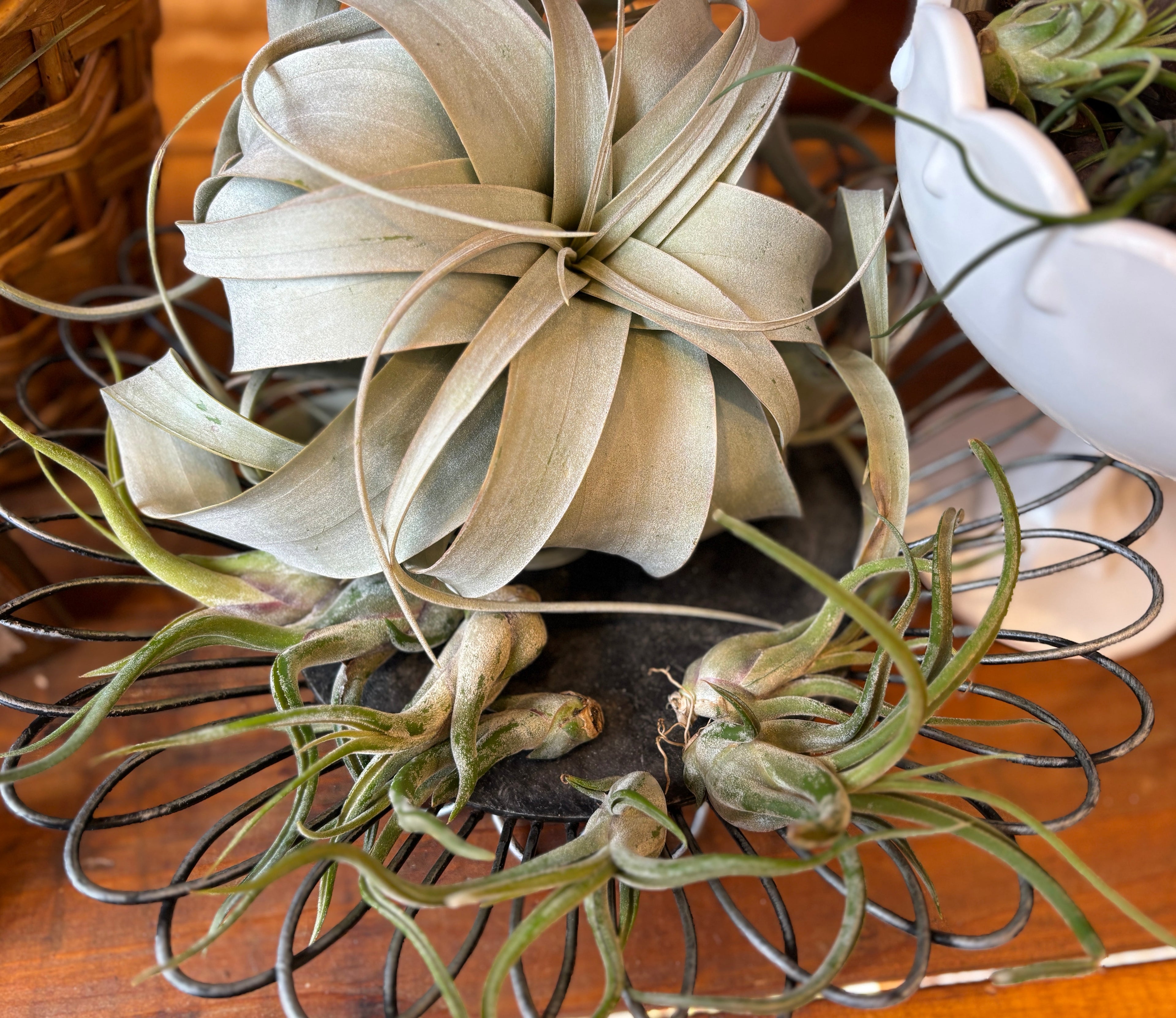
The lowest of care plants! Air plants do not require soil to survive. Just as the name implies, they survive in air! They can be displayed in many decorative formats. With their unique look, they can be quite fun to display. They originate from Central and South America. Air Plants come in all shapes and sizes as well as multiple colours.
Scientific Name: Tillandsia Butzii
Common Name: Air Plant
Light Requirements: Bright Indirect Light, direct sun for too many hours can scorch the leaves.
Water: Once a week, submerge in water and then be sure to completely dry out.
Pet Safe: Yes
Care: Easy


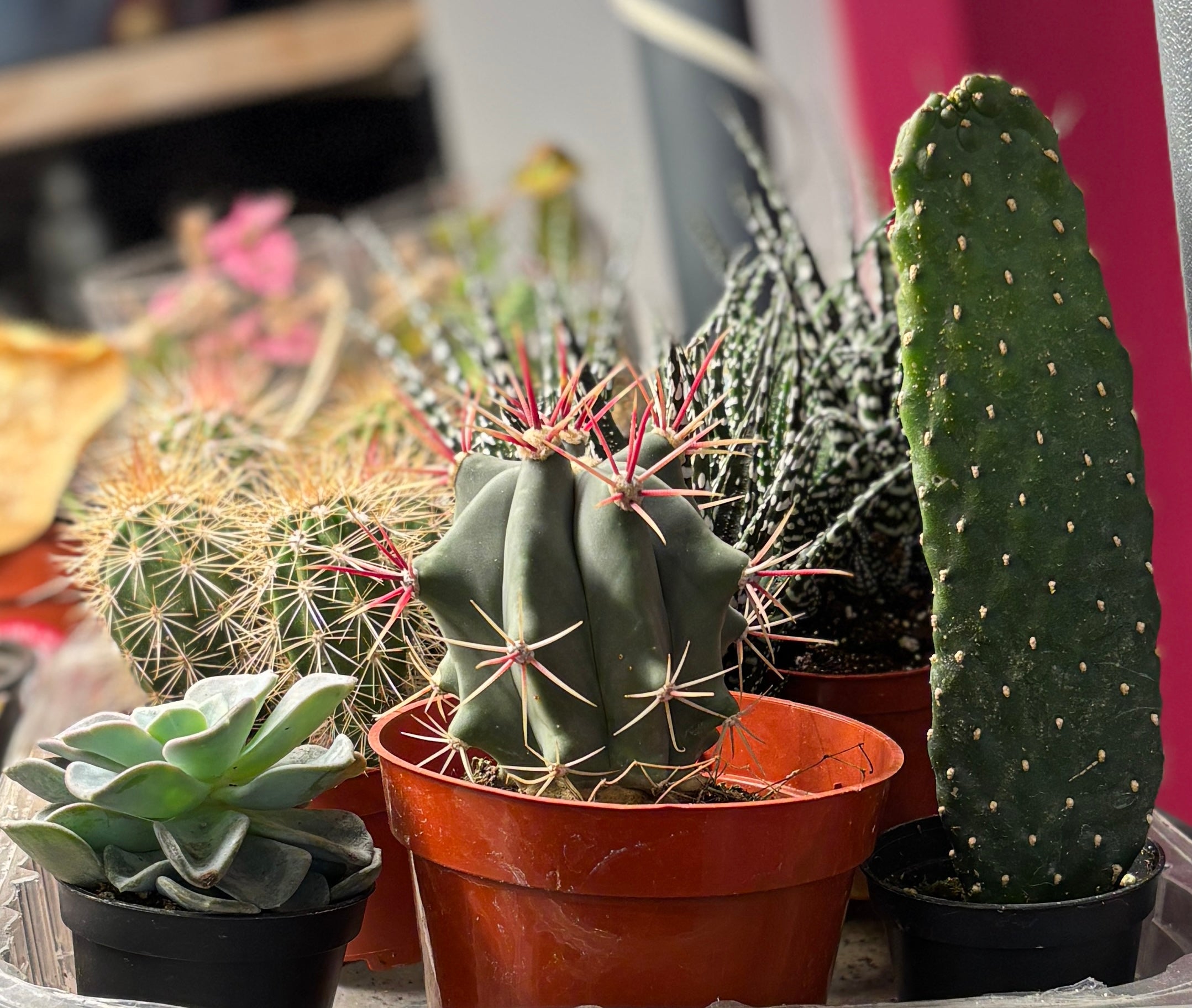
A fun Cactus with an interesting growth habit, producing multiple curved stems which resemble turrets of a castle, hence its common name. It is native to southern Florida and the Lower Rio Grande Valley of Texas, the Caribbean and South America.
Scientific Name: Acanthocereus Tetragonus
Common Name: Fairy Castle Cactus
Growth: Slow growing. While it can reach great heights in the wild, 6 feet or more, it will remain much smaller when grown indoors.
Light: Very bright indirect light. Too much sun can cause scorching.
Flowering: Lovely white flowers only open for one night. In the wild these flowers attack moths.
Watering: Let it dry out completely before watering and limit watering in the winter and increase during the summer.
Pet Safe: Non toxic however because of its sharp spines, it should be kept where pets can not be poked accidentally.
Care: Easy. Repotting every 2-3 years is recommended because its root system is large and tends to extend outwards.


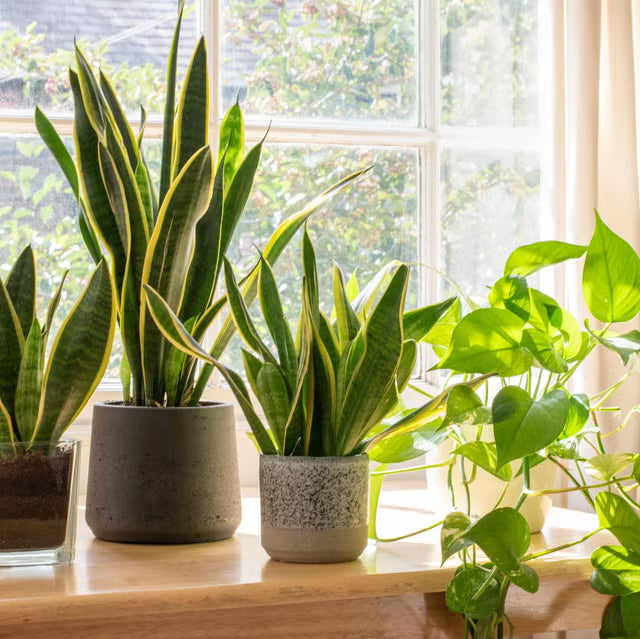
The Silver Streak is a strong, sturdy plant with sword shaped leaves. Each leaf is dark green with a metallic silver-green stripe running along the centre. They grow upright and in dense rosette form. Originating from West Africa, this cool snake plant is also excellent at filtering indoor air and removing toxins like formaldehyde and xylene.
Scientific Name: Dracaena trifasciata
Common Name: Snake Plant, Sansevieria Silver Streak
Growth: Can reach a height of 2 feet
Light: Bright indirect light to low light
Watering: Allow to dry out completely between watering
Pet Safe: No
Care: Easy


The Goldfish plant is a quirky, fun and interesting little plant. Yes, it looks like goldfish with its orange flowers in the shape of a fish! It originates from the tropical forests of Brazil. Under the right conditions and lots of bright light, this plant will flower on and off throughout the year. The vines are great for hanging baskets. In the language of flowers, this one symbolizes prosperity and abundance. Pruning after flowering and the occasional cleaning of the leaves will help this plant flourish!
Scientific Name: Nematanthus Gregarius It is also sometimes referred to as Nematanthus Nervosus.
Common Name: Goldfish Plant
Light: Bright Indirect light
Growth: Potentially 3 feet long
Watering: Consistent Moisture but not soggy
Pet Safe: Yes
Care: Intermediate