









Sort by:
715 products
715 products


With wonderfully fragrant flowers and vibrant green leaves, plus fruit you can use in drinks and pie, what is not to love about the Key Lime tree?!
Scientific Name: Citrus aurantifolia
Growth: Up to 6' indoors
Light: Full sun
Watering: Keep well watered. Water deeply once the top 1-2 inches of soil is dry to touch. Let is drain well after watering.
Pet Safe: No
Care: Intermediate
- Fertilize in early spring with a citrus specific fertilizer, or any fertilizer that has a Nitrogen, Phosphorus, Potassium (NPK) ratio of 2:1:2. You can also add new compost in the spring. Make sure to only apply it to the dirt around the tree, as key lime trees can burn if the fertilizer touches the trunk or foliage.
- Pruning: Prune to maintain shape and smaller size. Should be done in the spring to encourage new growth and keep the shape compact. Remove any dead branches and keep the centre open so the fruit receives maximum light and can ripen.
Pests: Watch for scale. Citrus is very prone to it. Scale is a small insect that forms a little brown shell on the leaves and stems. You will know you have it if the leaves become glossy and sticky which is the honeydew residue from the insect. Scrap off the scale with your fingernail or for the squeamish, use a scouring pad and a little soap. Hose off in the shower, spray with Carly's FU bug spray and if it comes back change the soil completely. Other pests include white fly and mealy bugs.


This beautiful plant has cascading vines and heart shaped leaves. This plant stores water in its leaves and roots making it drought tolerant. In the spring and fall the String of Hearts actually produces flowers!
Small, tubular, pinkish-purple flowers and they have tiny hairs that trap insects helping with pollination!
Scientific Name: Ceropegia Woodii
Common Name: String of Hearts/Rosary Vine/Chain of Hearts
Light: Bright indirect light to full sun
Watering: Let dry out between waterings
Pet Safe: Yes
Care: Easy


This Chinese Evergreen has gorgeous foliage. As with many varieties, it's always a stunning plant.
Scientific name: Aglaonema commutatum "Romeo"
Growth: 1-3' tall
Light: Bright indirect light.
Watering: Allow the top inch of soil to dry out between waterings. Likes high humidity so it would do well in a bathroom window. They do not like to be soggy, but neither do they like to dry out completely.
Pet Safe: No
Care: Easy


A wonderfully aromatic herb. Add it to meat or pasta dishes. Or just crush the leaves to enjoy the scent!
Scientific Name: Salvia rosmarinus
Growth: 1-2 feet tall in our region
Light: Bright, direct sunlight
Watering: keep evenly hydrated but do not overwater. Needs good drainage
Pet Safe: No
Care: Relatively easy, difficult to overwinter. Treat as an annual.


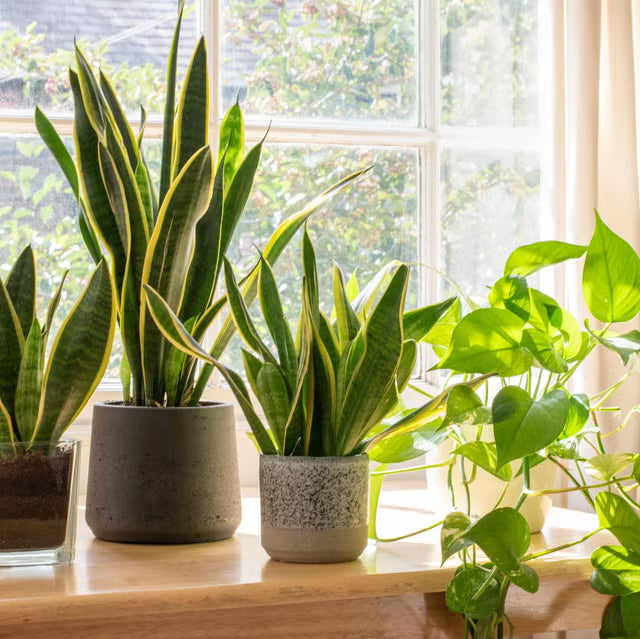
The Black Coral Snake plant has darker leaves with distinctive bands of lighter colour. The Snake Plant, also known as the "mother-in-law's tongue", is one of the hardiest plants around. It originates from West and Central Africa. You can find them in dry, rocky, desert like areas. Some people love them because they symbolize resilience and good luck. Snake Plants reduce allergens in the environment by releasing oxygen into the air, making them an air-purifying plant.
Scientific Name: Dracaena trifasciata, formerly Sansevieria trifasciata
Common Name: Snake Plant
Growth: Can grow to 35" tall
Light: Bright indirect light
Watering: Water sparingly
Pet Safe: No
Care: Easy


Parsley is a wonderful herb to have on hand to flavour dishes. Leaves can be added to soups, rice dishes etc.
Scientific Name: Petroselinum crispum
Growth: 6" tall
Light: Full sun (6+ hours)
Watering: Keep soil moist
Pet Safe: Yes
Care: Easy
Harvesting: Cut leaves from the outer stems


A funky succulent with a spiky look!
Haworthia attenuata, also known as zebra haworthia, is native to Southern Africa. This plant is very slow growing and has a life span of up to 50 years! In the wild, these plants grow in very harsh conditions and can be found buried in sand.
Scientific Name: Haworthia attenuata
Common Name: Zebra Haworthia
Growth: 1-6 inches in height
Light: Bright indirect light
Watering: Let dry out between watering
Pet Safe: Yes
Care: Easy


The leaves of this succulent are soft and fuzzy, perhaps like a bear? The edges of the grey leaves are outlined with cute little brown dots. Native to Madagascar.
Scientific Name: Kalanchoe tomentosa
Light: Bright light- south window is ideal. Very hot, direct sun can scorch the leaves.
Growth: Can slowly grow up to 2 feet
Watering: Water thoroughly when dry and let drain well. Do not sit in water.
Pet Safe: No
Care: Moderate

This plant sports gorgeous foliage with delicate flowers and trailing stolon's with adorable, little mini plants.
Scientific Name: Saxifraga stolonifera
Growth: 6-8", trailing stolons can reach 2-3'
Light: Bright, indirect
Watering: Keep moist but allow top inch of soil to dry out between watering.
Pet Safe: Yes
Care: Fairly Easy


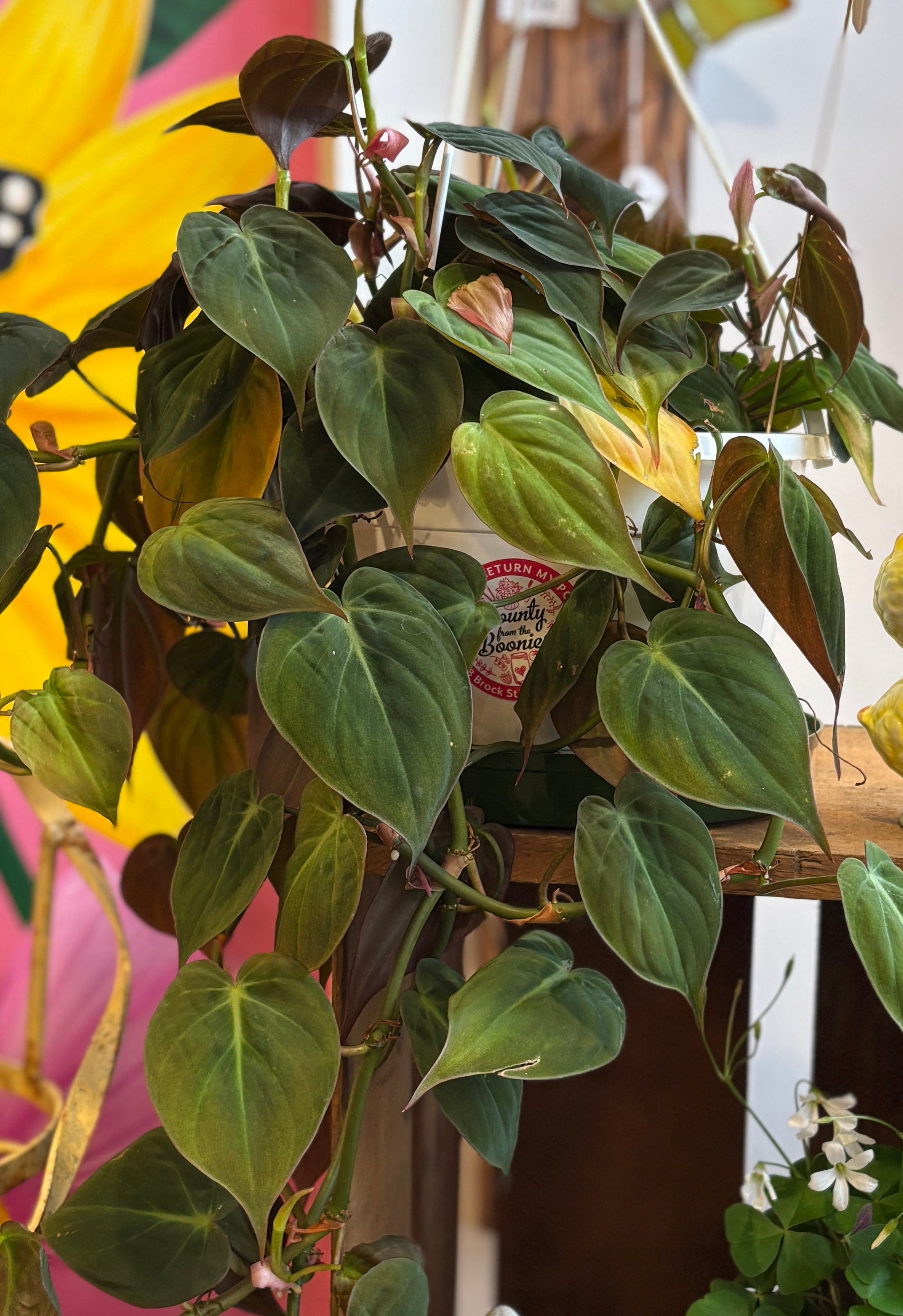
Stunning foliage- the leaves are heart shaped with lovely colouring. This plant will really elevate your collection!
Growth: 3' tall
Light: East facing window for bright, indirect light is best
Watering: Water well when top 1" of soil is dry- likes to be kept moist but not sitting in water.
Pet Safe: No
Care: Intermediate
-Provide with a structure to climb as these are a vining plant. A moss pole is a good choice.