








Pet Safe

We know Fur Babies can be mischievous. Check out our Pet Safe plants so you don't have to worry if Fido or Mittens are digging or getting too cozy with your plants.
Sort by:
119 products
119 products


Delilah is looking regal with her crown of thorns. Take this Queen home to your palace.
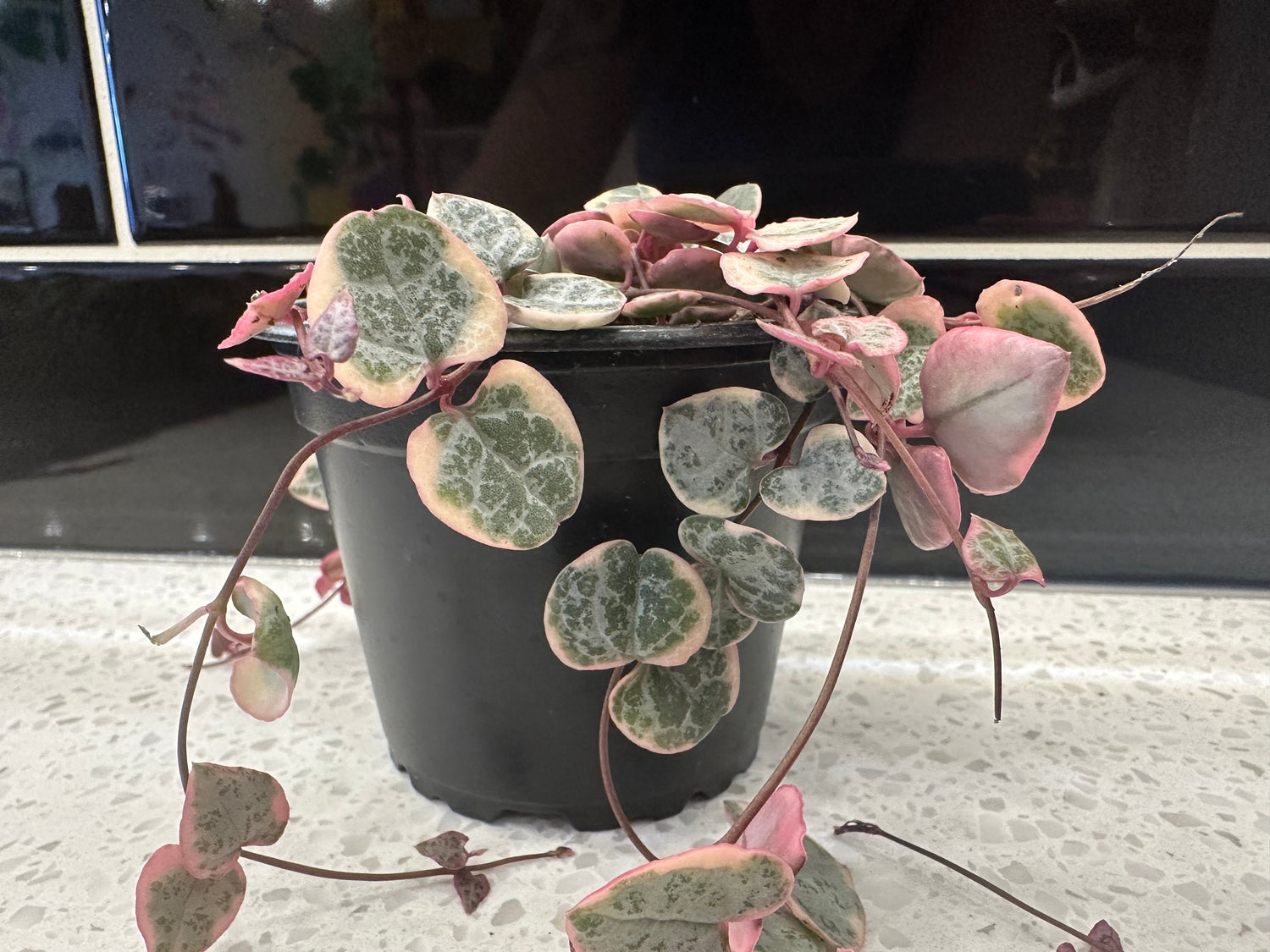
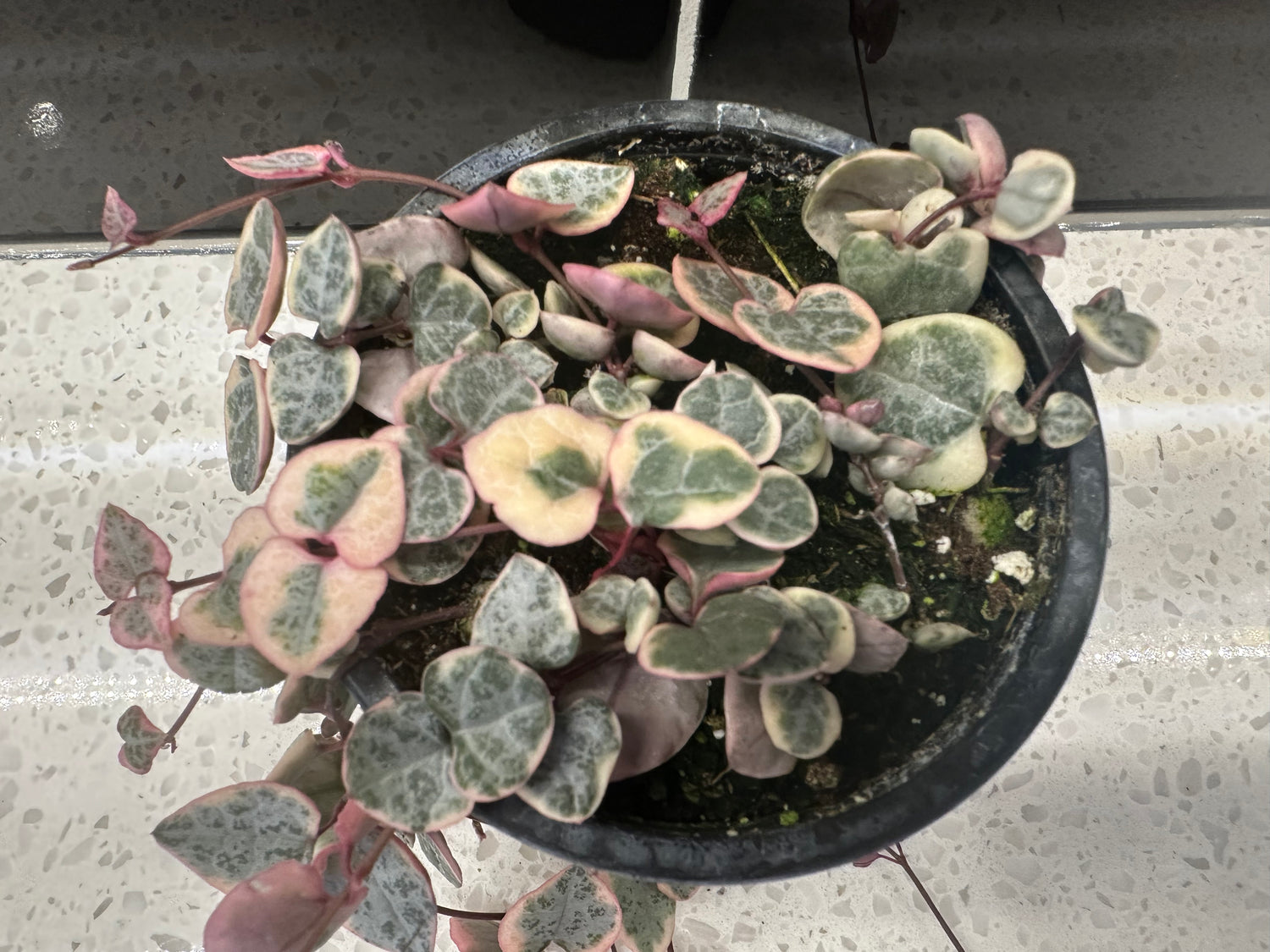
This beautiful plant has cascading vines and heart shaped leaves. This plant stores water in its leaves and roots making it drought tolerant. In the spring and fall the String of Hearts actually produces flowers!
mall, tubular, pinkish-purple flowers and they have tiny hairs that trap insects helping with pollination!
Scientific Name: Ceropegia Woodii
Common Name: String of Hearts/Rosary Vine/Chain of Hearts
Light: Bright indirect light to full sun
Watering: Let dry out between waterings
Pet Safe: Yes
Care: Easy


This beautiful plant has cascading vines and heart shaped leaves and sparkles in this disco planter.
Small, tubular, pinkish-purple flowers and they have tiny hairs that trap insects helping with pollination!
Scientific Name: Ceropegia Woodii
Common Name: String of Hearts/Rosary Vine/Chain of Hearts
Light: Bright indirect light to full sun
Watering: Let dry out between waterings
Pet Safe: Yes
Care: Easy


This beautiful plant has cascading vines and heart shaped leaves. This variety has lovely green leaves with white veining. This plant stores water in its leaves and roots making it drought tolerant.
Scientific Name: Ceropegia Woodii
Common Name: String of Hearts/Rosary Vine/Chain of Hearts
Light: Bright indirect light
Watering: Let dry out between waterings
Pet Safe: Yes
Care: Easy
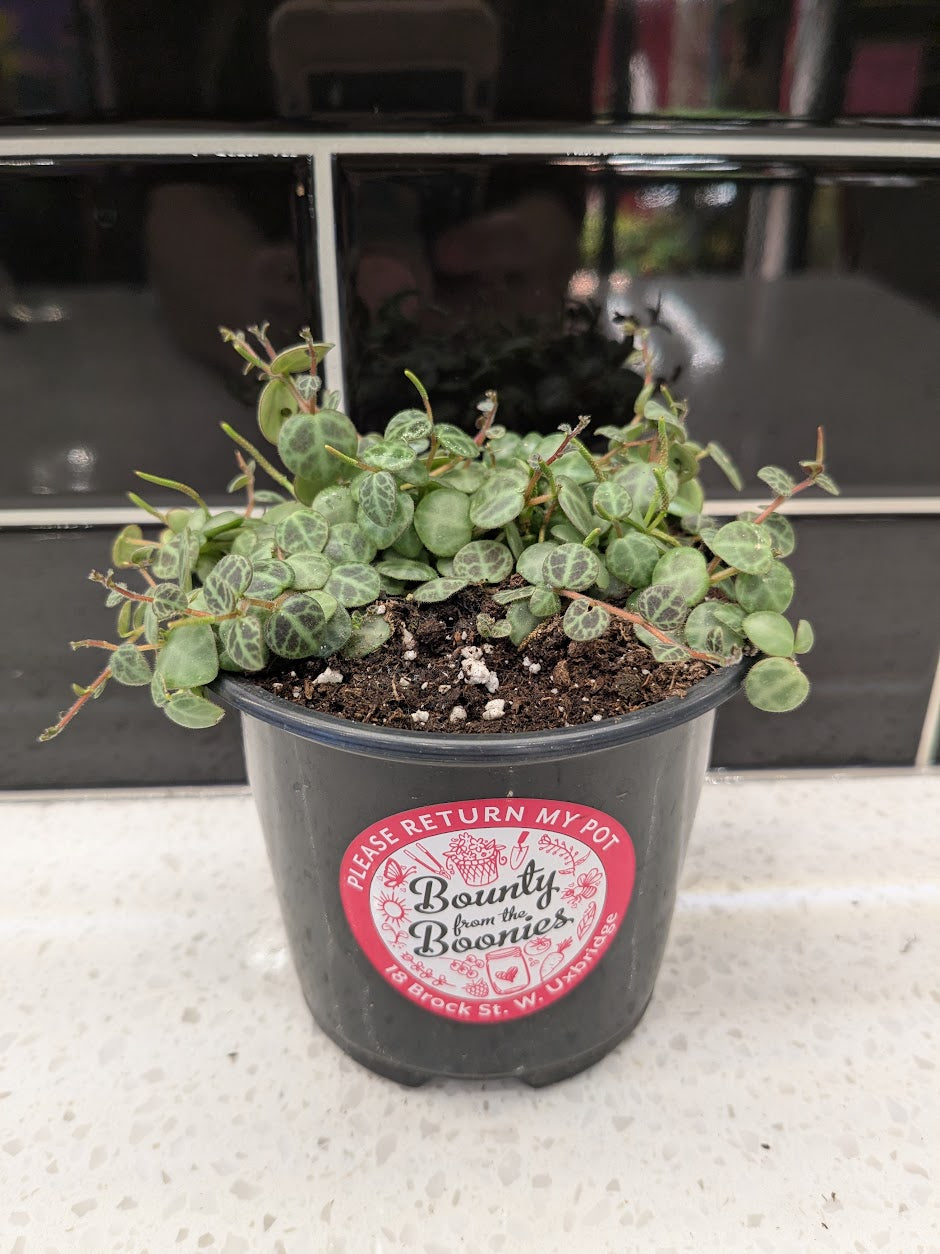
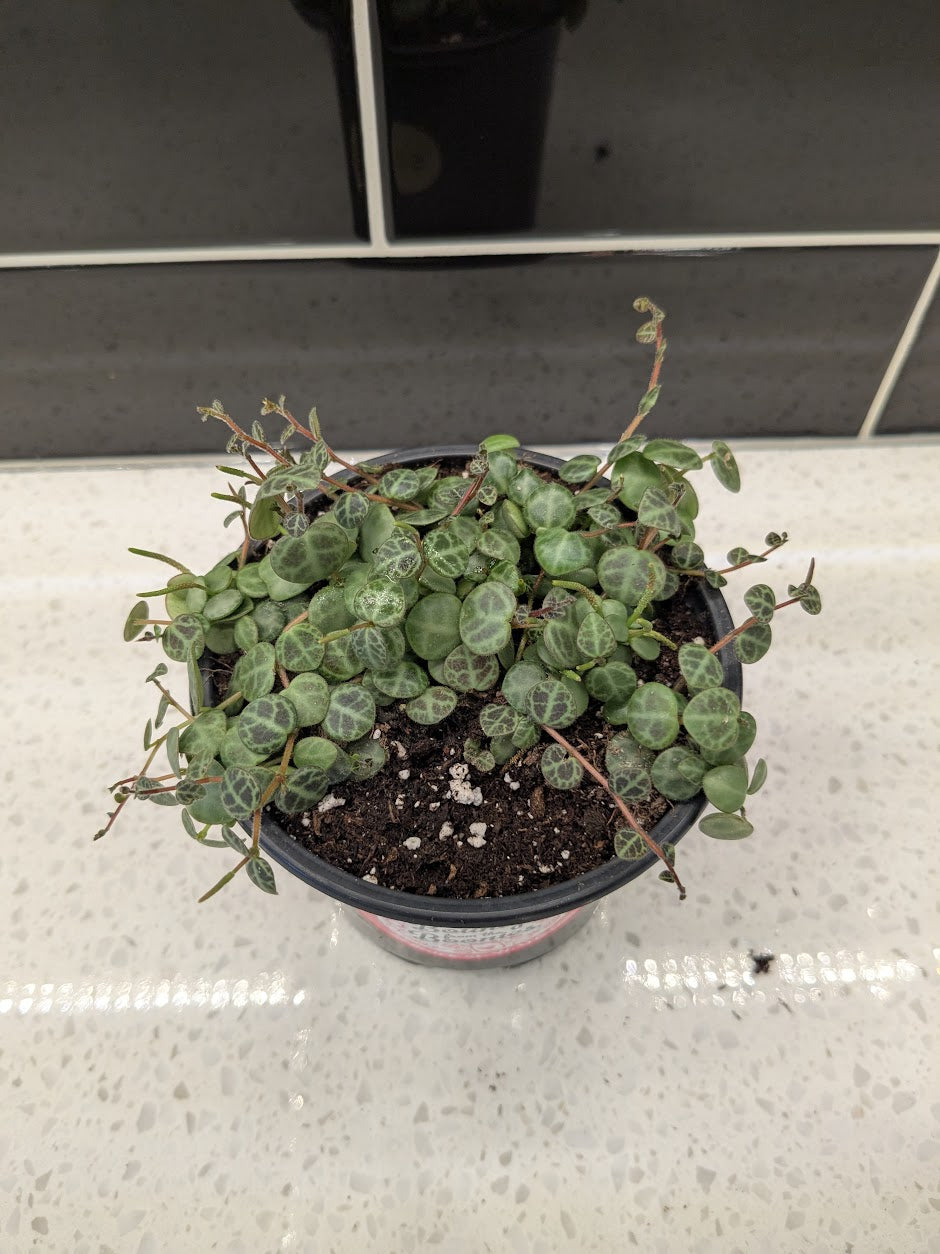
The String of Turtles is a cute little plant that resembles turtle shells. It originates from the rainforests of Ecuador and Brazil. It thrives in warm, humid conditions, growing as a trailing vine. A plant that is very easy to propagate and thrives in terrariums.
Scientific Name: Peperomia Prostrata
Common Name: String of Turtles
Growth: Could reach 12 inches long
Light: Bright indirect light
Watering: When top soil is dry, ensure good drainage
Pet Safe: Yes
Care: Intermediate


Tiger Jaw is a south African succulent is known for its distinctive jaw-shaped leaves with soft tooth like edges. It can produce bright yellow flowers that look a lot like daisies. This plant originates from the sub-tropical deserts and rocky areas of South Africa. The fleshy "teeth" along its leaves are soft and help channel rainwater and dew directly to its roots.
Scientific Name: Faucaria Tigrinya
Common Name: Tiger Jaw
Light: Bright, direct, to indirect light
Growth: 6 inches tall
Watering: Let dry between watering
Pet Safe: Yes
Care: Easy


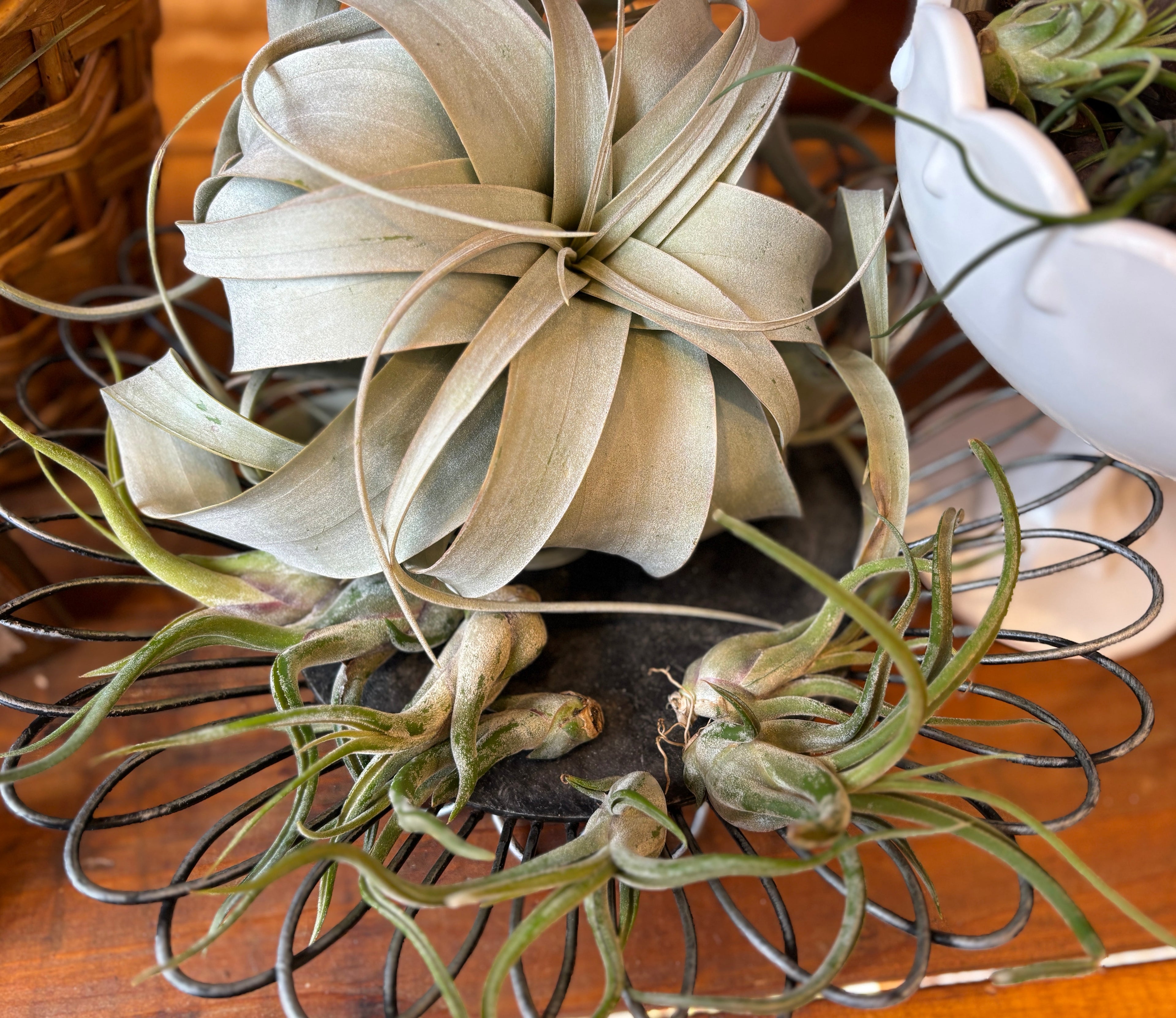
The lowest of care plants!
A variety of shapes and sizes add dramatic flair to any living space.
Scientific Name: Tillandsia caput-medusae
Common Name: Air Plant
Light Requirements: Bright Indirect Light, direct sun for too many hours can scorch the leaves.
Water: Once a week, submerge in water and then be sure to completely dry out.
Pet Safe: Yes
Care: Easy

The lowest of care plants! Air plants do not require soil to survive. Just as the name implies, they survive in air! They can be displayed in many decorative formats. With their unique look, they can be quite fun to display. They originate from Central and South America. Air Plants come in all shapes and sizes as well as multiple colours.
Scientific Name: Tillandsia Butzii
Common Name: Air Plant
Light Requirements: Bright Indirect Light, direct sun for too many hours can scorch the leaves.
Water: Once a week, submerge in water and then be sure to completely dry out.
Pet Safe: Yes
Care: Easy


The lowest of care plants!
A variety of shapes and sizes add dramatic flair to any living space.
Scientific Name: Tillandsia caput-medusae
Common Name: Air Plant
Light Requirements: Bright Indirect Light, direct sun for too many hours can scorch the leaves.
Water: Once a week, submerge in water and then be sure to completely dry out.
Pet Safe: Yes
Care: Easy


The lowest of care plants!
A variety of shapes and sizes add dramatic flair to any living space.
Scientific Name: Tillandsia Ionantha Guatemala
Common Name: Air Plant
Light Requirements: Bright Indirect Light, direct sun for too many hours can scorch the leaves.
Water: Once a week, submerge in water and then be sure to completely dry out.
Pet Safe: Yes
Care: Easy


The lowest of care plants! Air plants do not require soil to survive. Just as the name implies, they survive in air! They can be displayed in many decorative formats. With their unique look, they can be quite fun to display. They originate from Central and South America. Air Plants come in all shapes and sizes as well as multiple colours.
Scientific Name: Tillandsia Juncea
Common Name: Air Plant
Light Requirements: Bright Indirect Light, direct sun for too many hours can scorch the leaves.
Water: Once a week, submerge in water and then be sure to completely dry out.
Pet Safe: Yes
Care: Easy

What are Clippings?
Clippings are pieces cut from existing mature plants. They are then placed in water and allowed to build roots. Some grow quickly while others take longer to propagate (grow roots). Once there are several new roots growing and they are at least 1" long it's time to plant. They are great for experimenting, trying new varieties or even adding to aquariums and water features.
Planting
When ready to plant you'll place your clipping in a pot with dirt. You'll want to make sure that the soil stays extra moist for several days to help it acclimatize to its new environment. Congratulations! You have a new plant baby.
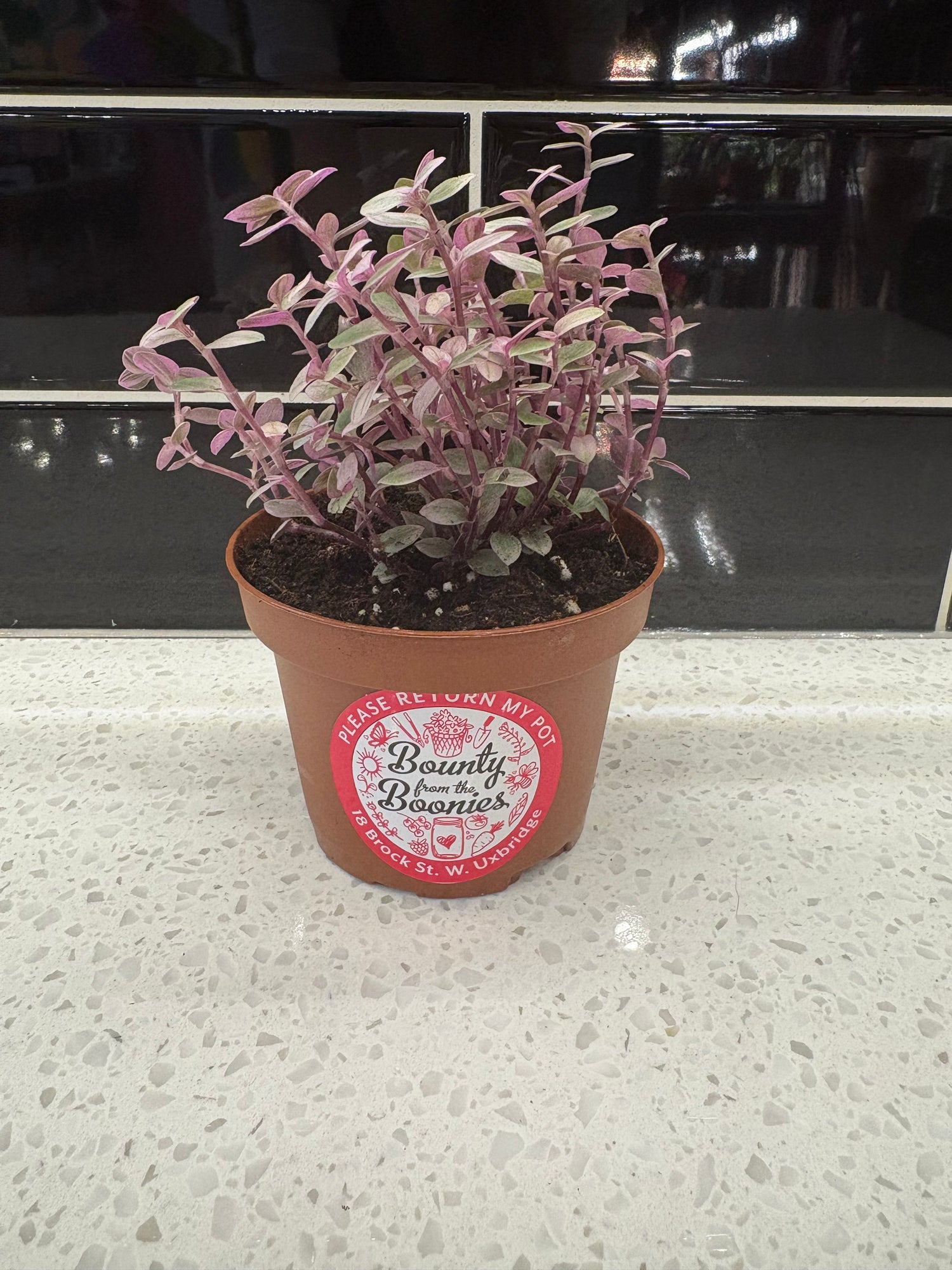
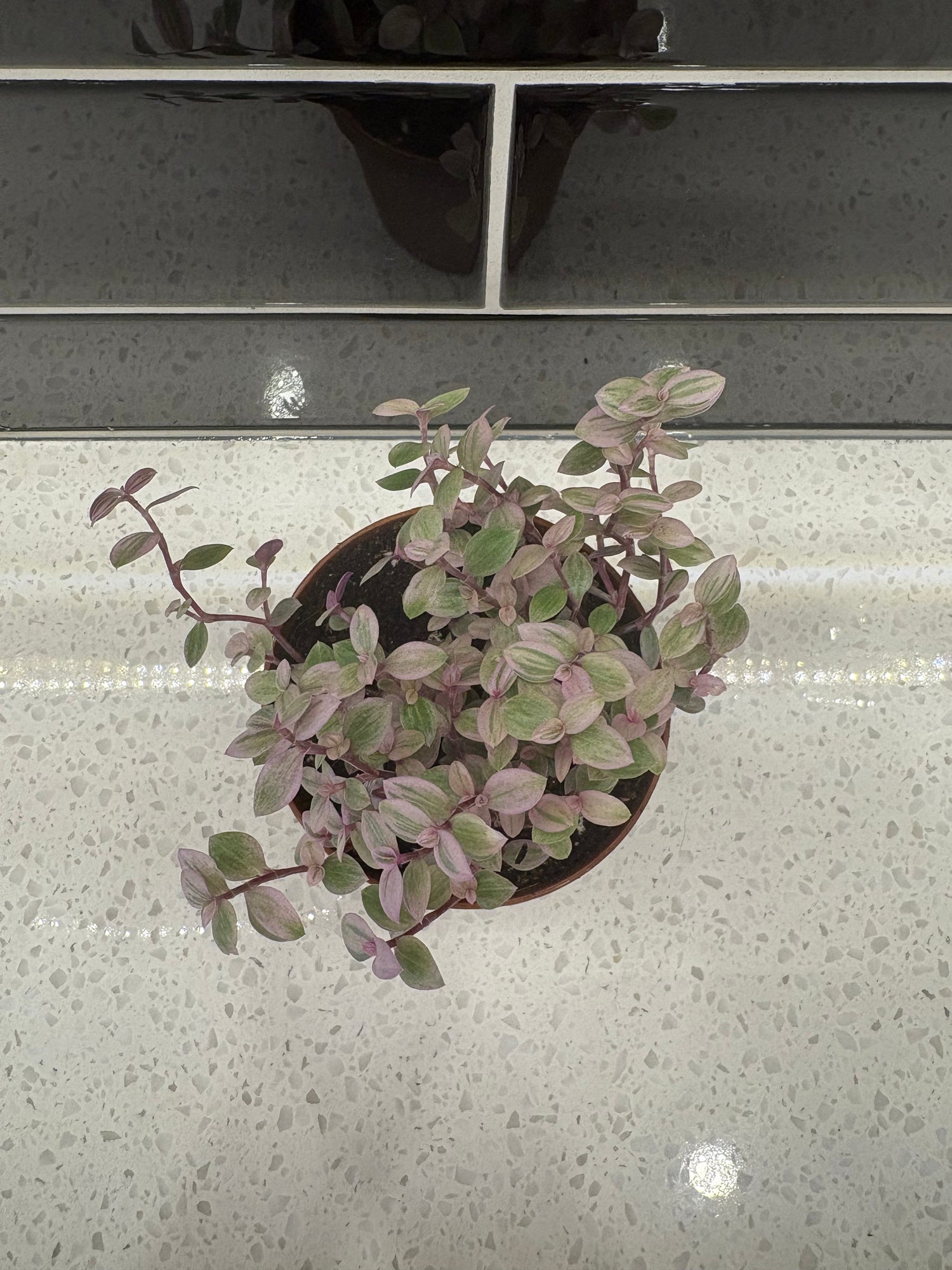
The Pink Lady Turtle Vine is a trailing succulent known for it's beautifully vibrant, pink and cream variegated leaves. It originates from the tropical regions of the Americas. This plant spreads horizontally making it wonderful for hanging baskets or effective ground cover. It can produce little white flowers in the summer months. It has air purifying qualities and is known to reduce stress and promote relaxation!
Scientific Name: Callisia Repens
Common Name: The Pink Lady Turtle Vine/Pink Panther
Light: Bright indirect light
Watering: When top soil is dry, ensure good drainage
Pet Safe: Yes
Care: Easy
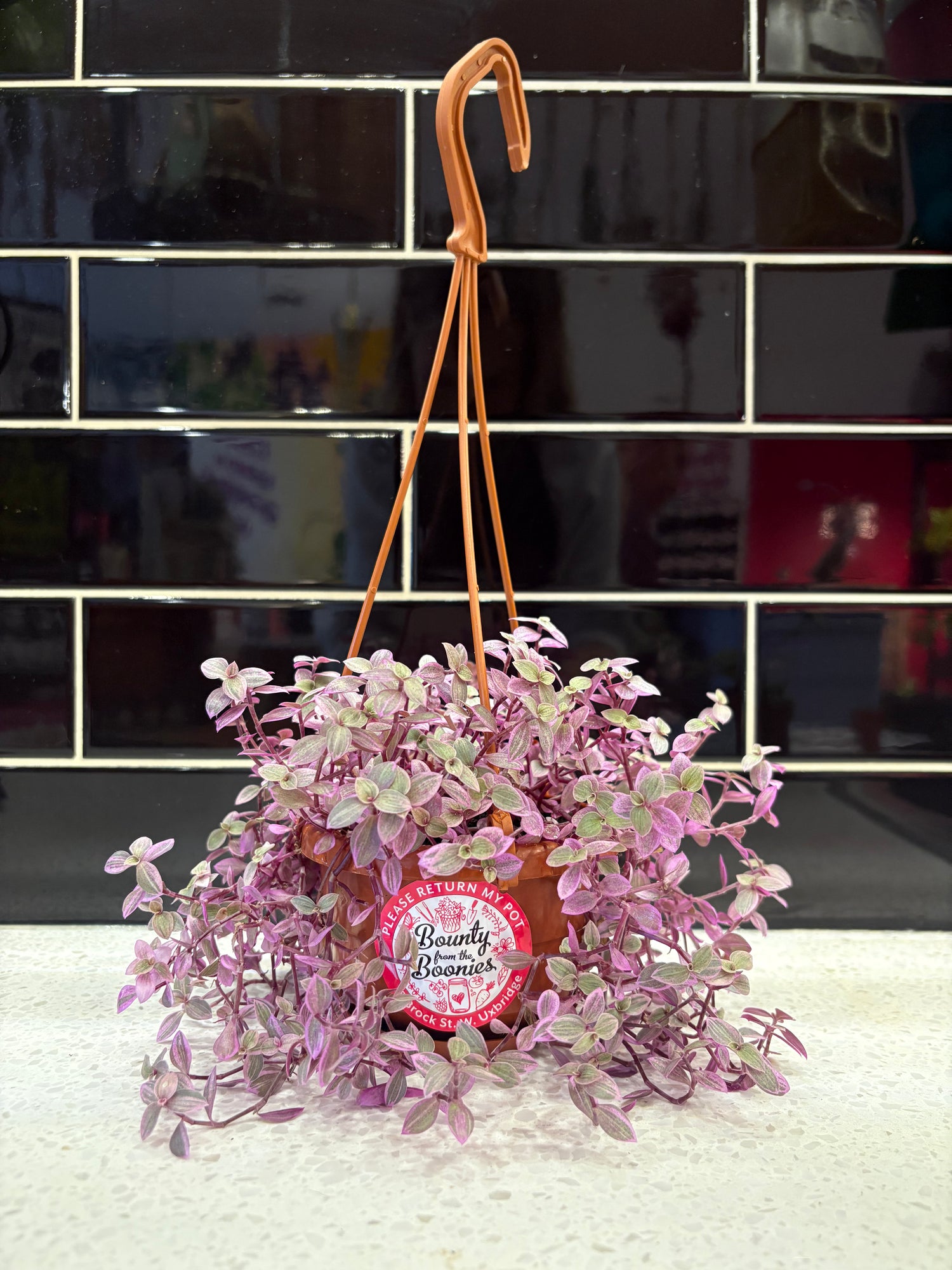
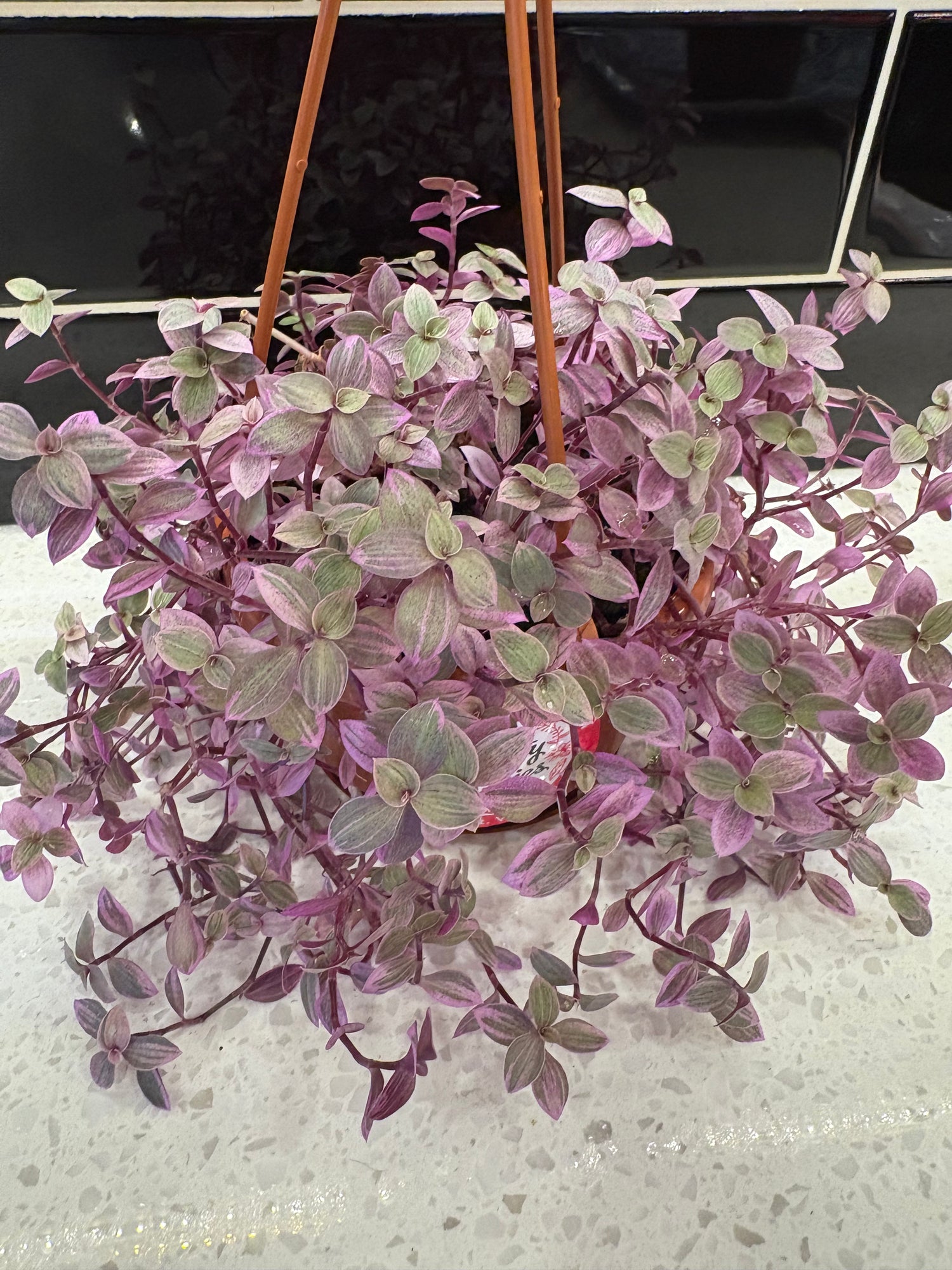
The Pink Lady Turtle Vine is a trailing succulent known for it's beautifully vibrant, pink and cream variegated leaves. It originates from the tropical regions of the Americas. This plant spreads horizontally making it wonderful for hanging baskets or effective ground cover. It can produce little white flowers in the summer months. It has air purifying qualities and is known to reduce stress and promote relaxation!
Scientific Name: Callisia Repens
Common Name: The Pink Lady Turtle Vine/Pink Panther
Light: Bright indirect light
Watering: When top soil is dry, ensure good drainage
Pet Safe: Generally considered non toxic
Care: Easy


Fresh mint scent and flavour. Lovely to look at and can be used to make a refreshing cup of tea!
Scientific Name: Mentha × gracilis 'Variegata'
Growth: low growing, spreads outwards. DO NOT plant directly into the garden as mints are very invasive & aggressive spreaders!
Light: Bright and indirect to sunny
Watering: water deeply when top inch of soil is dry to touch
Pet Safe: mints contain some oils which can be toxic to pets if ingested in large quantities
Care: easy
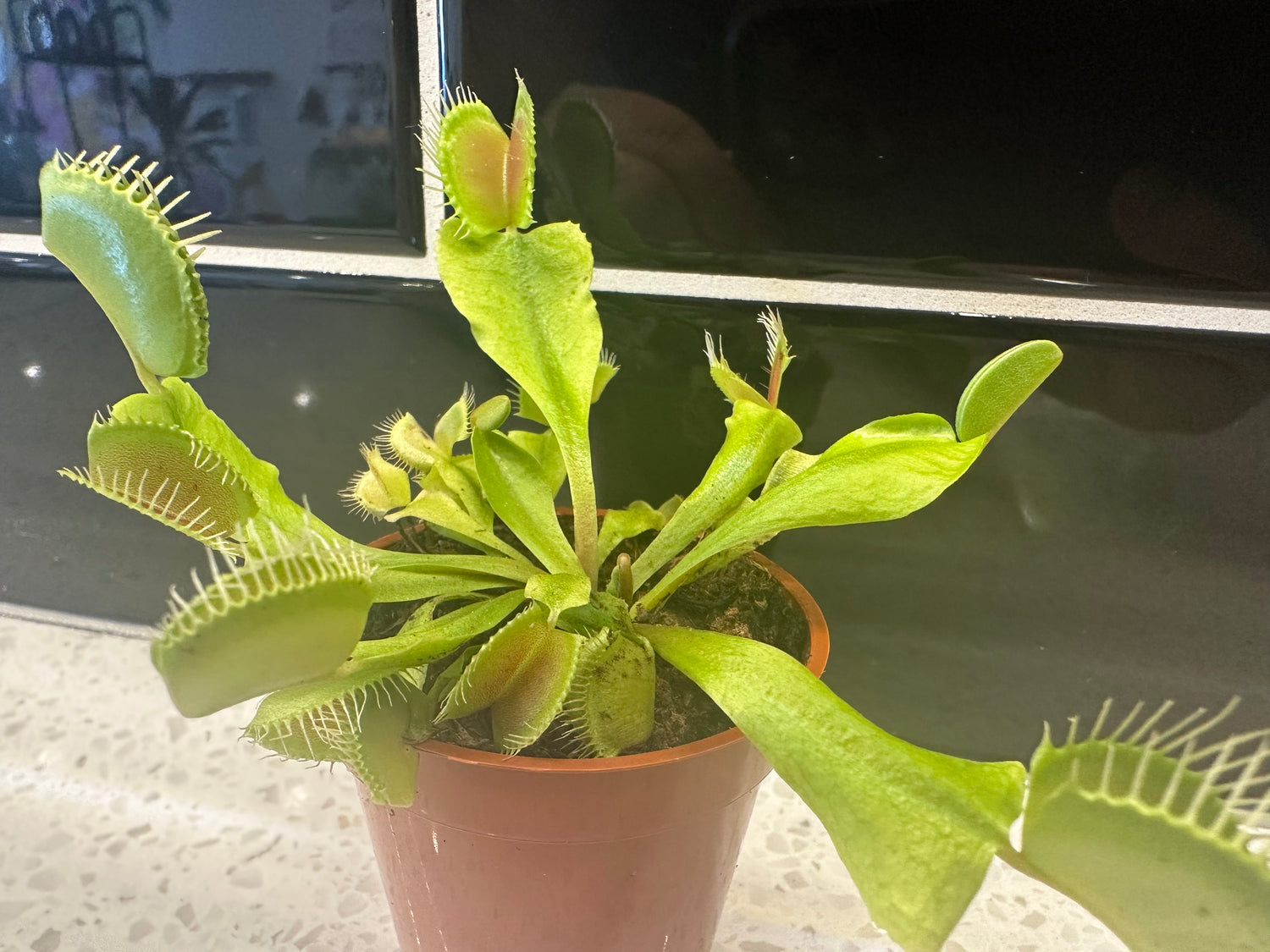
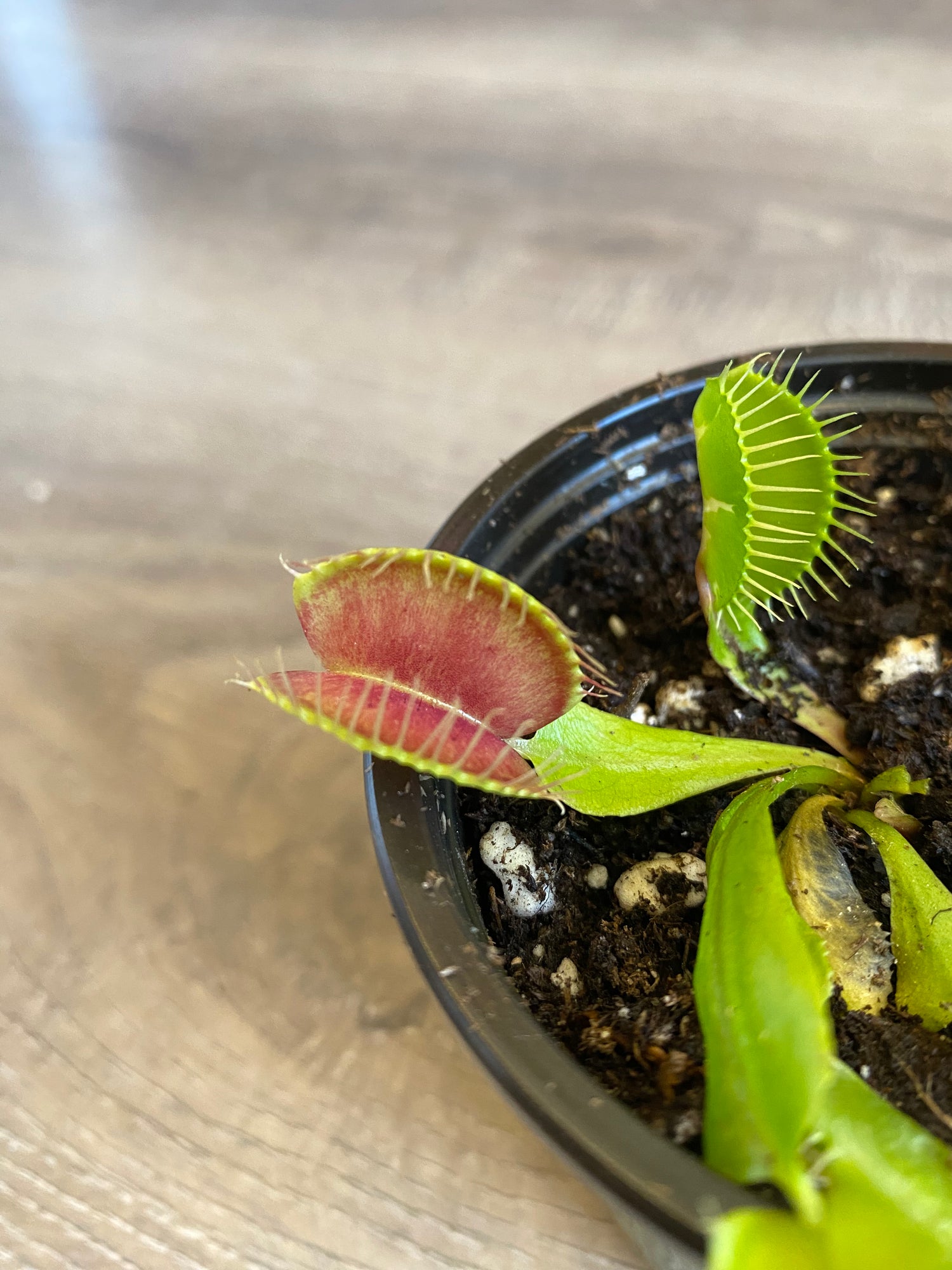
The Venus Fly trap is a unique carnivorous plant. It looks like a creature from an alien movie but don't let this plant scare you, it only munches on insects! With its leaves ending in little claw like hands, this plant closes the instant an insect lands on it.
The Venus Fly Trap originates from coastal bogs of North and South Carolina. They have adapted to low nutrient environments by using the insects they eat to give them the nutrients they need.
Substrate needed: The substrate needs to be nutrient poor, acidic and well draining. Typically a good blend is 1:1 sphagnum peat moss and perlite. This mimics the bogs they are from. Always use distilled water when watering your Venus Fly Trap.
As long as you keep up with the watering, let them take care of catching the flies!
Scientific Name: Dionaea muscipula
Common Name: Venus Fly Trap
Light Requirements: Bright indirect light, direct sun
Water: Use ONLY distilled, rain or reverse osmosis water. They grow in bogs so they like to have wet soil. Make sure the air flow is good. Be sure to take them out of their packaging as soon as you get it home.
Pet Safe: Yes
Care: Intermediate
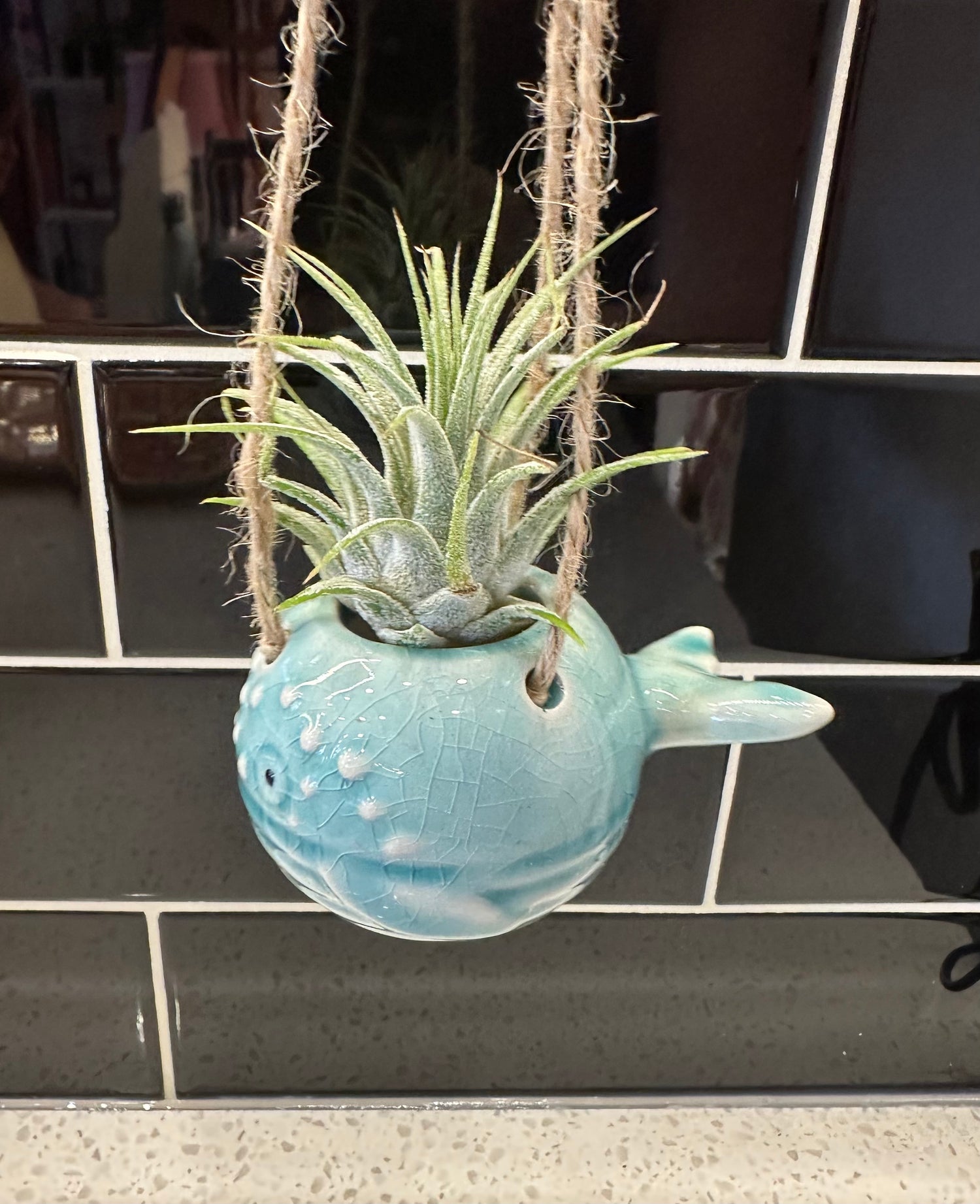
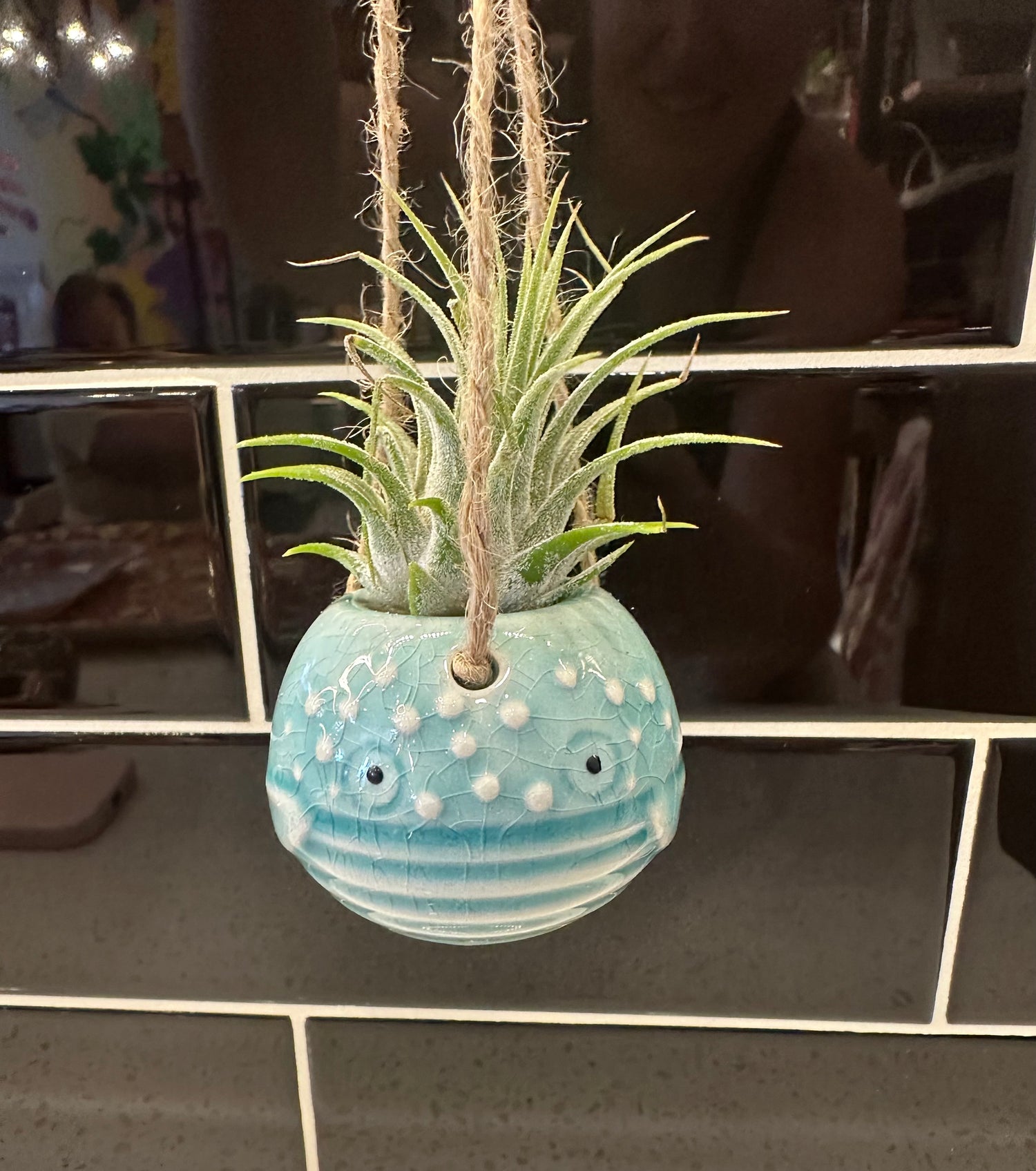
The lowest of care plants! A variety of shapes and sizes add dramatic flair to any living space.
Light: Bright, indirect light.
Watering: Soak in water once a week and let completely dry.
Care: Easy
Pet Safe: Yes
If purchasing online, the air plant may vary. You will receive the size purchased but exact look can vary.


A bushy vine, native to New Zealand and Australia, with pink stems and variegated leaves.
Scientific Name: Muehlenbeckia Axillaris
Light: Bright indirect light
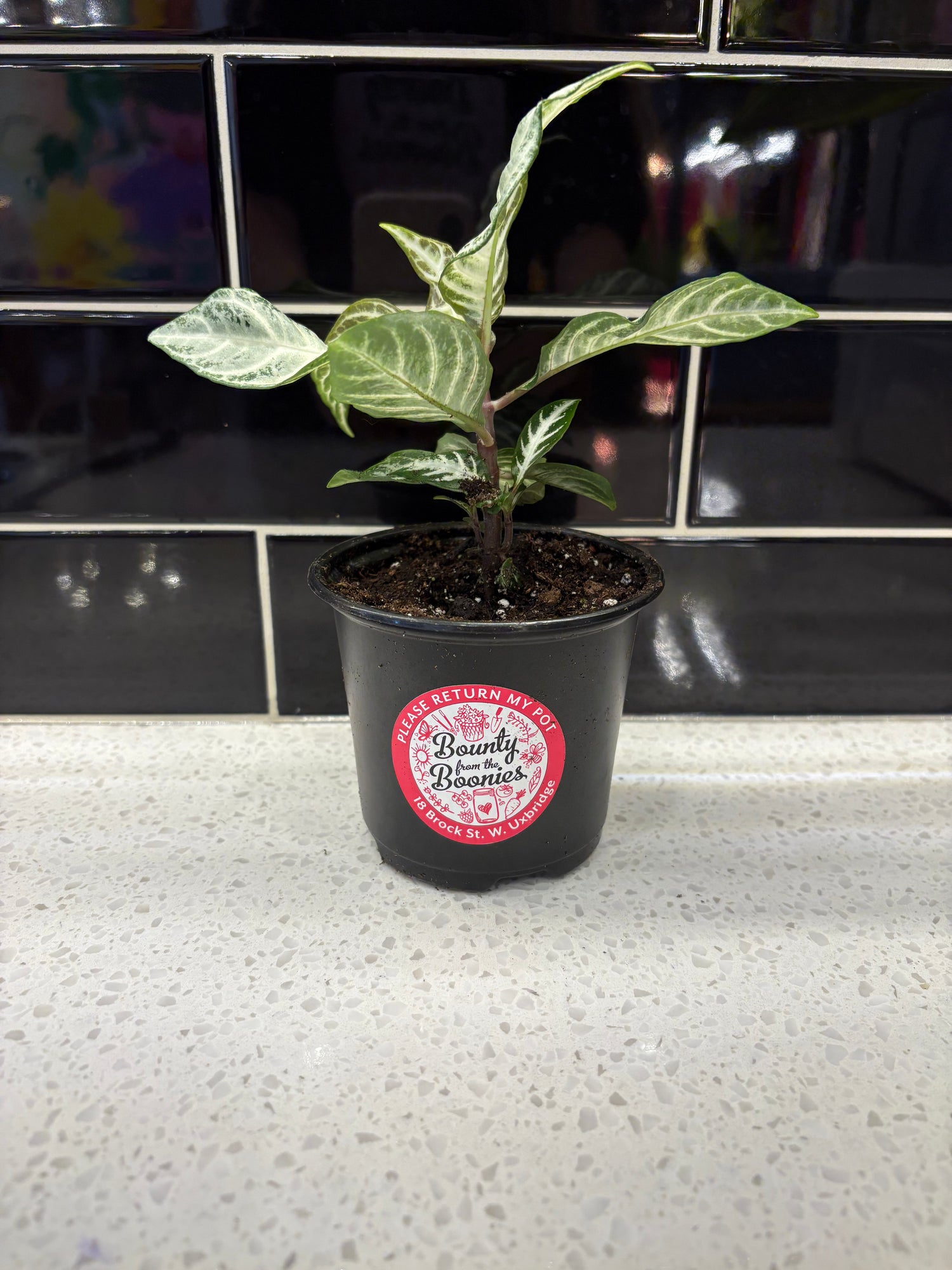
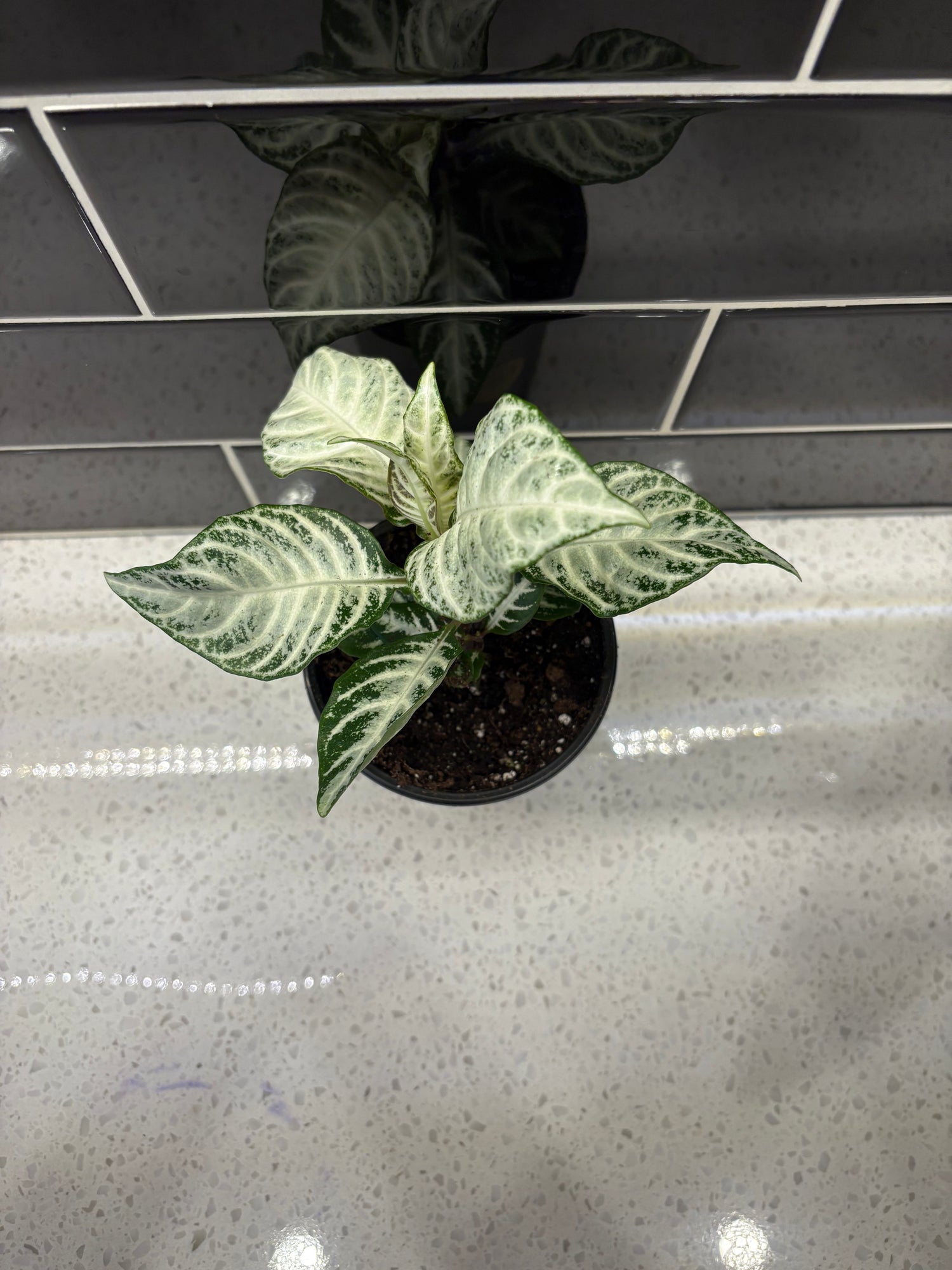
It's easy to see where this beautiful plant gets its name - the stripes that grace its striking leaves look like a zebra, with an emerald green background and creamy white striations.
Scientific Name: Aphelandra squarrosa 'Snowflake'
Common Name: Zebra Plant
Light: Bright, indirect - medium light
Growth: Can reach 12" in a compact, clumping form
Watering: Do not let the soil dry out, but do not let the roots sit in soggy soil, either! Likes humidity, so mist regularly
Pet Safe: Yes
Care: Easy