









Sort by:
357 products
357 products

What are Clippings?
Clippings are pieces cut from existing mature plants. They are then placed in water and allowed to build roots. Some grow quickly while others take longer to propagate (grow roots). Once there are several new roots growing and they are at least 1" long it's time to plant. They are great for experimenting, trying new varieties or even adding to aquariums and water features.
Planting
When ready to plant you'll place your clipping in a pot with dirt. You'll want to make sure that the soil stays extra moist for several days to help it acclimatize to its new environment. Congratulations! You have a new plant baby.


This is a star-shaped rosette with wavy leaves that are typically pink, red, and green. This plant is actually in the pineapple family! Originating from the rainforests of Brazil, they will not like to be in complete sun, their leaves will burn.
Name: Cryptanthus Bivittatus
Common Name: Earth Star
Growth: 4-5 inches in height
Light: Bright indirect light
Watering: When top soil is dry, be sure not to over water
Pet safe: Yes
Care: Intermediate


A pretty little succulent that is pet safe too! This plant originates from desert regions of Mexico. The Echeveria is a drought-tolerant succulent that thrives in high-elevation, rocky, and dry environments.
Scientific Name: Echeveria Elegans
Common Name: Echeveria
Light: Bright, indirect light
Growth: 2-3 inches tall
Watering: Let dry between watering
Pet Safe: Yes
Care: Intermediate

I love the neon green interior of this heirloom beefstake tomato. It’s stunning on a plate layered with a deep red cousin such as Manitoba - serve them drizzled with olive oil, basil and creamy goat cheese. Emerald Evergreens are smooth + sweet with a rich flavour, a chonky slicer. Try them fried, or make green tomato sauce!
Indeterminate + requires staking.
$6 each or 3 for $15

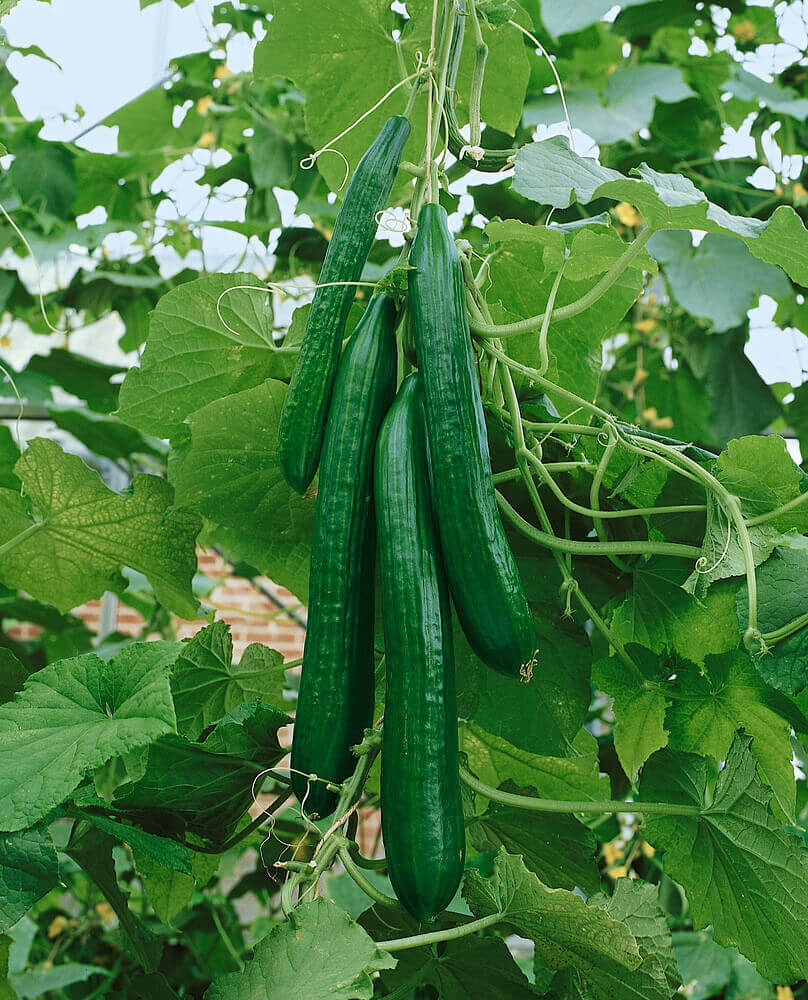
This variety of cucumber is the closest we've found to a traditional English cuke from the grocery store. Long, slender, thin-skinned fruits with fewer seeds than regular home-grown cukes, especially when picked early.
Requires a trellis + full sun. Harvest regularly to encourage more flowers to form.
$4 each or 3 for $10 (save $2!)


A fun Cactus with an interesting growth habit, producing multiple curved stems which resemble turrets of a castle, hence its common name. It is native to southern Florida and the Lower Rio Grande Valley of Texas, the Caribbean and South America.
Scientific Name: Acanthocereus Tetragonus
Common Name: Fairy Castle Cactus
Growth: Slow growing. While it can reach great heights in the wild, 6 feet or more, it will remain much smaller when grown indoors.
Light: Very bright indirect light. Too much sun can cause scorching.
Flowering: Lovely white flowers only open for one night. In the wild these flowers attack moths.
Watering: Let it dry out completely before watering and limit watering in the winter and increase during the summer.
Pet Safe: Non toxic however because of its sharp spines, it should be kept where pets can not be poked accidentally.
Care: Easy. Repotting every 2-3 years is recommended because its root system is large and tends to extend outwards.


The Angyo Star is a popular evergreen hybrid plant that is a cross between a Fatsia and an English Ivy. Its beautiful large, glossy green leaves with a stunning white variegation is a gorgeous addition to your home. As the plant grows you will need to stake it to help support it. The Angyo Star was named after the town Angyo in Japan where it was found by a plantsman named Ted Stephens.
Scientific Name: Fatshedera lizei
Common Name: Fatshedera Angyo Star
Light: Bright, Indirect Light
Watering: Keep the soil consistently moist but let top two inches dry between waterings
Growth: Can grow 5-6 feet tall
Pet Safe: No
Care: Easy

Covered in white spines that are as soft as a feather!
Scientific Name: Mammillaria plumosa
Common Name: Feather Cactus
Growth: Approximately 5 inches tall. Grows as a cluster up to 10 inches indoors.
Light: Bright, indirect light. It will be happy to receive morning sun, or some afternoon sun, and then indirect light the rest of the day.
Watering: Water more during the spring and summer, reducing the amount in the fall and giving very little during the winter. ALWAYS allow your cactus to dry out completely between waterings.
Pet Safe: No, moderately toxic if ingested
Care: Easy


An elegant variety of ficus, with pink/cream coloured leaves. Originating from Southeast Asia.
Scientific Name: Ficus Shivereana
Common Name: Ficus Moonshine
Light: Bright indirect light
Growth: Can grow quite tall indoors
Watering: When Top of soil is dry, ensure good drainage
Pet Safe: No
Care: Intermediate
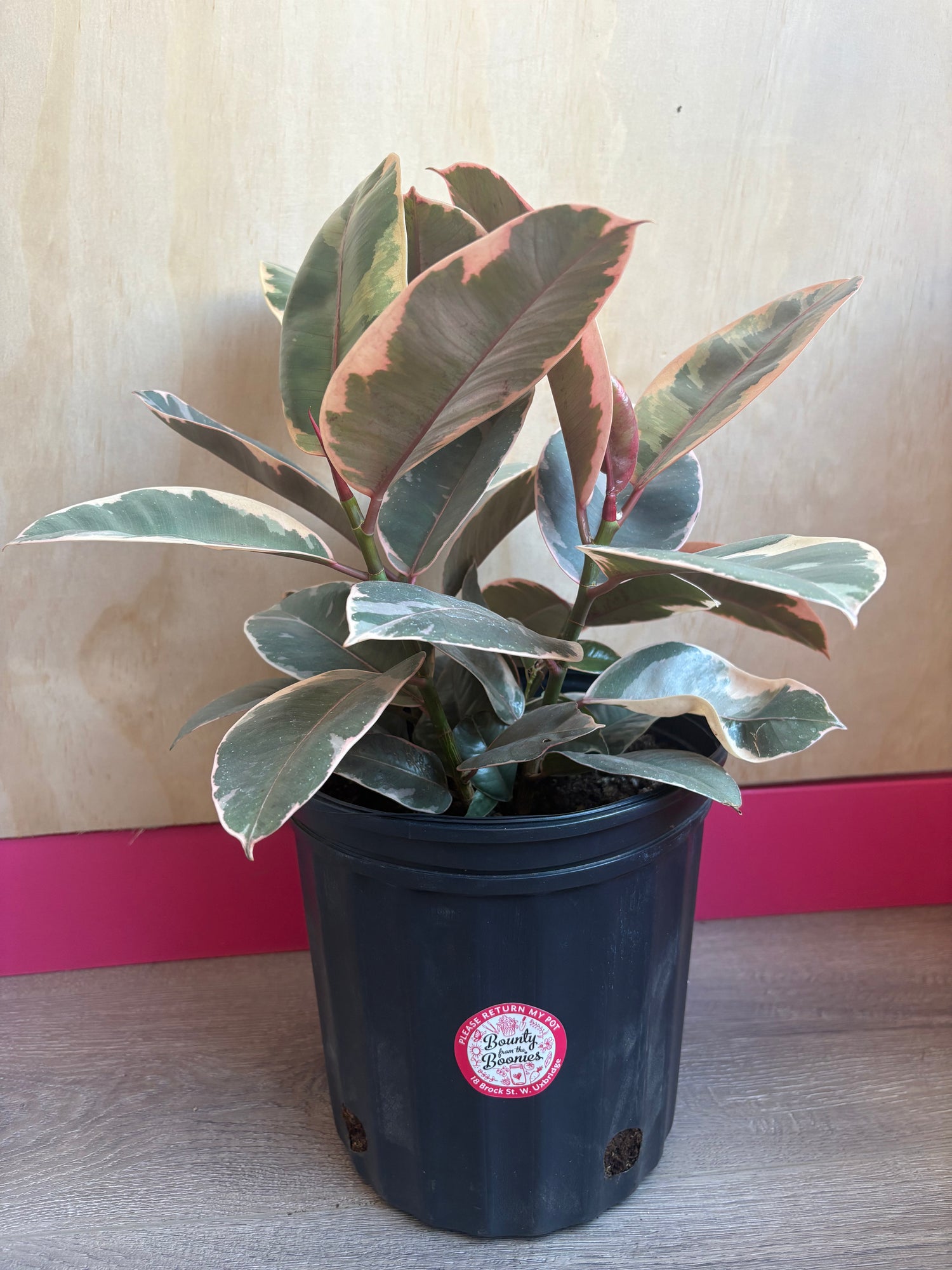
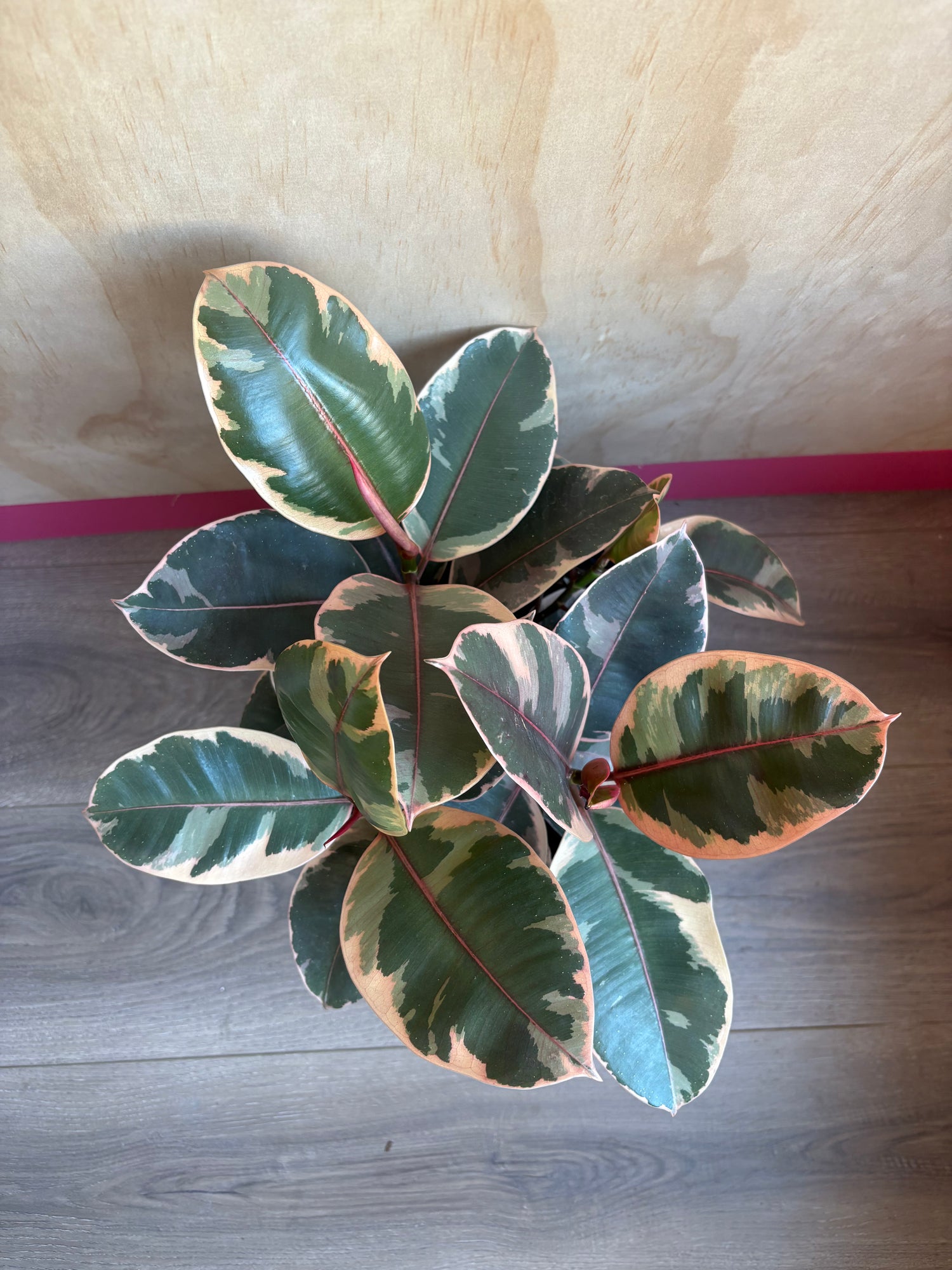
Native to parts in Southeast Asia, known for symbolizing abundance, happiness and wealth. This plant is a great addition to your plant collection with its beautifully pink tinted leaves.
Scientific Name: Ficus Ruby
Common Name: Rubber Fig, Rubber Tree, Rubber Plant
Light: Bright, Indirect light
Growth: Can grow 2-5 Feet
Watering: When the top two inches are dry
Pet Safe: No
Care: Easy

We've created our very own fire-breathing dinosaur. This cute succulent paired with one of our 3D printed dinosaur pots is beyond adorable.


This funky cactus has a zigzag pattern to its leaves and resembles a fishbone!
Unlike so many other Cacti, this little guy originates from the rainforests of Mexico. Found along the mountains just off the Pacific Coast,
It is an epiphyte, meaning it grows on trees, not in the ground in the wild. So it loves humid environments!
Diameter: 10”
Scientific Name: Epiphyllum anguliger
Common Name: Fishbone Cactus, Ric Rac Cactus
Growth: Approx. 1 foot, hanging
Light: Bright indirect light
Watering: Needs consistent moisture but not soggy.
Pet Safe: Yes
Care: Intermediate


This funky cactus has a zigzag pattern to its leaves and resembles a fishbone!
Unlike so many other Cacti, this little guy originates from the rainforests of Mexico. Found along the mountains just off the Pacific Coast, It is an epiphyte, meaning it grows on trees, not in the ground in the wild. So it loves humid environments!
Scientific Name: Epiphyllum anguliger
Common Name: Fishbone Cactus, Ric Rac Cactus
Growth: Can grow up to 6 inches per year
Light: Bright indirect light
Watering: Needs consistent moisture but not soggy.
Pet Safe: Yes
Care: Intermediate


Scientific Name: coleus scutellarioides
Common Name: coleus
Light: Bright, indirect light, will tolerate morning sun
Watering: Water when the top 1-2” of the soil is dry
Pet Safe: no
Care: Moderate


Pot size: 10” wide, 9” tall
Although not technically a fern, Foxtail fern has lovely green fronds that are bushy like a fox tail.
Scientific Name: Asparagus densiflorus
Common Name: Fox tail Fern, Asparagus fern
Light: Bright Indirect light
Growth: 2-3' Tall
Watering: This plant has tuberous roots for storing water so do not overwater! Only water when the top 3" of the soil is dry. They do like high humidity as they are from South Africa, so you can mist them regularly.
Pet Safe: No, all parts are toxic to people and pets
Care: Easy- intermediate

What are Clippings?
Clippings are pieces cut from existing mature plants. They are then placed in water and allowed to build roots. Some grow quickly while others take longer to propagate (grow roots). Once there are several new roots growing and they are at least 1" long it's time to plant. They are great for experimenting, trying new varieties or even adding to aquariums and water features.
Planting
When ready to plant you'll place your clipping in a pot with dirt. You'll want to make sure that the soil stays extra moist for several days to help it acclimatize to its new environment. Congratulations! You have a new plant baby.

Garlic chives are extra yummy with their hint of garlic added to the chive flavour. They are also a very pretty plant for the garden and great for pollinators, looking great in both the vegetable garden and mixed into the flower beds.
$4 each or 3 for $10 (save $2!)
Type: Perennial Herb
Height: 12-24"
Light: Full sun
Soil: Any free draining soil will do.
Watering: Once established, they are quite drought tolerant.
Planting: Space them 6" inches apart. Harden off* before planting outdoors.
* Hardening off refers to the process of gently and gradually acclimatizing indoor grown seedlings to the great outdoors! Don't throw your new babies straight into the elements! Over the course of a week, take them outside for a few hours at a time, bringing them back indoors afterwards. First sit them in the shade and then slowly introduce them to the sun. Increase the length of time they are outside and are exposed to the sun, until you feel they are ready to face the big outside world!
Harvest/ Care: Ready to harvest after 90 days- Cut a few stalks, chop and add to soups or other dishes.


Gasteria Pillansii is a slow growing South African succulent. It's appearance is unique with its fleshy, strap shaped leaves. It forms dense clumps and is very drought tolerant.
Scientific Name: Gasteria pillansii
Common Name: Cow tongue, Cattle tongue, Lawyer's tongue
Light: Bright, indirect light
Growth: Can grow 8 inches
Watering: Let dry between watering
Pet Safe: Yes
Care: Intermediate


Gasteria Pillansii is a slow growing South African succulent. It's appearance is unique with its fleshy, strap shaped leaves. It forms dense clumps and is very drought tolerant.
Scientific Name: Gasteria pillansii
Common Name: Cow tongue, Cattle tongue, Lawyer's tongue
Light: Bright, indirect light
Growth: Can grow 8 inches
Watering: Let dry between watering
Pet Safe: Yes
Care: Intermediate


Gasteria Pillansii is a slow growing South African succulent. It's appearance is unique with its fleshy, strap shaped leaves. It forms dense clumps and is very drought tolerant.
Scientific Name: Gasteria pillansii
Common Name: Cow tongue, Cattle tongue, Lawyer's tongue
Light: Bright, indirect light
Growth: Can grow 8 inches
Watering: Let dry between watering
Pet Safe: Yes
Care: Intermediate