








Search results
130 results
130 results
Search results

$4 each or 3 for $10 (save $2!)
Beautiful sunflower with 8 inch diameter heads in fall colours of gold and burgundy
Type: Annual flower
Height: 15-44"
Light: Full sun
Soil: average garden soil
Water: keep well watered
Bloom time: late summer
Planting: Can be started indoors 2-3 weeks before last frost or direct sown into the garden after danger of frost.
Notes: I learned the hard way that sunflowers are allelopathic, meaning they give off toxins that impede the growth of or even kill other plants. They also deplete soil of nutrients. Because I grow so much food in containers, I now grow my sunflowers in separate pots and place them near their fruit, veg and herb companions

$4 each or 3 for $10 (save $2!)
This is a very old variety which produces excellent fruit for sauce.
Type: Indeterminate. Needs staking. You can read about the difference between Determinate and Indeterminate tomatoes here: Determinate vs. Indeterminate Tomatoes
Height: Indeterminate height
Light: Full sun
Soil: Rich soil. Use good quality compost around plants and mulch well.
Water: Consistently keeping soil moist, but not wet, will results in good growth and happy tomatoes. Inconsistent moisture can lead to "Blossom End Rot". Always water tomatoes at the base of the plant never getting water on the leaves.
Planting:
- Start seeds indoors 6-8 weeks before last frost date. Use a heating mat to aid germination as they love to be warm! If you don't have a heating mat, you can sit the seeds on top of the fridge to get some warmth.
- Harden off* and then transplant to the garden after all frost danger is gone.
- Bury them deep! Plant the whole stem into the ground, not just the roots leaving only a few top leaves showing. The plant will put out roots from the buried stem, making your plant grow nice and strong!
- Space plants 60-90 cm, 2-3' apart; space rows 3-4' apart.
- DO NOT crowd plants. This leads to poor circulation and disease
Harvest: 80 days to maturity (from the day they are planted outside)
* Hardening off refers to the process of gently and gradually acclimatizing indoor grown seedlings to the great outdoors! Don't throw your new babies straight into the elements! Over the course of a week, take them outside for a few hours at a time, bringing them back indoors afterwards. First sit them in the shade and then slowly introduce them to the sun. Increase the length of time they are outside and are exposed to the sun, until you feel they are ready to face the big outside world!
Other tips:
Pruning out suckers on your plant will help it put more of it's energy into fruit production. Suckers appear between the main stem and the branches and can be easily taken out with your fingers.

$4 each or 3 for $10 (save $2!)
A great tasting, beefsteak tomato, great sliced for eating or frying.
Type: Indeterminate variety. Needs staking. You can read about the difference between Determinate and Indeterminate tomatoes here: Determinate vs. Indeterminate Tomatoes
Height: Indeterminate height
Light: Full sun
Soil: Rich soil. Use good quality compost around plants and mulch well.
Water: Consistently keeping soil moist, but not wet, will results in good growth and happy tomatoes. Inconsistent moisture can lead to "Blossom End Rot". Always water tomatoes at the base of the plant never getting water on the leaves.
Planting:
- Start seeds indoors 6-8 weeks before last frost date. Use a heating mat to aid germination as they love to be warm! If you don't have a heating mat, you can sit the seeds on top of the fridge to get some warmth.
- Harden off* and then transplant to the garden after all frost danger is gone.
- Bury them deep! Plant the whole stem into the ground, not just the roots leaving only a few top leaves showing. The plant will put out roots from the buried stem, making your plant grow nice and strong!
- Space plants 60-90 cm, 2-3' apart; space rows 3-4' apart.
- DO NOT crowd plants. This leads to poor circulation and disease
Harvest: 72 days to maturity (from the day they are planted outside)
* Hardening off refers to the process of gently and gradually acclimatizing indoor grown seedlings to the great outdoors! Don't throw your new babies straight into the elements! Over the course of a week, take them outside for a few hours at a time, bringing them back indoors afterwards. First sit them in the shade and then slowly introduce them to the sun. Increase the length of time they are outside and are exposed to the sun, until you feel they are ready to face the big outside world!
Other tips: Pruning out suckers on your plant will help it put more of it's energy into fruit production. Suckers appear between the main stem and the branches and can be easily taken out with your fingers.

$4 each or 3 for $10 (save $2!)
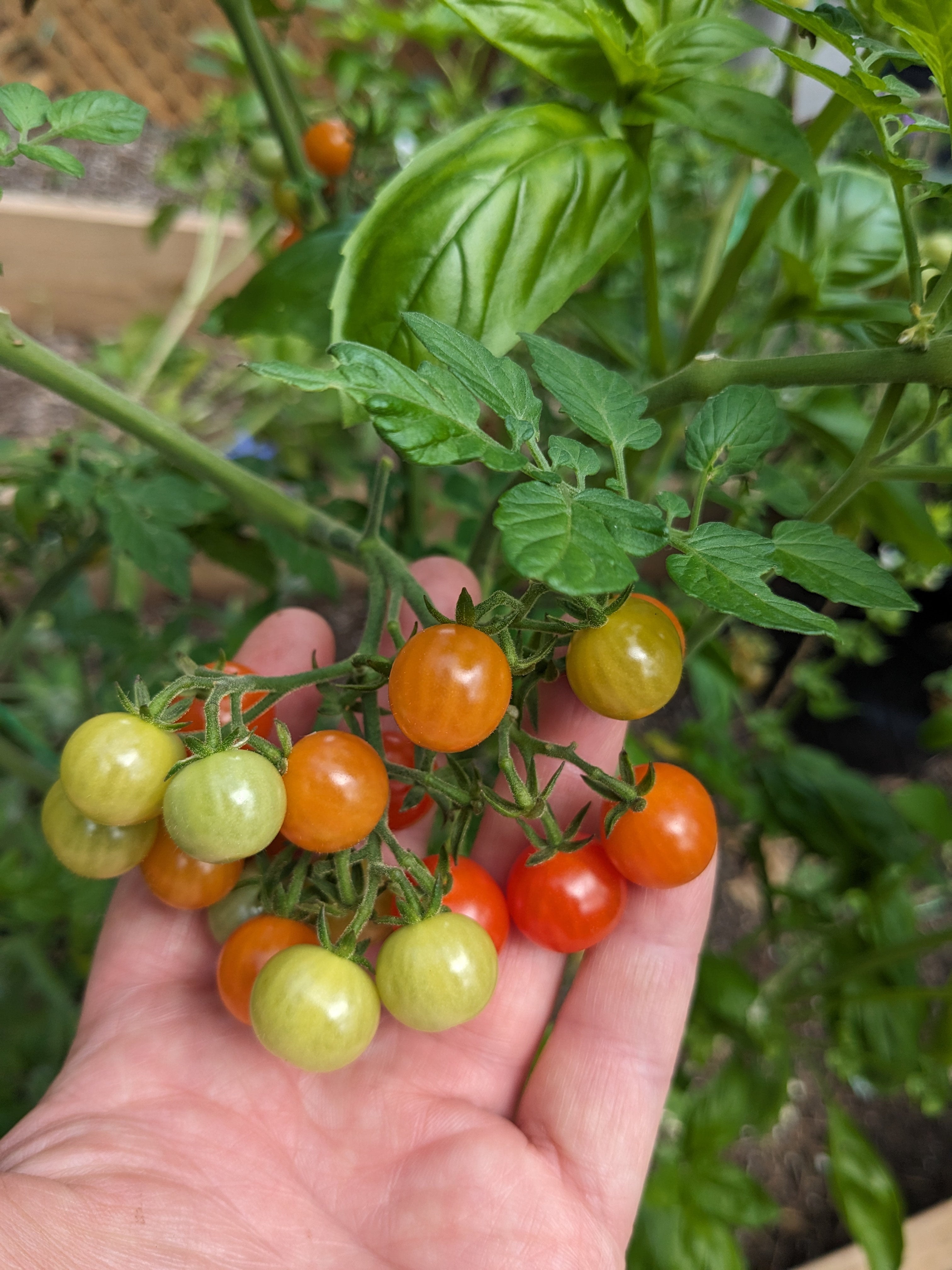
If I could only grow one variety of tomatoes each year, Candyland would be it. These teeny toms literally taste like pops of sugar, and are non-stop, prolific producers. Long after other tomatoes in my gardens are finished, Candyland produce until hard frost kills the plant.
Type: Indeterminate, vining variety. Needs staking. You can read about the difference between Determinate and Indeterminate tomatoes here: Determinate vs. Indeterminate Tomatoes
Height: Indeterminate height
Light: Full sun
Soil: Rich soil. Use good quality compost around plants and mulch well.
Water: Consistently keeping soil moist, but not wet, will results in good growth and happy tomatoes. Inconsistent moisture can lead to "Blossom End Rot". Always water tomatoes at the base of the plant never getting water on the leaves.
Planting:
- Start seeds indoors 6-8 weeks before last frost date. Use a heating mat to aid germination as they love to be warm! If you don't have a heating mat, you can sit the seeds on top of the fridge to get some warmth.
- Harden off* and then transplant to the garden after all frost danger is gone.
- Bury them deep! Plant the whole stem into the ground, not just the roots leaving only a few top leaves showing. The plant will put out roots from the buried stem,
- They make great container plants.
- DO NOT crowd plants. This leads to poor circulation and disease
Harvest: Matures in 55-60 days from transplant. (from the day they are planted outside)
* Hardening off refers to the process of gently and gradually acclimatizing indoor grown seedlings to the great outdoors! Don't throw your new babies straight into the elements! Over the course of a week, take them outside for a few hours at a time, bringing them back indoors afterwards. First sit them in the shade and then slowly introduce them to the sun. Increase the length of time they are outside and are exposed to the sun, until you feel they are ready to face the big outside world!
Other tips:
Pruning out suckers on your plant will help it put more of it's energy into fruit production. Suckers appear between the main stem and the branches and can be easily taken out with your fingers.

$4 each or 3 for $10 (save $2!)
These cosmos are a lovely pure white which shines in the garden, especially at night! They would be a perfect choice for a night or moon themed garden.
Type: annual
Height: 30-183 cm (1-6 ft)
Soil: well drained, drought tolerant. Not too rich or you will only get foliage and no flowers.
Light: full to partial (6+ hours/day)
Planting: direct sow lightly, no more than 1/4” deep, in warm soil after last frost. For earlier blooms, start seeds indoors 4 weeks before last frost, then transplant outside after hardening off. *
Care: low maintenance. Deadhead regularly
Bloom time: early summer - hard frost
Carly’s Tip: Water soil first, let saturate, then plant seeds. This prevent seeds – especially light, delicate ones not deeply sown – from moving/washing away.
*Hardening off refers to the process of gently and gradually acclimatizing indoor grown seedlings to the great outdoors! Don't throw your new babies straight into the elements! Over the course of a week, take them outside for a few hours at a time, bringing them back indoors afterwards. First sit them in the shade and then slowly introduce them to the sun. Increase the length of time they are outside and are exposed to the sun, until you feel they are ready to face the big outside world!

$4 each or 3 for $10 (save $2!)
A superior snap pea with lots of crunch and sweetness. Will produce reliably if picked often.
If any sugar snap peas make it in the house, store them in a container of water in the fridge to keep them crisp. Delicious raw, stir fried or lightly steamed. Kids love 'em.
Type: Vegetable
Height: 6 ft long, must be grown on a trellis
Light: full sun
Soil: well drained with good organic matter; add compost before planting
Planting: Peas prefer cool temperatures. Plant as soon as the soil can be worked, from later winter-early spring (container/raised bed soil warms up quicker!). Sow 1" deep, 1-3" apart. Try for a fall crop by planting again late summer if it's not too hot
Harvest: 68 days
$4 each or 3 for $10 (save $2!)
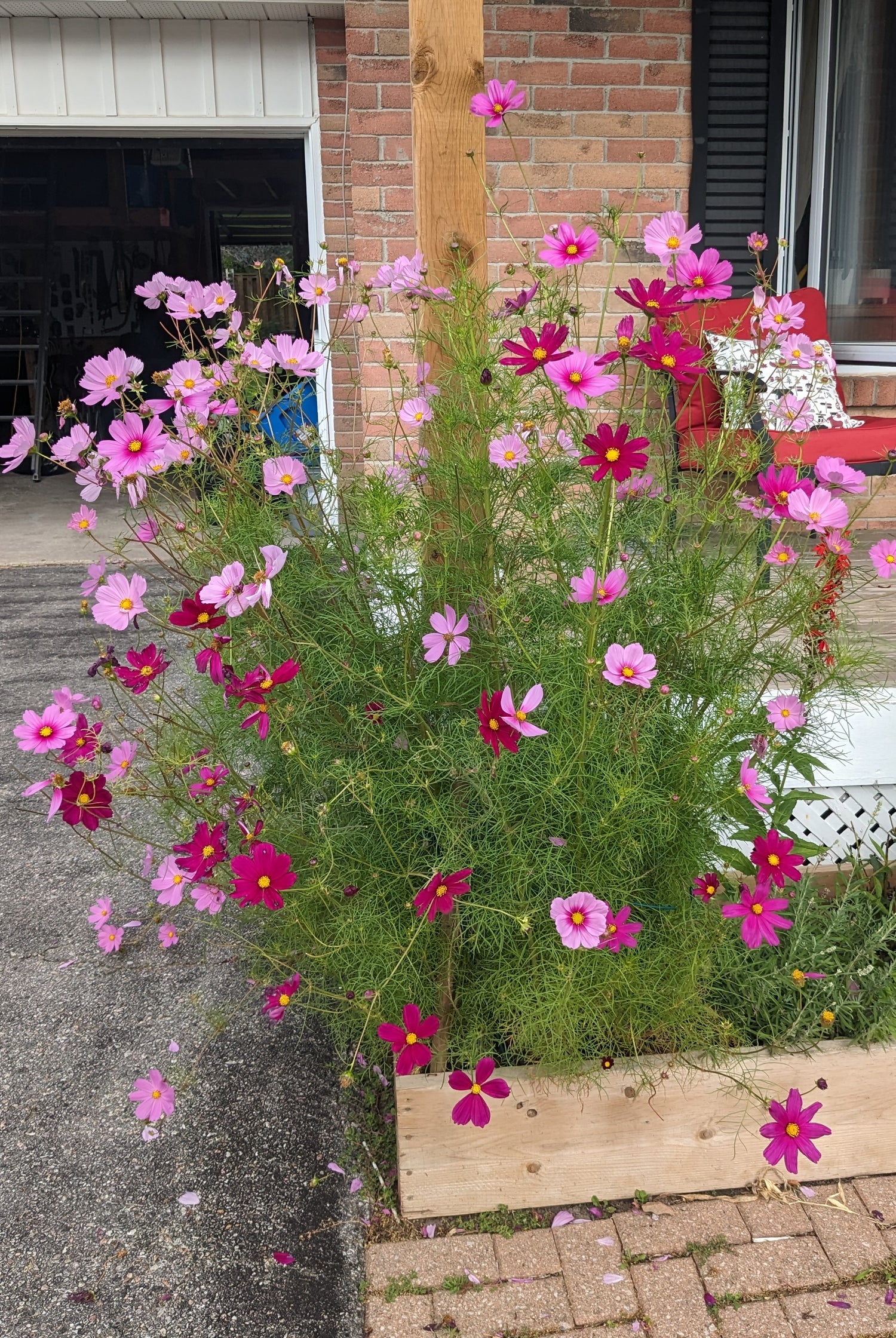
Uxbridge Township’s flower!
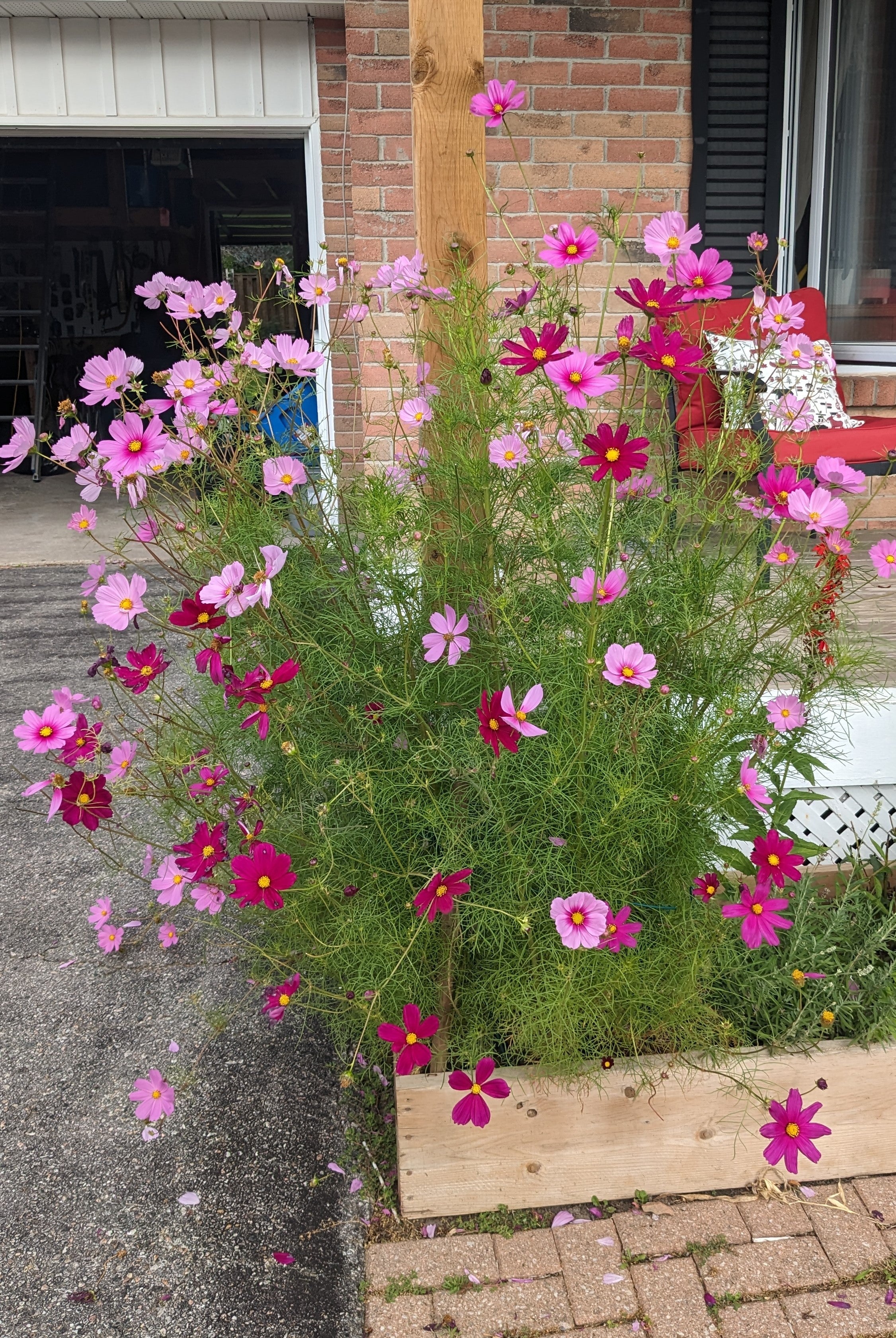
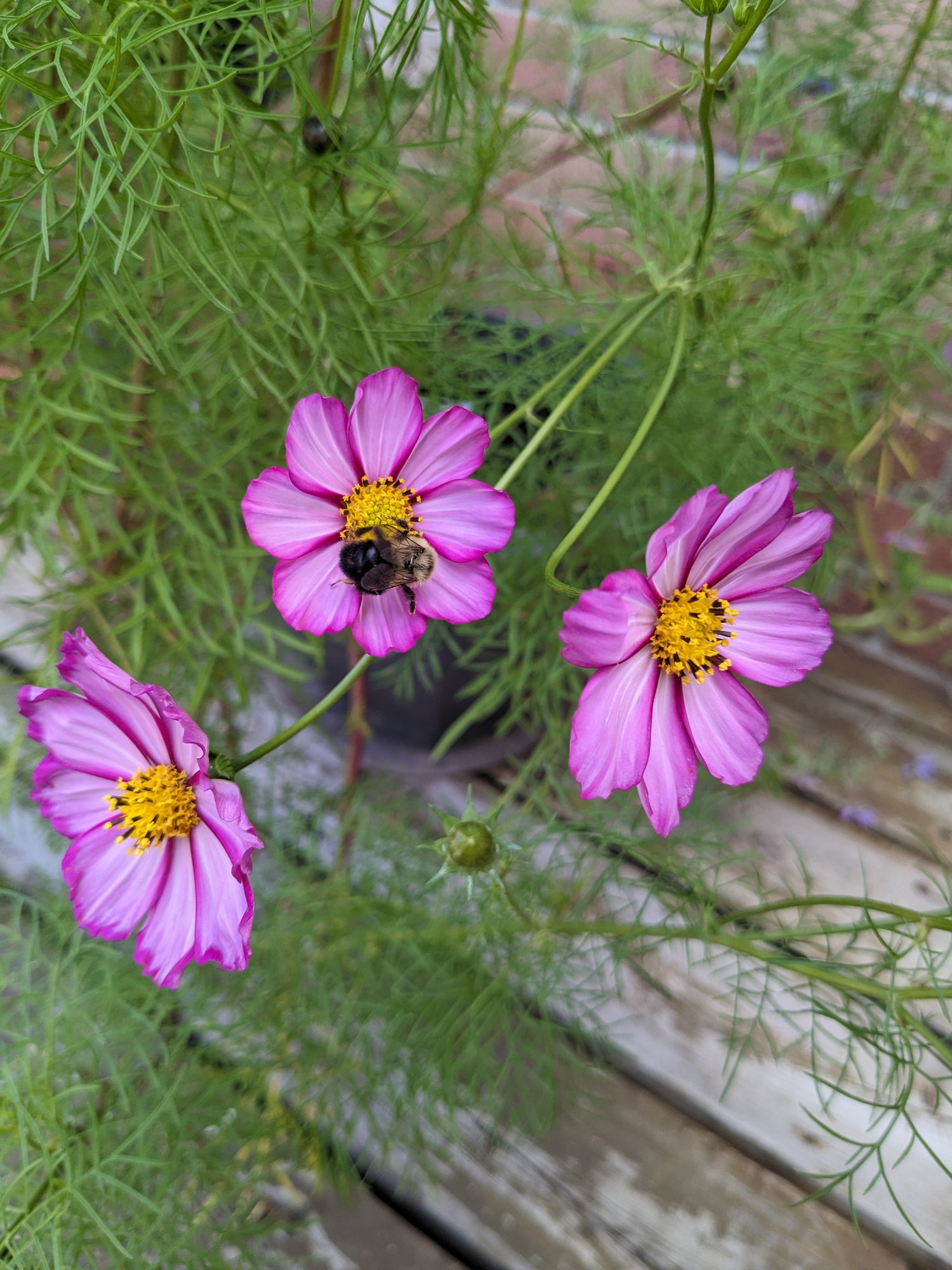
These delightful beauties in cheery pinks (my favourite colour!) are showstoppers in my full sun gardens.
Daisy-like blooms sit atop long, slender stems with feathery leaves, forming a cloud of colour. Once blooming, you’ll have non-stop flowers until a hard frost.
They crawl with bumblebees, hoverflies, sweat bees and ladybugs; I love sitting quiet and close to a patch of Cosmos, listening to soft buzzing and watching the action. Small birds such as goldfinches and chickadees eat seeds from the dried flower heads.
An excellent cut flower, lasting a week or more. East Gwillimbury Garden Club 3rd place winner in 2023, any other annuals category.
Open-pollinated
Heirloom
Type: annual, but reliably self-seeds and returns in my Zone 5b garden
Colour: pink shades, from pale to dark crimson, some variegated, yellow centres
Mix of single, double and fluted blooms
Height: 30-183 cm (1-6 ft)
Soil: well drained, drought tolerant
Light: full to partial (6+ hours/day)
Planting: direct sow lightly, no more than 1/4” deep, in warm soil after last frost. For earlier blooms, start seeds indoors 4 weeks before last frost, then transplant outside after hardening off (LINK: how to harden off seedlings)
Care: low maintenance. Deadhead regularly
Bloom time: early summer - hard frost
Carly’s Tip: Water soil first, let saturate, then plant seeds. This prevent seeds – especially light, delicate ones not deeply sown – from moving/washing away.

$4 each or 3 for $10 (save $2!)
Type: Annual flower
Height: 4-6'
Light: Full sun
Soil: average garden soil
Water: keep well watered
Bloom time: late summer
Planting: Can be started indoors 2-3 weeks before last frost or direct sown into the garden after danger of frost.
Notes: I learned the hard way that sunflowers are allelopathic, meaning they give off toxins that impede the growth of or even kill other plants. They also deplete soil of nutrients. Because I grow so much food in containers, I now grow my sunflowers in separate pots and place them near their fruit, veg and herb companions

$4 each or 3 for $10 (save $2!)
Calendula are a happy daisy, which once planted in the garden will self sow around in joyful abundance (but not in a weedy way)! The flowers can be dried and placed in oil for a lovely balm to soothe dry or irritated skin.
Oopsy Daisy blooms have an unusual bi-coloured flower.
Type: annual
Height: 12-18"
Soil: average soil, quite drought tolerant.
Light: Full sun
Planting: Can be directly sown outdoors after danger of frost or can be started indoors 4 weeks before the last frost. Transplant outdoors after the last frost. Be sure to harden off*.
Care: low maintenance. Deadhead regularly
Bloom time: early summer - hard frost
*Hardening off refers to the process of gently and gradually acclimatizing indoor grown seedlings to the great outdoors! Don't throw your new babies straight into the elements! Over the course of a week, take them outside for a few hours at a time, bringing them back indoors afterwards. First sit them in the shade and then slowly introduce them to the sun. Increase the length of time they are outside and are exposed to the sun, until you feel they are ready to face the big outside world!


$4 each or 3 for $10 (save $2!)
A gorgeous plant for the border! It grows into a shrub full of flowers which are adored by bees and butterflies and the seeds are eaten by birds.
Type: Annual flower
Height: 4-5'
Light: full sun
Soil: average
Water: keep evenly watered
Bloom time: mid to late summer
Planting: start seeds indoors 4-6 weeks before the last frost. Give plants lots of space in the garden to grow!

$4 each or 3 for $10 (save $2!)
A bright and happy flower, these nasturtiums look like sunshine in the garden! The foliage is spicy and can be used in salads, as can the flowers, for a very pretty presentation!
Type: Annual flower
Height: 12-18"
Light: Full sun to part sun
Soil: not too rich or you will only get leaves
Water: fairly drought tolerant once established
Bloom time: all summer
Planting: you can start the seeds indoors a few weeks before the last frost or direct sow them into the garden after frost danger has passed.


$4 each or 3 for $10 (save $2!)
Like all milkweeds, Swamp Milkweed, is a food source for the Monarch butterfly larvae. Unlike Common Milkweed, Swamp Milkweed is well behaved in the garden as it does not sucker. This is an extremely beautiful plant and is a must have in a native plant garden!
Type: Perennial, native to Ontario
Height: 3-4 feet
Light: Full sun
Soil: Rich to medium rich soils, however it may survive a season or two in poorer, dryer soils.
Water: As the name suggests, Swamp Milkweed is happiest where it gets consistent moisture. However, it can be used in rain gardens and dryer areas although it may not be as long lived.
Bloom time: July to August. NOTE: This plant is very late to reappear in the spring! Sometimes it doesn't poke through the soil until the end of May- so be patient!
Planting: Cold, moist stratification required - see options in photos, courtesy of Northern Wildflowers. This website offers an excellent overview of this plant and how to grow it from seeds: Swamp Milkweed – A Beginners Guide – GrowIt BuildIT
Wild life support: Leaves are a food source for Monarch caterpillars, Tussock moth caterpillars, Milkweed beetle. A variety of bees and wasps use the nectar and pollen.


$4 each or 3 for $10 (save $2!)
A very old variety, this is a great flower for the historical garden. Flowers are such a rich deep purple/ red that they appear black and have lovely yellow centres. May need staking.
Type: Biennial
Height: 6'+
Light: Full sun
Soil: good garden soil
Water: keep evenly watered
Bloom time: mid to late summer
Planting: Start inside 6-8 weeks before planting out. Do not cover seed, needs light to geminate. Transplant after last frost into full sun or light shade.
Growing tip: Pinch out the growing tip after transplanting to make your plants stocky and strong. Cut back after first bloom to encourage reblooming. Do not move established plants. May be short lived, but hollyhocks self-seed dependably.
$4 each or 3 for $10 (save $2!)
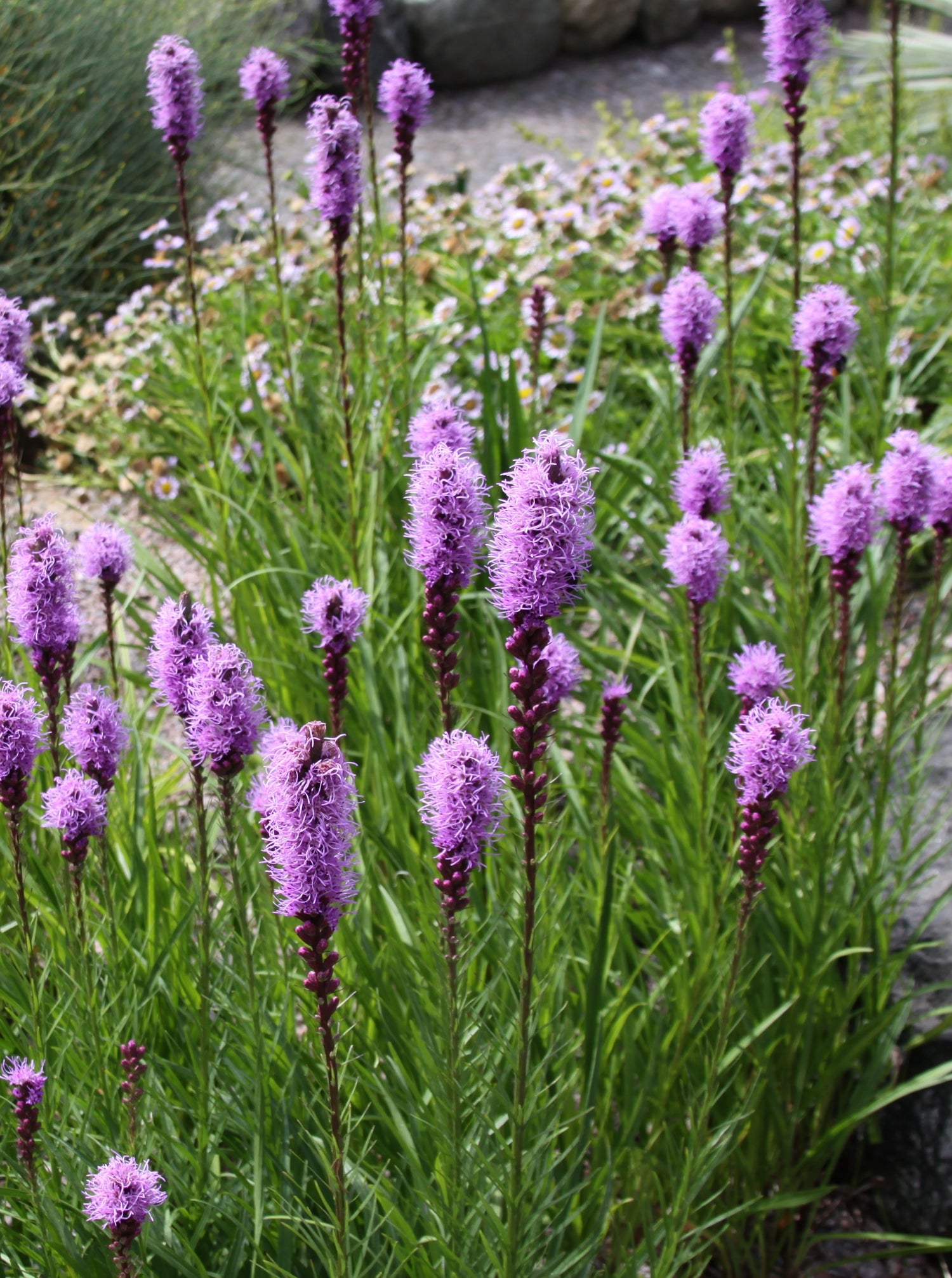
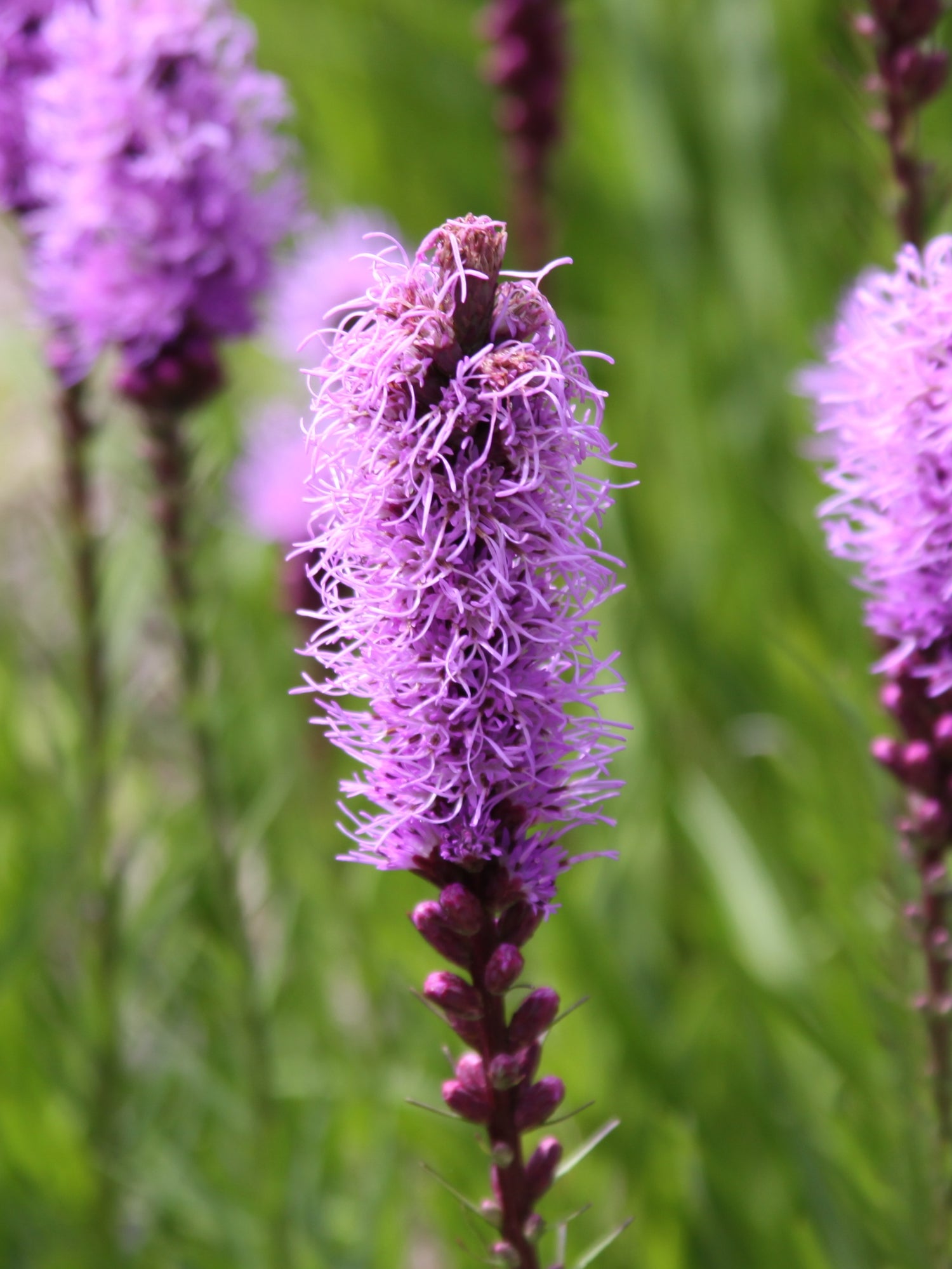
Butterflies, bees and hummingbirds love this plant's nectar, making Dense Blazing Star an excellent addition to pollinator gardens. Birds then eat the seeds through the winter.
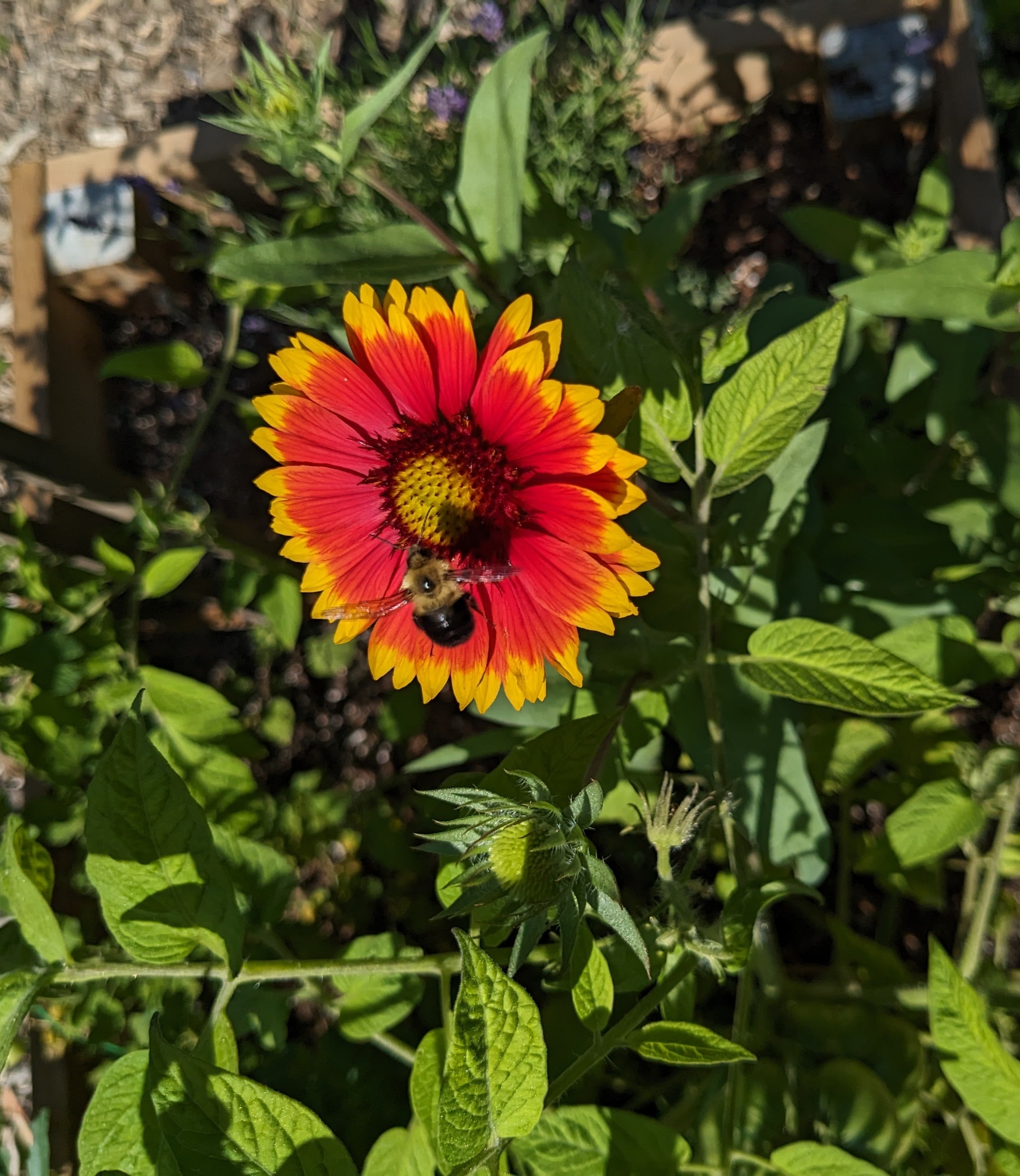
I love the whimsical, long-lasting, bright, feathery pop of purples as it grows and flowers from the top down - truly unique. I grow it among White (dwarf) Lavender, Lance-Leaf Coreopsis, Spotted Bee Balm and Blanket Flower.
Type: Native Perennial
Height: 5 ft.
Light: full sun-part shade
Moisture: well draining, drought tolerant
Bloom time: July-late fall
Planting: Cold, moist stratification required - see options in photos, courtesy of Northern Wildflowers. Lightly cover (1/8" depth) with moist soil, and do not let seedlings dry out. OR direct sow in late fall to overwinter in the garden for blooms the following spring

Strawflowers are so pretty and unusual! They are a must have for the cutting garden and make an excellent dried flower. The flowers in this mix range from yellow, bronze and crimson to pinky rose colour. Petals are papery and dry, like straw.
Type: Annual flower
Height: 2'
Light: full sun
Soil: any good garden soil
Water: keep evenly watered throughout the summer
Bloom time: July onwards. Cutting the blooms will encourage continuous growth.
Planting: Sow seeds indoors 3-4 weeks before the last frost. Press seeds into the soil but do not cover the seeds as light aids germination. Transplant to the garden once the danger of frost has passed and the seedlings are big enough to handle. Alternatively, they can be directly sown into the garden once the soil is warm.

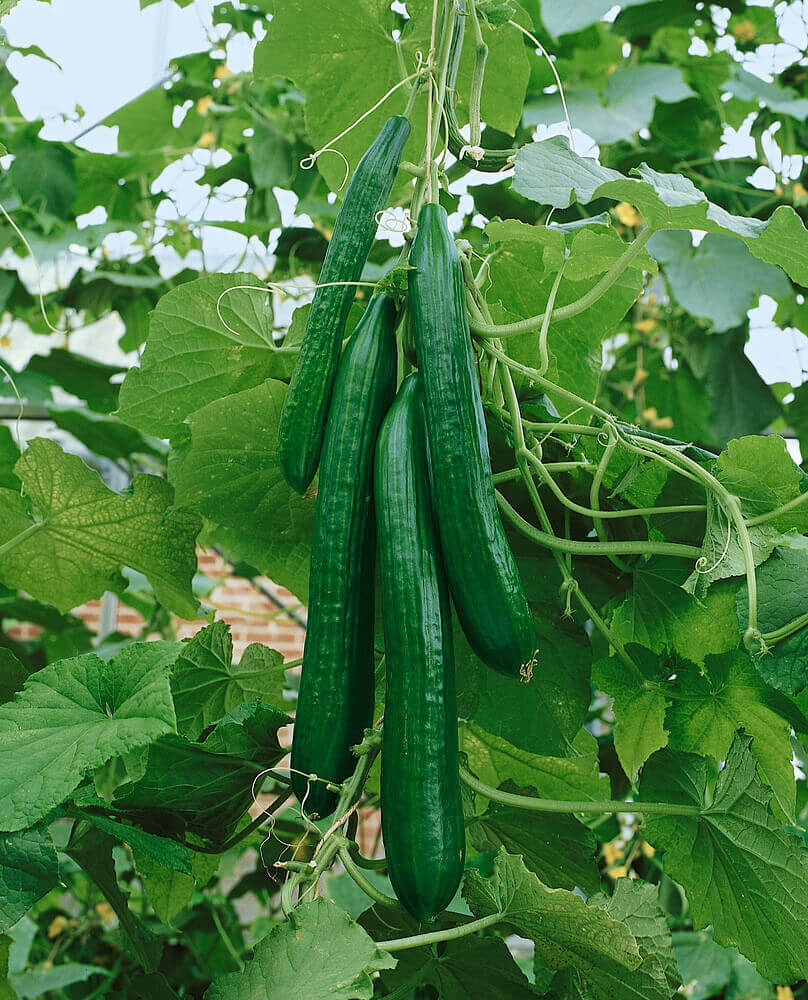
This variety of cucumber is the closest we've found to a traditional English cuke from the grocery store. Long, slender, thin-skinned fruits with fewer seeds than regular home-grown cukes, especially when picked early.
Requires a trellis + full sun. Harvest regularly to encourage more flowers to form.
$4 each or 3 for $10 (save $2!)

Lovely white daisy flowers cover lacey foliage. Flowers can be dried and used for tea.
Type: Herb, perennial or will self seed to return year after year.
Height: 10"
Light: Full sun
Soil: Fertile soil, well drained.
Harvest: Pick flowers in early morning and let dry completely before storing.
$4 each or 3 for $10 (save $2!)
A gorgeous plant for the border! It grows into a shrub full of flowers which are adored by bees and butterflies and the seeds are eaten by birds.
Type: Annual flower
Height: 4-5'
Light: full sun
Soil: average
Water: keep evenly watered
Bloom time: mid to late summer
Planting: Give plants lots of space in the garden to grow! Plant outside after danger of frost. Harden off* before planting outdoors.
* Hardening off refers to the process of gently and gradually acclimatizing indoor grown seedlings to the great outdoors! Don't throw your new babies straight into the elements! Over the course of a week, take them outside for a few hours at a time, bringing them back indoors afterwards. First sit them in the shade and then slowly introduce them to the sun. Increase the length of time they are outside and are exposed to the sun, until you feel they are ready to face the big outside world!


This architectural plant is absolutely stunning at all stages, from the moment it pokes its feathery head out in the spring to the yellow-tipped flower umbels in the fall.
We grow Bronze Fennel in our food garden for the delicious anise-tasting leaves and seeds, but also as an incredible pollinator magnet that increases biodiversity. It's a host plant for several swallowtail butterfly species, including Anise Swallowtail and Eastern Black Swallowtail, while its nectar is an important food source for many types of bees and wasps. We've also spotted Ruby Throated Hummingbirds paying a visit!
The leaves of Bronze Fennel are delicious fresh in salads, and can be dried for seasoning. All parts of the plant, including the seeds, make a delicious and soothing tea.
NOTE: This a perennial plant with roots, not the bulb-forming fennel veggie you may be more familiar with.
$4 each or 3 for $10 (save $2!)

Sweet and delightfully stiped cherry tomato made up of yellow, red + orange striations, Sunrise Bumblebees look absolutely stunning on a bed of greens or in a caprese salad. Juicy + lower acid than a standard red tomato, these heirlooms are deliciously sweet with crack-resistant skin. Harvest regularly to keep the plant producing.
$6 each or 3 for $15
Type: Indeterminate, vining plants that will need staking. Plants will keep growing and producing until frost. You can read about the difference between Determinate and Indeterminate tomatoes here: Determinate vs. Indeterminate Tomatoes
Height: Indeterminate height.
Light: Full sun
Soil: Rich soil. Use good quality compost around plants and mulch well.
Water: Consistently keeping soil moist, but not wet, will result in good growth and happy tomatoes. Inconsistent moisture can lead to "Blossom End Rot". Always water tomatoes at the base of the plant never getting water on the leaves.
Planting:
- Harden off* and then transplant to the garden after all frost danger is gone.
- Bury them deep! Plant the whole stem into the ground, not just the roots leaving only a few top leaves showing. The plant will put out roots from the buried stem, making your plant grow nice and strong!
- Space plants 60-90 cm, 2-3' apart; space rows 3-4' apart. They will grow nicely in containers but will need some kind of support.
- DO NOT crowd plants. This leads to poor circulation and disease
Harvest: 70 days to maturity (from the day they are planted outside)
* Hardening off refers to the process of gently and gradually acclimatizing indoor grown seedlings to the great outdoors! Don't throw your new babies straight into the elements! Over the course of a week, take them outside for a few hours at a time, bringing them back indoors afterwards. First sit them in the shade and then slowly introduce them to the sun. Increase the length of time they are outside and are exposed to the sun, until you feel they are ready to face the big outside world!
Other tips:
Pruning out suckers on your plant will help it put more of its energy into fruit production. Suckers appear between the main stem and the branches and can be easily taken out with your fingers.